Flight Attendant Interview Questions: What to Expect and How to Prepare
From one-way video screens to reach tests and group exercises, here is how airline cabin crew hiring really runs and what recruiters watch for at each stage.
Quick answer
- Expect a recorded one-way video round: practise to a camera with a 60-second timer, since screens like Sun Country's run 15–20 minutes (NoraHQ, 2026).
- Prepare four or five distinct STAR stories — safety, difficult customer, teamwork, a mistake — because reusing one story across every competency question is a known assessment-day failure (LearnWithKateryna, 2026).
- Confirm physical and documentation requirements early: some airlines test reach to 212 cm and set minimum heights, such as Emirates at 160 cm (Flight Attendant Central, 2023).
Flight attendant interviews are rarely a single conversation. Most large airlines run a staged process — online application, a recorded or recruiter screen, an assessment or group day, a final panel, then a conditional offer and compliance checks (CoPilot Interview, 2026) — with candidates cut after most stages.
This guide covers what each round looks like, sample answers in Situation–Task–Action–Result form, and the behaviours that end a candidate's day early. Round counts and physical requirements vary sharply by airline and country, so check the carrier's own careers page before you prepare.
What This Interview Usually Covers
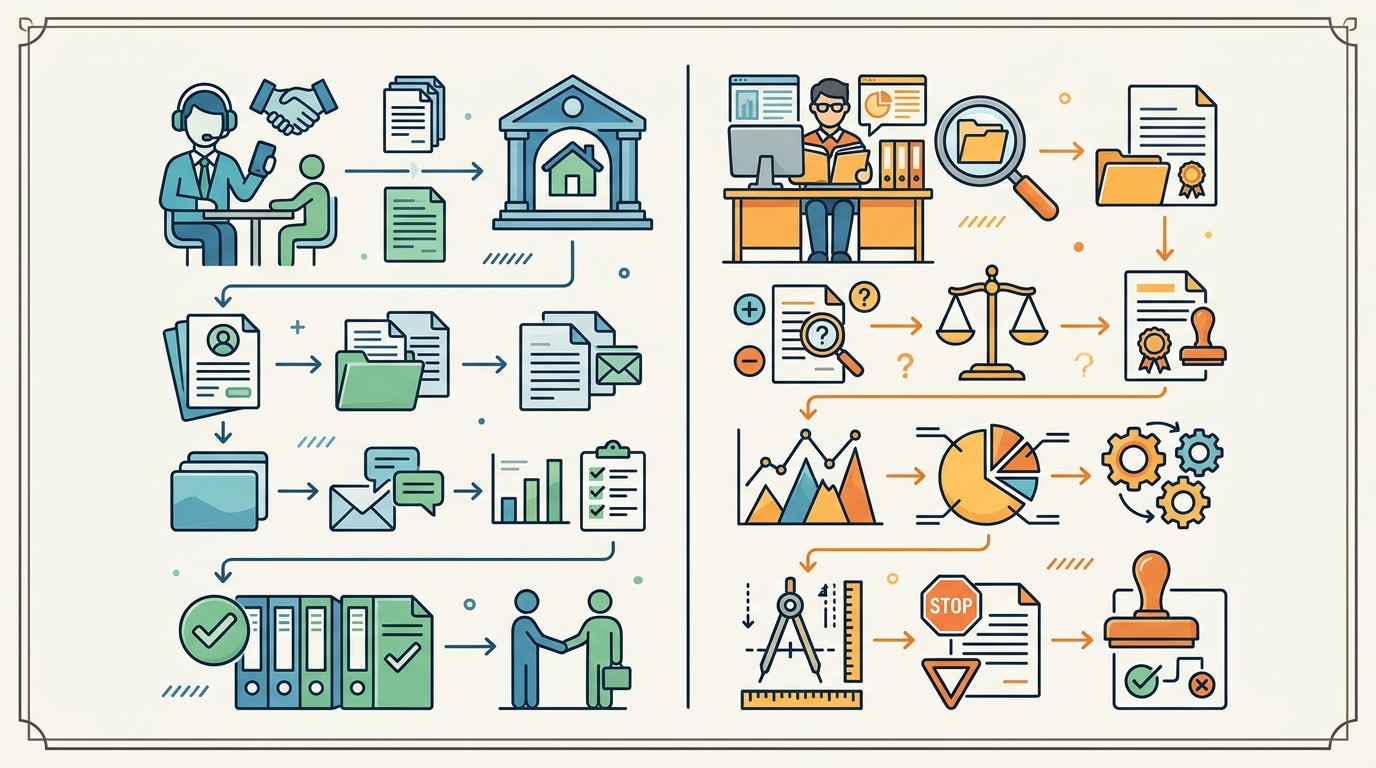
Cabin crew hiring is a filter, not a chat. Most large airlines run roughly five broad stages: an online application, a screening step such as a recorded video interview or recruiter call, an assessment or group day, a final interview, then a conditional offer with background and compliance checks (CoPilot Interview, 2026).
Round counts vary by carrier. Alaska Airlines is reported to run three to four rounds — a 20–30 minute recruiter screen, a 45–60 minute group or virtual panel, a 45-minute final, and a 30–45 minute conditional offer and compliance review, across about two to four weeks (NoraHQ, 2026). Southwest moves from a virtual one-way interview to an in-person session with an information session, Q&A and a panel run by a recruiter and a current flight attendant, and states it does not use group interviews (Southwest Airlines Careers, undated). Delta's process is described as typically eight rounds, ending in a conditional job offer on Event Day (CleverPrep, undated).
Assessment days commonly combine three things: a group exercise, a reach test and an interview (JobTestPrep, undated). Some add a written English test and psychometric testing (LearnWithKateryna, 2026). Expect safety questions to outrank service ones.
Common Questions and Sample Answers
Why do you want to be a flight attendant?
Sample answer
I spent three years on a hotel front desk working the 11pm–7am shift, alone for 120 rooms. My task was to resolve anything from medical calls to lost passports without backup. I built a one-page escalation card listing on-call managers, the nearest clinic and the duty translator line, and kept it at the desk. Complaint escalations to the manager dropped to about one a month. That showed me I work best owning the decision in the moment, which is what crew do between door closed and door open.
How would you handle a passenger refusing a safety instruction?
Sample answer
On a late shift at a stadium bar, a group refused to leave a closed section. My task was to clear it without a scene in front of 200 people. I approached one person rather than the group, used their name, explained the cleaning crew needed the floor by 11:15, and moved their drinks to a table I had already cleared. They left within four minutes. In the air I would repeat the instruction calmly once, give the safety reason, then involve the purser and document it.
Tell me about a time you worked with a team under pressure.
Sample answer
I was catering a 200-person wedding when two colleagues called in sick ninety minutes before service. The task was four courses on time with six staff instead of eight. I split the room into zones, gave each pair a numbered table range, and moved the two strongest servers to the top table. Every course left the kitchen on schedule and the client rebooked for their anniversary. Under-resourced teams fail from unclear ownership, not lack of effort.
How do you cope with irregular hours and time away from home?
Sample answer
I worked four-on, four-off rotating shifts for two years in a 24-hour call centre, nights included. My task was to stay functional through the rotation. I kept the same wake-up routine regardless of start time, used blackout blinds, and booked family commitments only into fixed off-blocks. I lost two days to illness in 24 months. Irregular hours and nights away are reported as the top reason new crew leave (Articuler.AI, 2026), so I have tested this rather than guessed.
Describe a time you made a mistake at work.
Sample answer
I logged an allergy note against the wrong table number during a 90-cover lunch. My task was to catch it before food reached either table. I stopped the pass myself, told the head chef within about 30 seconds, and had the dish re-plated. The correct guest ate four minutes late; the wrong table was never served it. I now read allergy details back aloud to the person ordering. Reporting fast is what stops a small error becoming a safety event.
A passenger complains about something you cannot fix. What do you do?
Sample answer
A guest arrived to a sea-view room we had oversold. My task was to keep the stay recoverable. I acknowledged the error plainly, did not blame the booking system, and offered a higher floor with a partial view plus breakfast, letting them choose. They stayed and left a review naming the handling. In the cabin I cannot change a delay or seat pitch, but I can be honest about the cause, say what I will do, and return when I said I would.
Mistakes That Cost Candidates the Job
- Dropping your guard during breaks or the walk to the room on an assessment day — how you treat other candidates is observed and counts toward cuts (LearnWithKateryna, 2026).
- Treating the group exercise as a debate to win, or going silent to play it safe; both are listed as assessment-day killers (LearnWithKateryna, 2026).
- Reusing one story for every competency question instead of preparing four or five distinct examples (LearnWithKateryna, 2026).
- Arriving without checking physical requirements and failing the reach test on the day — some airlines test reach to 212 cm and set minimum heights, for example Emirates at 160 cm and Etihad at 163 cm (Flight Attendant Central, 2023).
- Arriving late or under-groomed for an open day, where punctuality and presentation feed a first-impressions cut (Articuler.AI, 2026).
- Describing the job as travel and free flights rather than showing you understand the irregular hours that drive most new-hire resignations (Articuler.AI, 2026).
- Answering a safety question with a service answer — offering a drink and an apology when asked about an unfastened seatbelt in turbulence.
- Claiming fluency in a language you cannot sustain under test conditions; Air Transat is reported to test French and English throughout its process (NoraHQ, 2026).
Frequently asked questions
What should I wear to a cabin crew assessment day?
Business formal: a suit or tailored dress, closed-toe polished shoes, hair secured off the face, minimal jewellery. Grooming and punctuality are reported to feed an early first-impressions cut (Articuler.AI, 2026). Arrive 30 minutes early and carry a spare shirt or tights.
How long does the whole hiring process take?
Plan for weeks, not days, and keep working meanwhile. Alaska Airlines' recruitment timeline is reported at about two to four weeks (NoraHQ, 2026), while Air Transat's three to five stages are reported to run roughly four to twelve weeks end to end (NoraHQ, 2026).
Should I bring up pay in the interview?
No — wait for the conditional offer stage. Crew pay is usually a mix of hourly flight pay, per-diem allowances and seniority-based scheduling rather than a flat salary. For US comparison figures check the Bureau of Labor Statistics occupational page; elsewhere use your national statistics agency.
Do I need a degree or prior flying experience?
Generally no. A high school diploma is typically required, along with excellent health, clear speech and willingness to relocate (CareerOneStop, undated); training ranges from a few days to a year (O*NET OnLine, undated). Some carriers want customer service experience — Emirates is reported to require one year (TalkDrill, 2026).
Are group interviews always part of it?
No. Most assessment days include a group exercise, a reach test and an interview (JobTestPrep, undated), but Southwest states it does not conduct group interviews and runs a panel with a recruiter and a current flight attendant instead (Southwest Airlines Careers, undated). Check the carrier's careers page.
Sources
- U.S. Bureau of Labor Statistics — Flight Attendants : Occupational Outlook Handbook (2024)
- O*NET OnLine — 53-2031.00 - Flight Attendants

Written by
Desmond writes about the mechanics of job searching: resumes, interviews, the long silence after applying. He's fascinated by how much of getting hired depends on luck dressed up as skill.