
Career Paths
Career Paths guides on World Career Path.

How to Become a Drone Pilot: Step-by-Step Guide
Becoming a drone pilot means passing the civil aviation regulator's test for the country you fly in, registering your aircraft, and then proving you can deliver usable data — survey images, inspection footage, mapping files — not just keep an aircraft in the air. In the United States that is the FAA's Part 107 remote pilot certificate; in the UK it is usually the CAA's General VLOS Certificate; in Canada, a Transport Canada basic or advanced certificate; in the EU, EASA open-category certificates.
Priya Chandrasekaran · 10 min read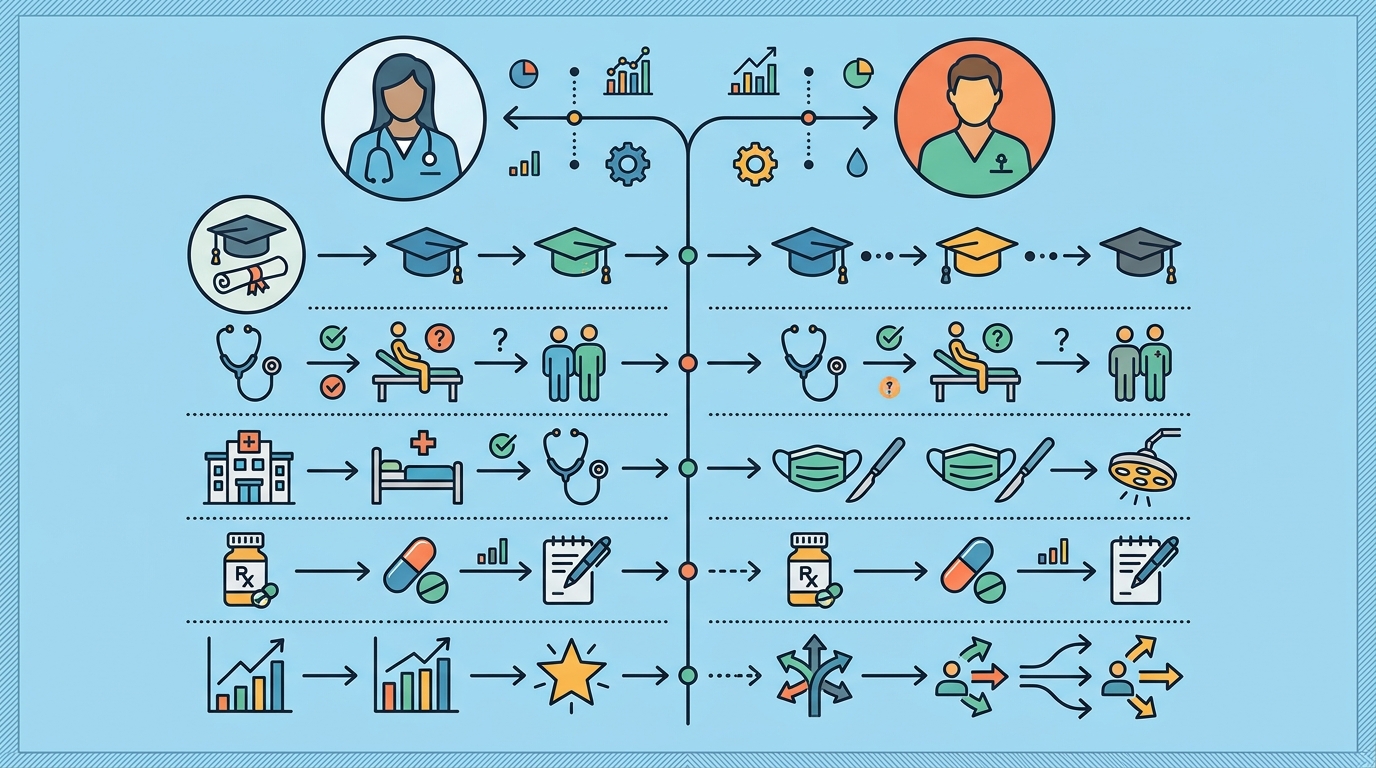
Nurse Practitioner vs. Physician Assistant: Which Career Path Is Right for You?
Nurse practitioners and physician assistants both diagnose, treat and prescribe, but they arrive through different training systems and are regulated differently. NPs qualify through nursing: a registered nursing license first, then an accredited graduate program, a national certification exam and an APRN license (U.S. Bureau of Labor Statistics). PAs qualify through a medical-model master's program of at least two years of postbaccalaureate study, then state licensure and the PA-C credential (U.S. Bureau of Labor Statistics).
Wyatt Holloway · 8 min read
What Does an Actuary Do? Duties, Skills, and Salary Explained
An actuary uses statistics and financial theory to estimate how likely an event is and what it will cost — a crash, a hospital stay, a wave of early retirements — and then helps design policies and set the money aside to cover it. The work combines database and modelling software with written and spoken explanation, because the numbers have to be understood by underwriters, regulators and executives who are not mathematicians.
Marisol Tanaka-Reyes · 9 min read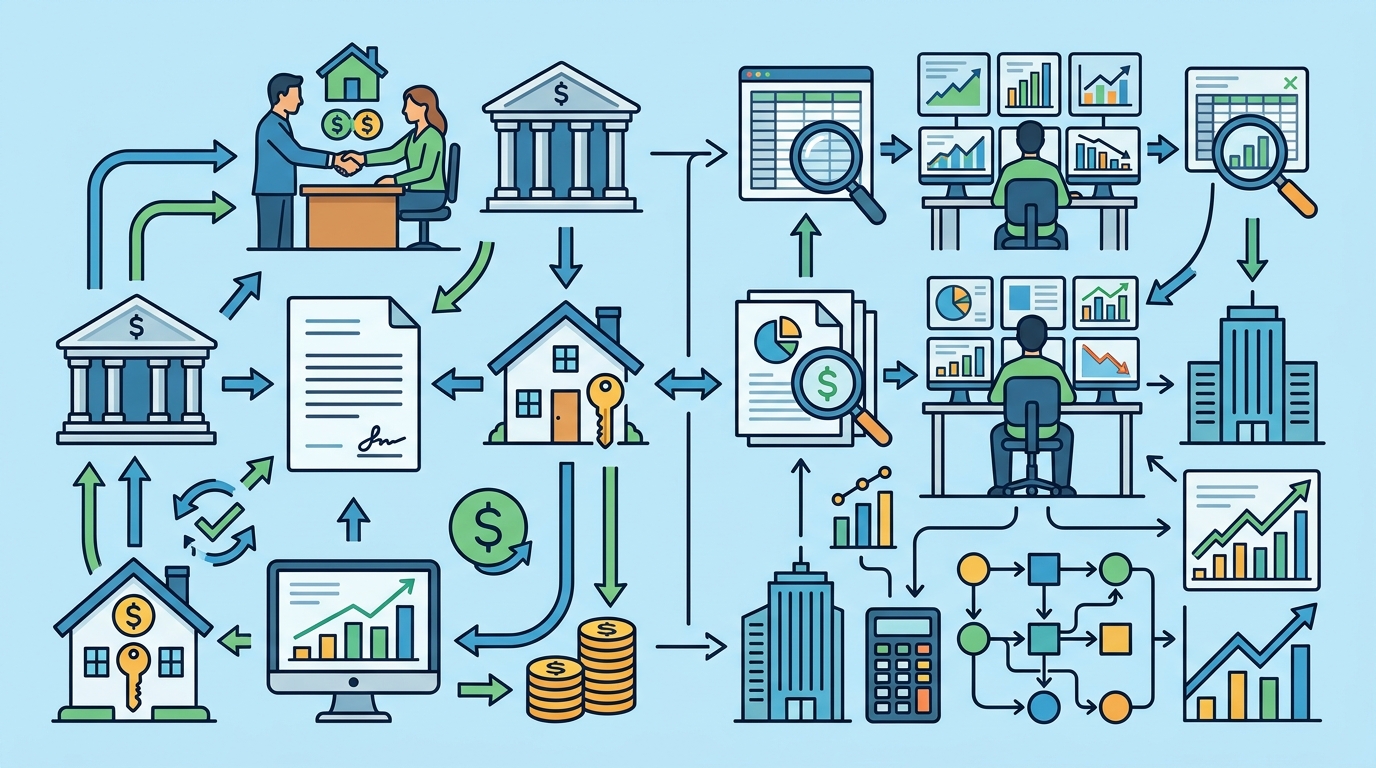
Loan Officer vs. Financial Analyst: Pay, Duties, and Day-to-Day Differences
Loan officers work with applicants: they contact people and businesses about loans, gather and verify financial information, check agreements against regulations, and approve or refer applications (U.S. Bureau of Labor Statistics, 2025). Financial analysts work with data: they evaluate current and historical financial figures, study economic and business trends, examine company financial statements, and write reports recommending investments (U.S. Bureau of Labor Statistics, 2025).
Marisol Tanaka-Reyes · 9 min read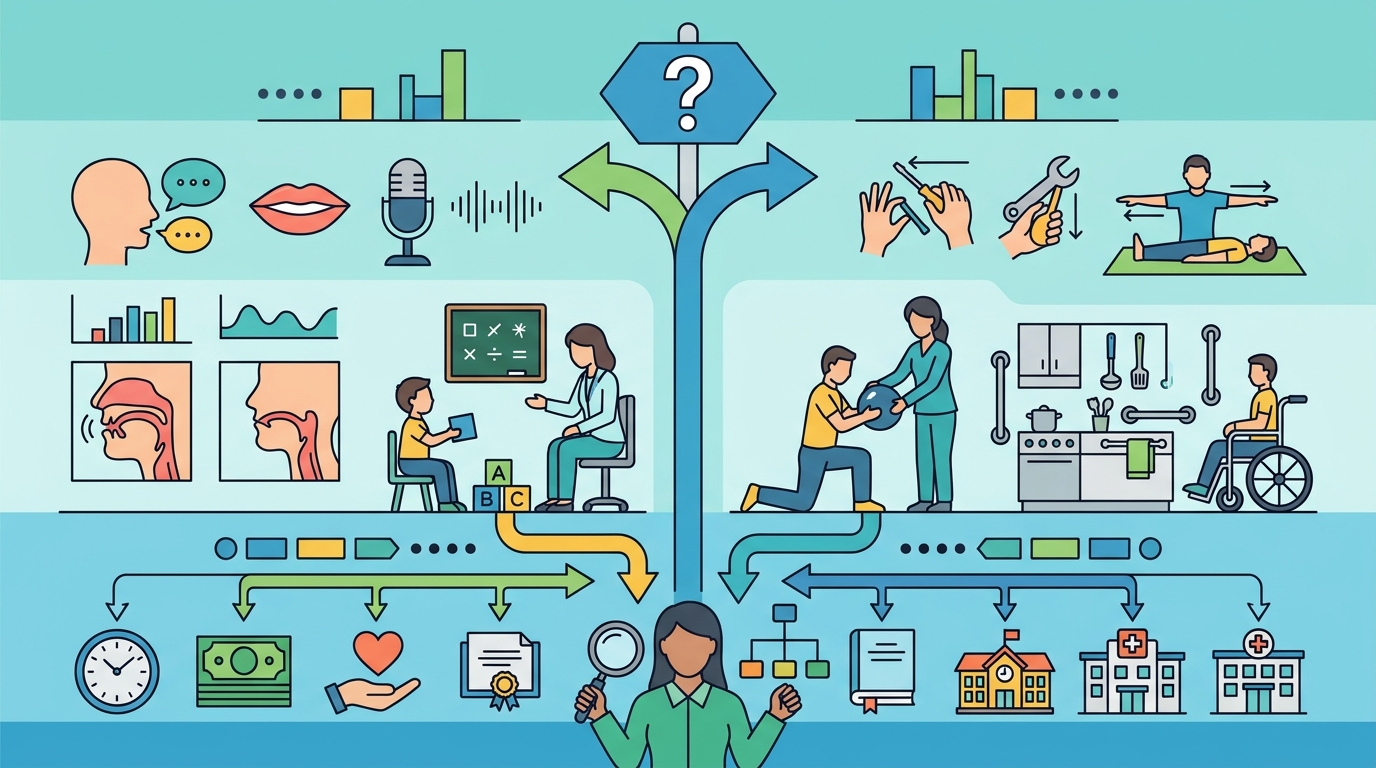
Speech-Language Pathologist vs. Occupational Therapist: Which Career Path Is Right for You?
Speech-language pathology and occupational therapy sit side by side in hospitals, schools and clinics, and in the United States both typically require a master's degree and a state licence. The difference is what you treat: speech-language pathologists work on communication, language, voice and swallowing, while occupational therapists work on the practical activities of daily life — dressing, bathing, cooking, returning to work or school.
Noor Abdallah · 8 min read
How to Become an Actuary: Education, Licensing, and First-Job Steps
Becoming an actuary means combining a quantitative education with a long series of professional exams taken while you work. In most countries there is no single licence to apply for: you join a national actuarial association, pass its exam and module sequence, and build experience in an analyst role at the same time.
Wyatt Holloway · 9 min read
Supply Chain Manager Career Overview: Is This the Right Path for You?
A supply chain manager keeps materials, products and information moving from supplier to customer: forecasting demand, choosing carriers and suppliers, watching inventory levels and fixing the disruptions that hit every week. In the United States, the Bureau of Labor Statistics does not publish a separate Occupational Outlook Handbook profile for supply chain managers, and instead covers the work under Logisticians (SOC 13-1081), noting that experienced logisticians may advance into supply chain management roles (U.S. Bureau of Labor Statistics, 2025).
Priya Chandrasekaran · 9 min read
How to Become an Air Traffic Controller: Step-by-Step Guide
Becoming an air traffic controller in the United States means meeting a fixed set of Federal Aviation Administration entry rules, passing the Air Traffic Skills Assessment, clearing a medical exam and security investigation, training at the FAA Academy in Oklahoma City, then spending more than a year in on-the-job training at an assigned facility (U.S. Bureau of Labor Statistics, 2025; Federal Aviation Administration, undated). The usual entry-level education is an associate's degree, often through an FAA-approved Air Traffic Collegiate Training Initiative (AT-CTI) program, though a bachelor's in any field or qualifying work experience can also open the door (U.S. Bureau of Labor Statistics, 2025).
Desmond Okafor · 11 min read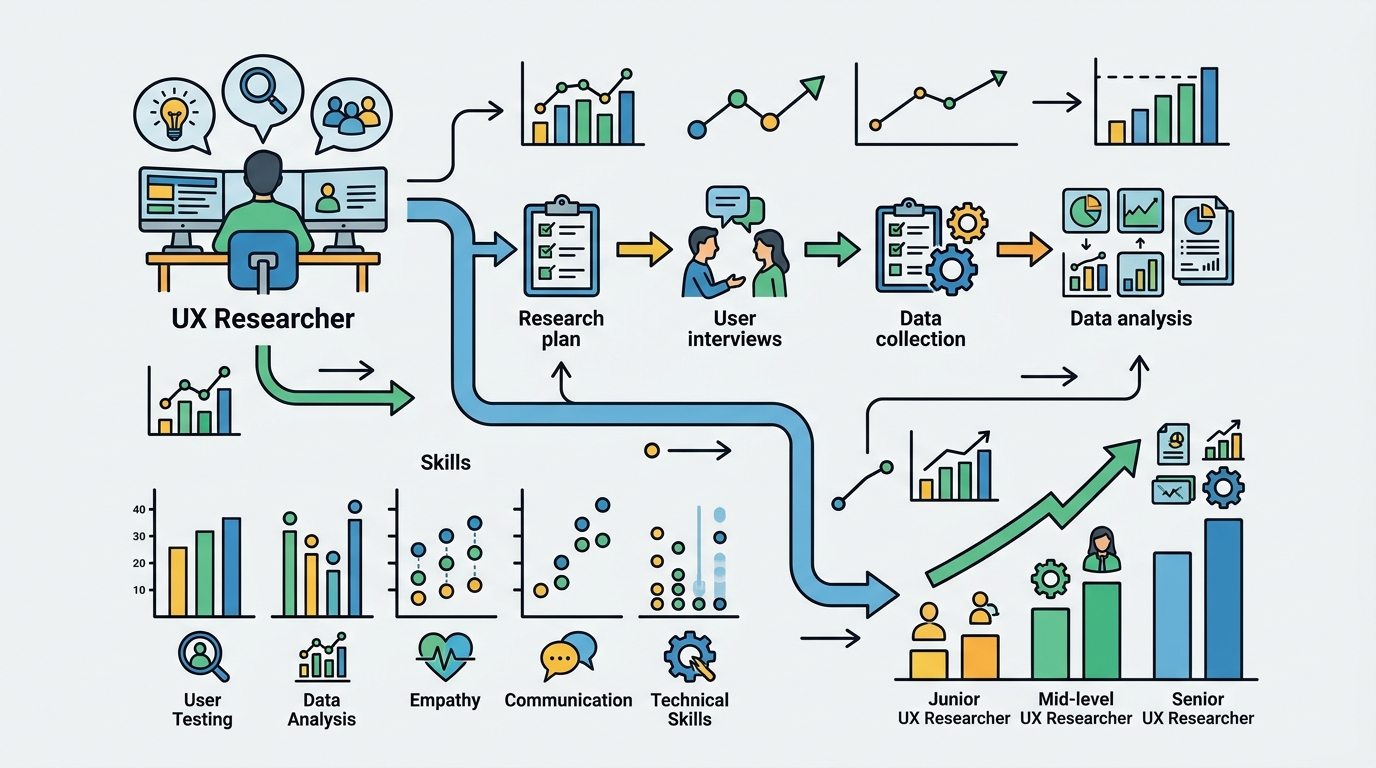
What Does a UX Researcher Do? Duties, Skills, and Salary Explained
A UX researcher plans and runs studies with real or potential users, then turns what those people say and do into evidence a product team can act on. ONET OnLine (U.S. Department of Labor) lists conducting user research and analysing user feedback as a core task for the occupation, and classifies it as Job Zone Four — work that requires considerable preparation, usually a degree plus practice.
Desmond Okafor · 9 min read