Supply Chain Manager Career Overview: Is This the Right Path for You?
A look at the planning, procurement and logistics work behind the role, the credentials that open doors, and the pressure that comes with keeping goods moving.
Quick answer
- Typical entry route: a four-year bachelor's in logistics, supply chain management or business (U.S. Bureau of Labor Statistics, 2025).
- BLS publishes a median annual wage for logisticians (2025); check the current OEWS table for the figure.
- Logistician employment is projected to grow much faster than average, 2025–2035 (U.S. Bureau of Labor Statistics, 2025).
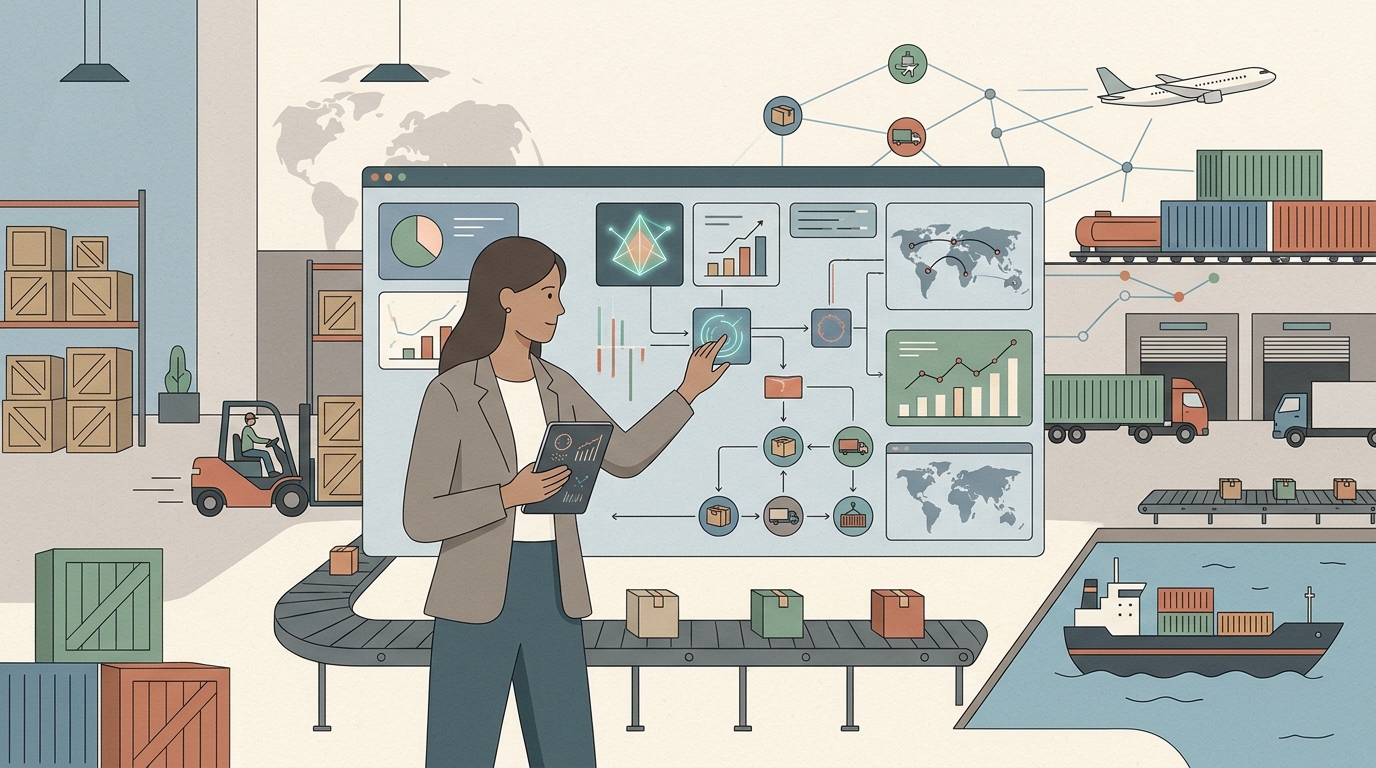
A supply chain manager keeps materials, products and information moving from supplier to customer: forecasting demand, choosing carriers and suppliers, watching inventory levels and fixing the disruptions that hit every week. In the United States, the Bureau of Labor Statistics does not publish a separate Occupational Outlook Handbook profile for supply chain managers, and instead covers the work under Logisticians (SOC 13-1081), noting that experienced logisticians may advance into supply chain management roles (U.S. Bureau of Labor Statistics, 2025).
It suits people who like solving constrained problems with numbers and who can stay calm when a shipment is late and a plant is waiting. It is less suited to people who want predictable hours — most logisticians work full time and some work more than 40 hours a week (U.S. Bureau of Labor Statistics, 2025).
What This Job Involves Day to Day
A typical day starts before the first shift does. At 7 a.m. you open the enterprise resource planning (ERP) system and pull the overnight exception report: short shipments, failed electronic data interchange (EDI) messages from a supplier, and any purchase order that did not confirm. Anything that threatens today's production run gets dealt with first.
By 8.30 a.m. you are in the warehouse management system (WMS) checking stock positions against the demand plan, and in the transportation management system (TMS) looking at inbound loads that have slipped. Logisticians choose, integrate and implement the software used to plan and track product movement, and use those systems for data and administrative work such as procurement (U.S. Bureau of Labor Statistics, 2025) — so part of the morning may be spent cleaning up master data or testing a new module rather than moving freight.
Mid-morning is usually supplier contact: a call with a vendor's logistics coordinator about a late component, then a review of a subcontractor's proposal. Maintaining business relationships with customers' key logistics personnel and managing subcontractor activity are standard tasks in this occupation (O*NET OnLine, U.S. Department of Labor, 2025).
After lunch the work turns analytical. You rebuild a forecast in a spreadsheet, compare actual service levels against agreed benchmarks, and work out whether to expedite by air at a cost premium or accept a stockout. Reviewing logistics performance against targets and benchmarks is part of the role (O*NET OnLine, U.S. Department of Labor, 2025).
Late afternoon is reporting and firefighting in whatever order the day decides. A 4 p.m. carrier escalation, a 5 p.m. cost-reduction proposal for next quarter. If a site runs nights or a shipment clears customs in another time zone, the day can run long; some logisticians work more than 40 hours a week (U.S. Bureau of Labor Statistics, 2025).
Common Tasks and Responsibilities
- Oversee the acquisition of products and materials, from requisition through purchase order to receipt (U.S. Bureau of Labor Statistics, 2025).
- Direct the allocation of materials, supplies and finished product across plants, warehouses and customers (U.S. Bureau of Labor Statistics, 2025).
- Forecast demand and align supply so inventory covers orders without tying up unnecessary working capital (U.S. Bureau of Labor Statistics, 2025).
- Monitor product risk across the chain — single-source components, long lead times, quality holds — and build contingency plans (U.S. Bureau of Labor Statistics, 2025).
- Select, integrate and administer the WMS, TMS or ERP modules used to plan and track product movement (U.S. Bureau of Labor Statistics, 2025).
- Review logistical functions end to end and identify where cost or cycle time can be reduced (U.S. Bureau of Labor Statistics, 2025).
- Act as liaison between suppliers, carriers, internal operations and customers when deliveries slip (U.S. Bureau of Labor Statistics, 2025).
- Manage subcontractor activity and review their proposals, including developing proposals with cost estimates (O*NET OnLine, U.S. Department of Labor, 2025).
- Measure logistics performance against targets and benchmarks, then present the gaps and the fix (O*NET OnLine, U.S. Department of Labor, 2025).
Salary and Job Outlook by Experience Level
Because the U.S. Bureau of Labor Statistics has no separate profile for supply chain manager, use Logisticians (SOC 13-1081) as the nearest covered occupation and look up the published figures yourself rather than relying on second-hand numbers (U.S. Bureau of Labor Statistics, 2025).
| Career stage | Typical years of experience | Typical pay range — where the published figure comes from |
|---|---|---|
| Entry-level (logistics analyst, production planner, supply management specialist) | 0–3 | 10th and 25th percentile national hourly wage estimates for Logisticians (BLS Occupational Employment and Wage Statistics, May 2023) |
| Mid-career (supply chain manager, logistics manager) | 3–8 | Around the national median hourly and annual wage for logisticians (BLS OEWS, May 2023; median annual wage also published by BLS, 2025) |
| Experienced / senior (site, regional or director level) | 8+ | 75th and 90th percentile national estimates for Logisticians (BLS OEWS, May 2023) |
Notes on the figures above:
- All percentile estimates are national. State and metropolitan pay differs materially — BLS publishes a separate state-level median annual wage for logisticians in California, for example (BLS OEWS, May 2023).
- Job titles reported under this occupation include Supply Management Specialist and Production Planner, with Logistics Engineers and Logistics Analysts listed as related occupations (O*NET OnLine, U.S. Department of Labor, 2025). Comparing like with like matters when you check a figure.
- Outlook: employment of logisticians is projected to grow from 2025 to 2035, much faster than the average for all occupations, with projected annual openings over the decade coming mostly from replacement needs (U.S. Bureau of Labor Statistics, 2025). ONET designates the occupation "Bright Outlook," projecting 75,000 or more openings nationwide over 2024–2034 (ONET OnLine, U.S. Department of Labor).
- Outside the United States, use your own national statistics agency's published earnings data for the equivalent occupation; BLS figures do not transfer.
Skills and Traits That Fit This Work
- Numerical reasoning under uncertainty — you rebuild a forecast when one customer doubles an order and decide how much safety stock that justifies, knowing the forecast will still be wrong.
- Systems literacy — you can configure and troubleshoot the software used to plan and track product movement, because logisticians are expected to choose, integrate and implement those systems themselves (U.S. Bureau of Labor Statistics, 2025).
- Negotiation that preserves the relationship — you push a supplier for an earlier delivery date this month without losing their goodwill for the next twelve.
- Risk awareness — you spot that a cheap component has a single qualified source overseas and flag it before a port delay stops the line.
- Clear written communication — a cost-reduction proposal or a subcontractor proposal review has to be read and approved by people who will never open your spreadsheet.
- Composure during disruption — when a load is lost at 4 p.m., you work the escalation methodically instead of reacting to whoever is shouting loudest.
- Tolerance for interruption — plans get broken daily, and the analytical work often has to be picked up again after the fire is out.
How to Get Started
- Complete a bachelor's degree, usually four years full time. Programs that prepare people for this work include logistics and supply chain management, business, or related disciplines, with coursework in accounting, economics and procurement (U.S. Bureau of Labor Statistics, 2025). The bachelor's is the typical entry-level education reported for logisticians (U.S. Bureau of Labor Statistics, 2025).
- Enter through an analyst-level title rather than a manager title. Apply for roles advertised as Logistics Analyst, Production Planner or Supply Management Specialist — titles reported under this occupation (O*NET OnLine, U.S. Department of Labor, 2025). Experienced logisticians may advance to become supply chain managers (U.S. Bureau of Labor Statistics, 2025), so the manager role is usually the second or third job, not the first. Use employer careers portals and manufacturer, distributor and third-party logistics job boards directly.
- Add a professional certification once you have operating experience. Certification is not required but demonstrates professional competence and broad logistics knowledge (U.S. Bureau of Labor Statistics, 2025). The APICS Certified Supply Chain Professional (CSCP) is earned by passing one exam of 150 multiple-choice questions in 3.5 hours (Association for Supply Chain Management, via Credly), with the CSCP Learning System covering Supply Chain Design; Supply Chain Planning and Execution; and Supply Chain Improvement and Best Practices (ASCM). The ASCM Certified in Planning and Inventory Management (CPIM) requires one exam covering nine modules, also 150 questions in 3.5 hours (ASCM Toronto Chapter). ASCM recommends on average 100 hours of study for each APICS certification exam (ASCM).
- If you are aiming at defense work, plan for the required credentials. Certifications from the Defense Acquisition University (DAU) are required for U.S. Department of Defense acquisitions (U.S. Bureau of Labor Statistics, 2025), so check the requirement before applying to that part of the market.
- Build evidence of results, not just exposure. Keep a record of specific improvements — days of inventory removed, service level recovered, freight cost reduced — because proposing strategies to minimize cost and time is a core duty you will be interviewed against (U.S. Bureau of Labor Statistics, 2025).
Frequently asked questions
Do I need a degree to become a supply chain manager?
A bachelor's degree, typically four years, is the usual route. Programs may be in logistics and supply chain management, business or related disciplines, with coursework in accounting, economics and procurement (U.S. Bureau of Labor Statistics, 2025). Some people move across from warehouse, purchasing or planning roles and study part time, but the degree remains the standard entry-level education reported for this occupation.
How does pay progress as you gain experience?
Progression usually follows scope: one site, then a region, then a network. The U.S. Bureau of Labor Statistics publishes 10th, 25th, median, 75th and 90th percentile national hourly wage estimates for logisticians (OEWS, May 2023), and the spread between those percentiles is a fair guide to the range between junior analysts and senior managers. State medians differ — California has its own published median (OEWS, May 2023).
What are the hours and physical demands like?
This is mostly desk and systems work, with regular time on warehouse or plant floors where safety footwear and high-visibility clothing are standard. Most logisticians work full time and some work more than 40 hours a week (U.S. Bureau of Labor Statistics, 2025). Expect occasional early calls or evening contact when suppliers, carriers or plants operate in other time zones.
Is demand for this work growing?
Employment of logisticians is projected to grow from 2025 to 2035, much faster than the average for all occupations, with projected annual openings over that decade coming mostly from replacement needs rather than new positions (U.S. Bureau of Labor Statistics, 2025). O*NET also designates the occupation Bright Outlook, projecting 75,000 or more openings nationwide over 2024–2034 (O*NET OnLine, U.S. Department of Labor).
Which certification is worth doing first, CSCP or CPIM?
CPIM concentrates on planning and inventory management across nine modules, assessed by one 150-question exam in 3.5 hours (ASCM Toronto Chapter). CSCP takes a wider end-to-end view across supply chain design, planning and execution, and improvement, also one 150-question exam in 3.5 hours (ASCM, via Credly). Pick the one matching your current work. ASCM recommends around 100 hours of study per exam.
What is the hardest part of the job?
Accountability without full control. You are measured on service levels and cost while depending on suppliers, carriers and customs you cannot direct. Monitoring product risk and acting as liaison with suppliers and customers are core duties (U.S. Bureau of Labor Statistics, 2025), which means absorbing other people's failures and still producing a workable plan by the end of the day.
Sources
- U.S. Bureau of Labor Statistics — Logisticians : Occupational Outlook Handbook (2025)
- U.S. Bureau of Labor Statistics — Occupational Employment and Wage Statistics, May 2023 National Occupational Employment and Wage Estimates: Logisticians (2023-05)

Written by
Priya tracks wages, layoffs, and the slow shifts in what counts as a stable job. She writes for readers trying to make sense of numbers that rarely match their own experience.