
Career paths in any country: the role, the pay and the first step
Career paths in any country: the role, the pay and the first step
Start with where you are
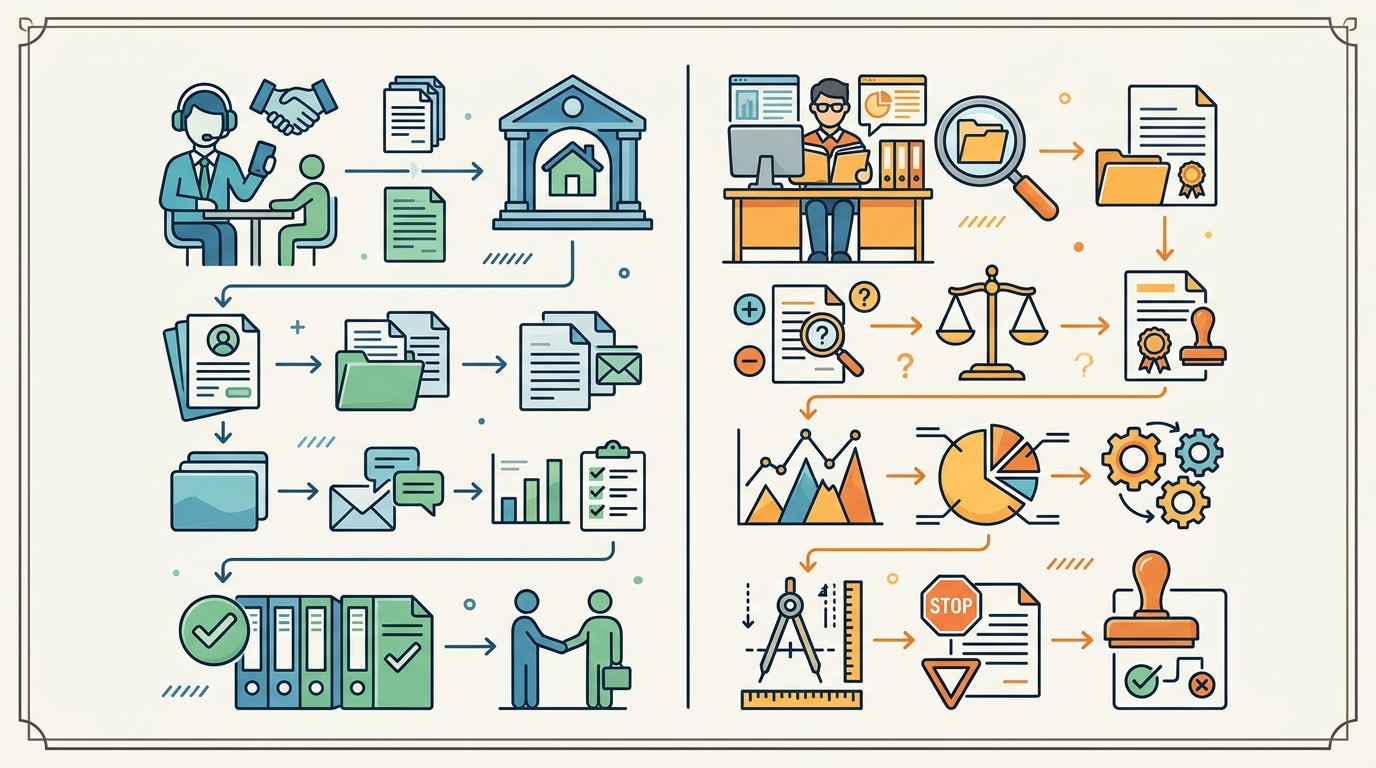
Loan Officer vs. Underwriter: Key Differences Explained
A loan officer works with applicants to put a credit application together and assesses their financial information to decide whether a loan can be approved (U.S. Bureau of Labor Statistics, 2025). An insurance underwriter reviews individual applications to evaluate the degree of risk involved and determine acceptance, then sets coverage amounts and premiums on the ones approved (O\NET OnLine, U.S. Department of Labor, undated; U.S. Bureau of Labor Statistics, 2025).
Wyatt Holloway · 7 min read
Breaking Into Human Resources: A Step-by-Step Guide
Human resources specialists recruit, screen and interview job applicants, place new hires into roles, and often handle compensation and benefits, training and employee relations (U.S. Bureau of Labor Statistics, 2026-10-29). The usual route in is a bachelor's degree in human resources, business, communications or a related field, plus experience in a support role such as human resources assistant or customer service representative before you move into a specialist job.
Marisol Tanaka-Reyes · 9 min read
How to Get Your Notary Public Commission
A notary public commission is a state appointment, not a national licence. You apply through your state's commissioning office — usually the Secretary of State — meet basic eligibility rules, and in some states complete a training course, sit an exam, pass a background check and file a surety bond before you are appointed.
Wyatt Holloway · 8 min readLatest guides
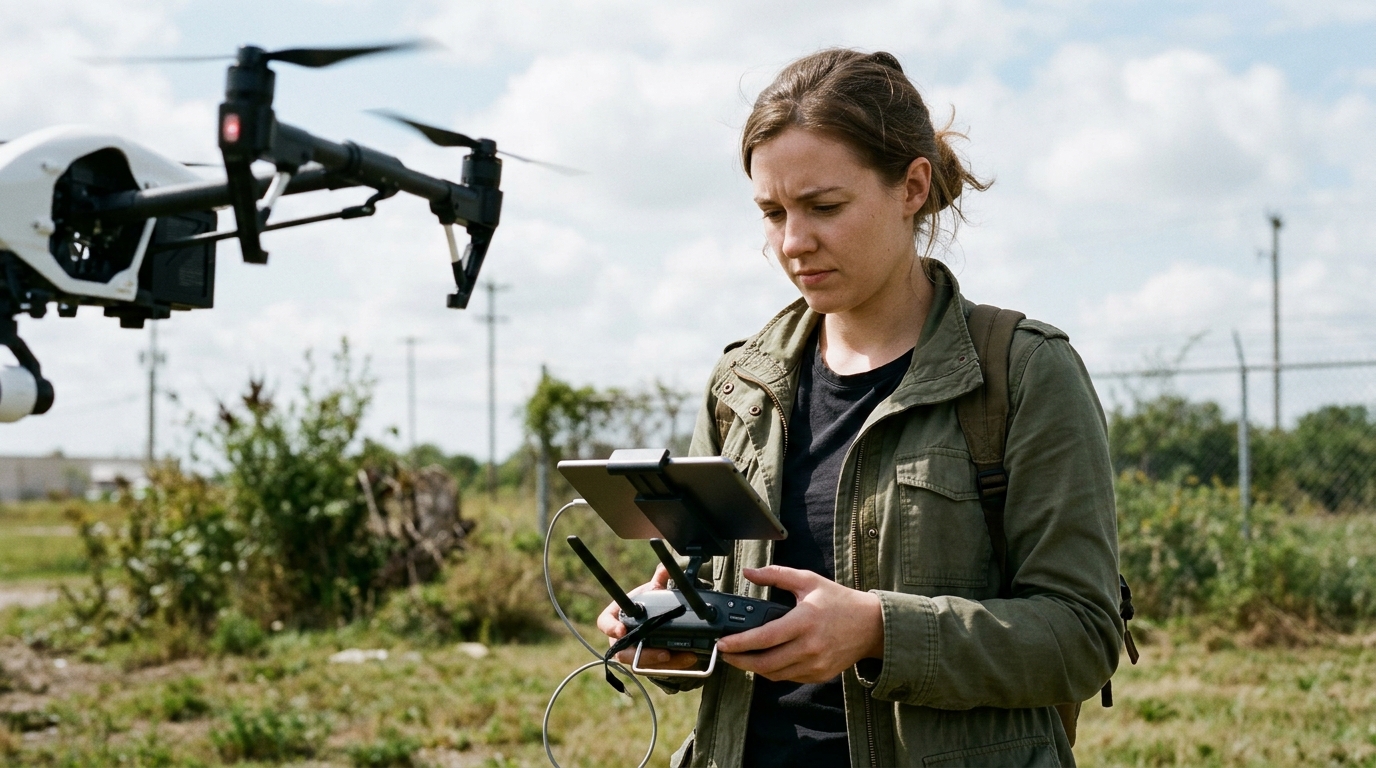
How to Become a Drone Pilot: Step-by-Step Guide
Becoming a drone pilot means passing the civil aviation regulator's test for the country you fly in, registering your aircraft, and then proving you can deliver usable data — survey images, inspection footage, mapping files — not just keep an aircraft in the air. In the United States that is the FAA's Part 107 remote pilot certificate; in the UK it is usually the CAA's General VLOS Certificate; in Canada, a Transport Canada basic or advanced certificate; in the EU, EASA open-category certificates.
Priya Chandrasekaran · 10 min read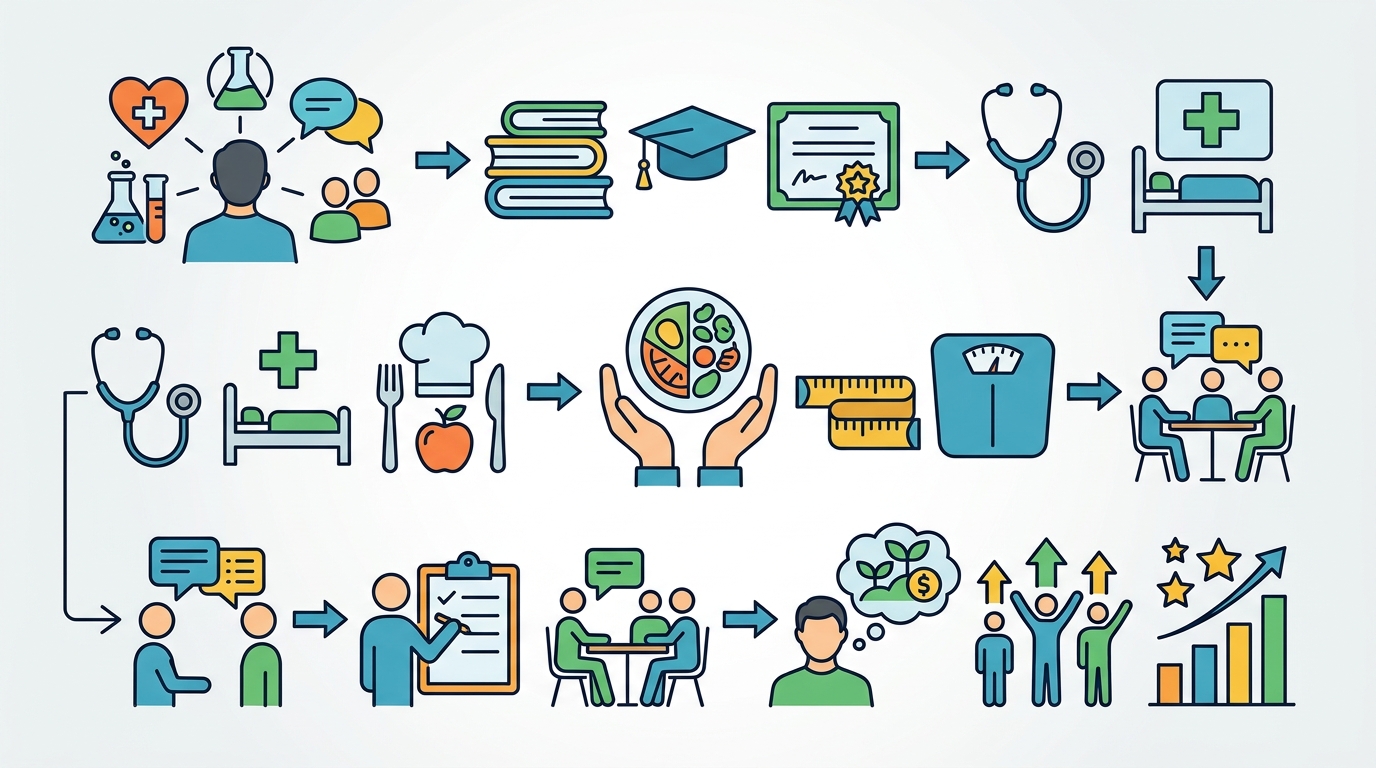
Dietitian: A Guide for Career Changers
Becoming a dietitian as a career changer is a structured, slow route rather than a quick pivot: in the United States the Commission on Dietetic Registration has required a minimum of a master's degree to sit the credentialing exam since 1 January 2024 (Tulane University School of Public Health and Tropical Medicine), on top of supervised practice and, in many states, licensure (U.S. Bureau of Labor Statistics, 2025). If you already hold a bachelor's degree in something unrelated, expect roughly three to six years from your first prerequisite class to your first paid dietitian role.
Wyatt Holloway · 9 min read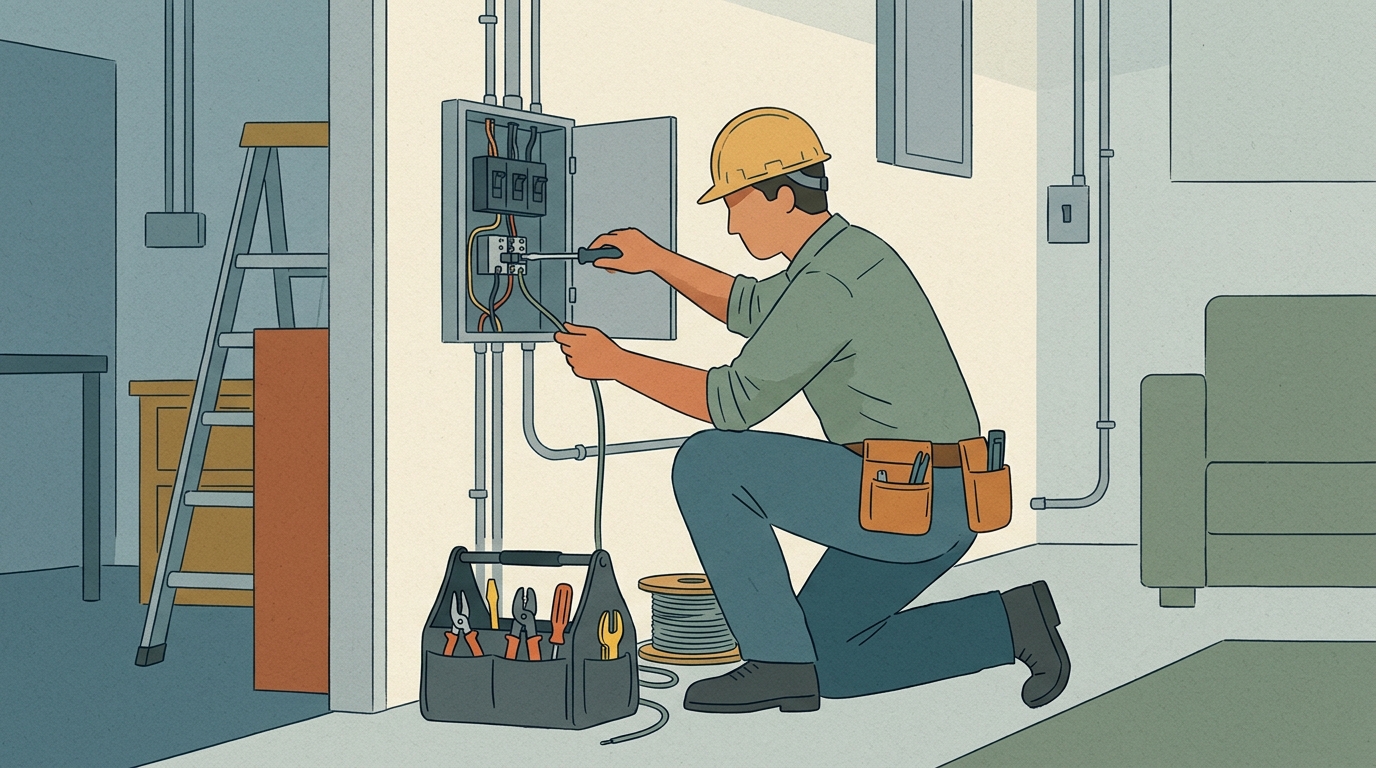
What Does an Electrician Do? A Day in the Life
An electrician installs, maintains and repairs electrical power, communications, lighting and control systems in homes, businesses and factories (U.S. Bureau of Labor Statistics, 2025). The day mixes physical installation work, fault-finding with test instruments, and paperwork proving the job meets the electrical code.
Noor Abdallah · 9 min read
Electrician vs. Plumber: Which Career Fits You?
Electricians and plumbers are both skilled trades you can enter without a four-year degree, learning through a paid apprenticeship rather than classroom study alone. The U.S. Bureau of Labor Statistics (2025) describes electricians as installing, maintaining and repairing electrical power, communications, lighting and control systems; plumbing work centres instead on water supply, drainage, waste and gas or heating pipework.
Priya Chandrasekaran · 8 min read
How to Switch to a Career in Supply Chain Management, Step by Step
Switching into supply chain management from another field usually takes 18 to 30 months from first research to a settled first year, and most of that time is spent while you are still drawing your current salary. The common route is to pick one recognised credential — CPIM or CSCP from ASCM, or CPSM from ISM — study it in evenings, pull supply chain tasks into your existing job, and only then apply out.
Desmond Okafor · 10 min read
Receptionist Cover Letter: Examples and How to Write One
A receptionist cover letter has one job: prove in under a page that you can handle a ringing phone, a waiting visitor and a half-full appointment diary at once. The strongest letters name the systems you have used, quantify the volume you handled, and mirror the advert's wording so a fast scan lands on the right words.
Desmond Okafor · 7 min read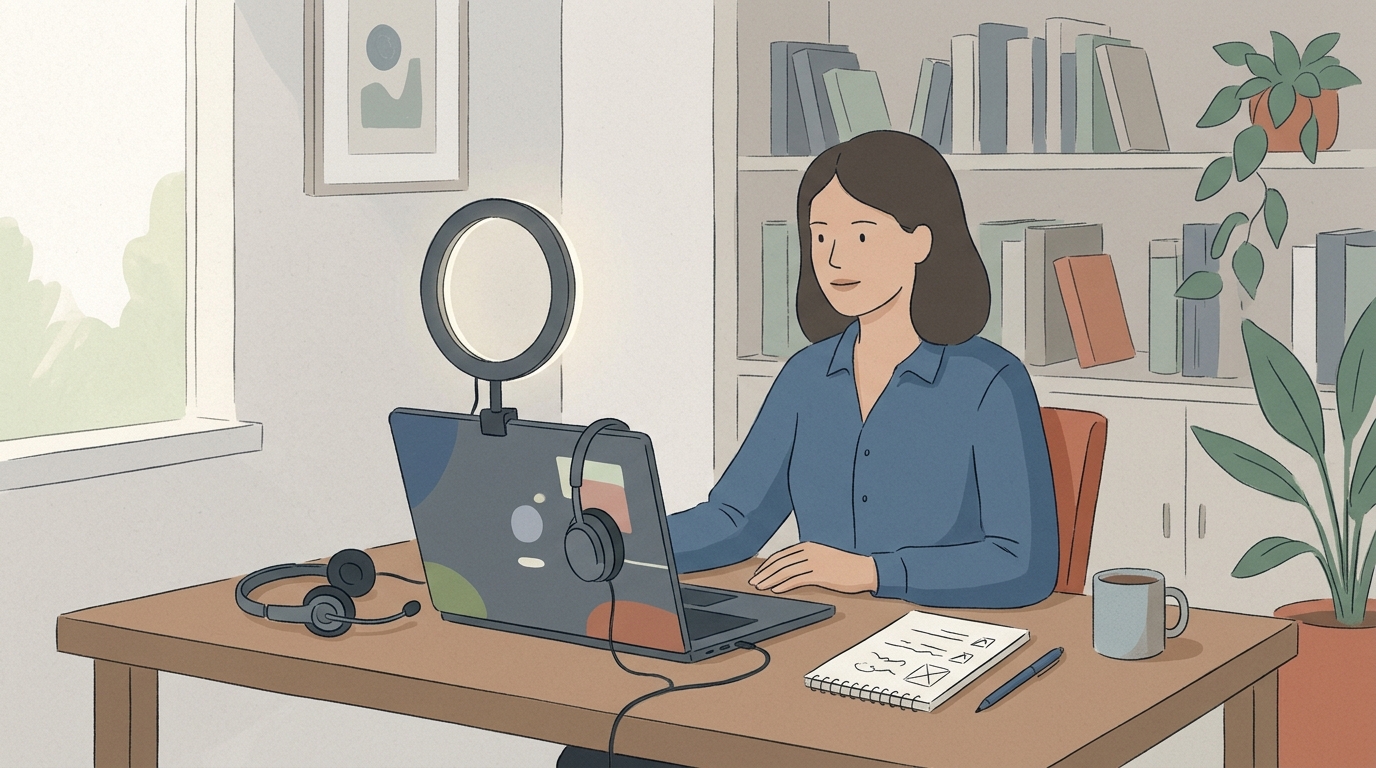
How to Prepare for a Video Interview
Preparing for a video interview means doing two jobs at once: rehearsing your answers, and making sure the technology, lighting and background do not get in the way of them. Most of that work is physical and checkable — test the camera and microphone, pick a plain background, log in early, and keep the interviewer's phone number on paper.
Priya Chandrasekaran · 7 min read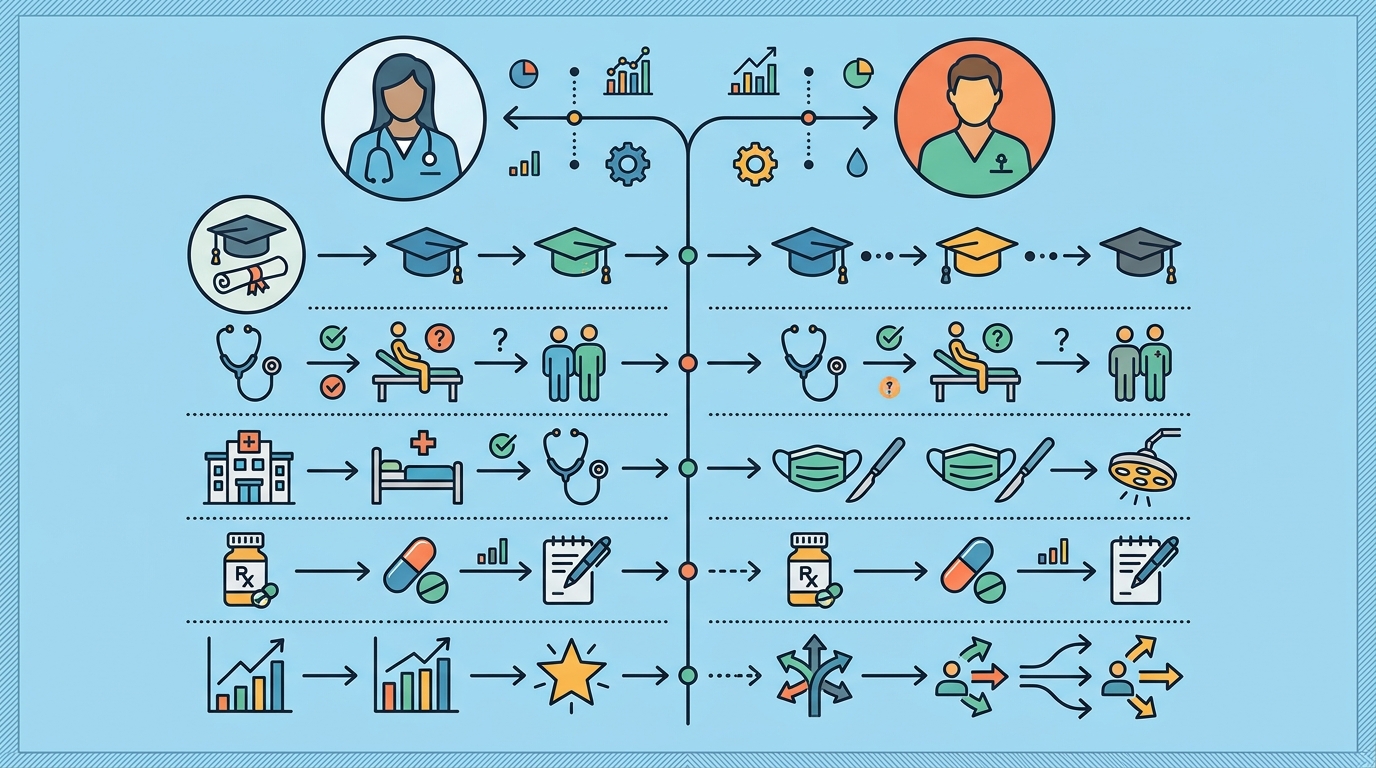
Nurse Practitioner vs. Physician Assistant: Which Career Path Is Right for You?
Nurse practitioners and physician assistants both diagnose, treat and prescribe, but they arrive through different training systems and are regulated differently. NPs qualify through nursing: a registered nursing license first, then an accredited graduate program, a national certification exam and an APRN license (U.S. Bureau of Labor Statistics). PAs qualify through a medical-model master's program of at least two years of postbaccalaureate study, then state licensure and the PA-C credential (U.S. Bureau of Labor Statistics).
Wyatt Holloway · 8 min readMost read
- How to Become a Claims AdjusterDesmond Okafor · 10 min read
- Choosing Between Event Planning and Hospitality Management as a Career ChangerWyatt Holloway · 7 min read
- Medical Biller Job Description: Duties, Skills, and SalaryWyatt Holloway · 8 min read
- How to Get Your Commercial Drone Pilot LicenseMarisol Tanaka-Reyes · 8 min read
- What Does a Social Worker Do? A Day in the LifePriya Chandrasekaran · 8 min read
Career Paths
- How to Become a Drone Pilot: Step-by-Step Guide
- Nurse Practitioner vs. Physician Assistant: Which Career Path Is Right for You?
- What Does an Actuary Do? Duties, Skills, and Salary Explained
- Loan Officer vs. Financial Analyst: Pay, Duties, and Day-to-Day Differences
Job Descriptions
- Loan Officer vs. Underwriter: Key Differences Explained
- Breaking Into Human Resources: A Step-by-Step Guide
- What Does an Electrician Do? A Day in the Life
- Electrician vs. Plumber: Which Career Fits You?
How to Get Started
- How to Get Your Notary Public Commission
- How to Get Your Commercial Drone Pilot License
- How to Become a Home Health Aide With No Experience
- How to Become a Flight Attendant Without a Degree
Salaries & Pay
- Phlebotomist vs. Medical Assistant Salary: Which Pays More?
- Project Manager vs. HR Generalist Salary: Which Pays More?
- Flight Attendant Pay: Average Salary, Range, and What Affects It
- How to Negotiate a Higher Salary as a Customer Service Representative
Resumes & Interviews
- Receptionist Cover Letter: Examples and How to Write One
- How to Prepare for a Video Interview
- How to Prepare for a Phone Interview
- Teacher Interview Questions: What to Expect and How to Prepare
Changing Careers
- Dietitian: A Guide for Career Changers
- How to Switch to a Career in Supply Chain Management, Step by Step
- Choosing Between Event Planning and Hospitality Management as a Career Changer
- Is Becoming an Occupational Therapist a Good Career Change?