
Changing Careers
Changing Careers guides on World Career Path.

Dietitian: A Guide for Career Changers
Becoming a dietitian as a career changer is a structured, slow route rather than a quick pivot: in the United States the Commission on Dietetic Registration has required a minimum of a master's degree to sit the credentialing exam since 1 January 2024 (Tulane University School of Public Health and Tropical Medicine), on top of supervised practice and, in many states, licensure (U.S. Bureau of Labor Statistics, 2025). If you already hold a bachelor's degree in something unrelated, expect roughly three to six years from your first prerequisite class to your first paid dietitian role.
Wyatt Holloway · 9 min read
How to Switch to a Career in Supply Chain Management, Step by Step
Switching into supply chain management from another field usually takes 18 to 30 months from first research to a settled first year, and most of that time is spent while you are still drawing your current salary. The common route is to pick one recognised credential — CPIM or CSCP from ASCM, or CPSM from ISM — study it in evenings, pull supply chain tasks into your existing job, and only then apply out.
Desmond Okafor · 10 min read
Choosing Between Event Planning and Hospitality Management as a Career Changer
Event planning and hospitality management overlap in reputation and diverge in practice. Event planning is project work with heavy peaks: you meet clients, solicit bids from venues and suppliers, and run the event onsite (U.S. Bureau of Labor Statistics, 2025). Lodging management is running a building that never closes — inspecting rooms and grounds, hiring and training staff, setting budgets and approving expenditures (U.S. Bureau of Labor Statistics, 2025).
Wyatt Holloway · 7 min read
Is Becoming an Occupational Therapist a Good Career Change?
Occupational therapy can be a strong second career if you want hands-on clinical work with a rehabilitation focus, but it is not a quick switch. In the United States the typical entry-level requirement is a master's degree in occupational therapy, every state requires a licence, and you must pass the qualifying exam before you can use the title Occupational Therapist Registered (U.S. Bureau of Labor Statistics, 2025).
Marisol Tanaka-Reyes · 9 min read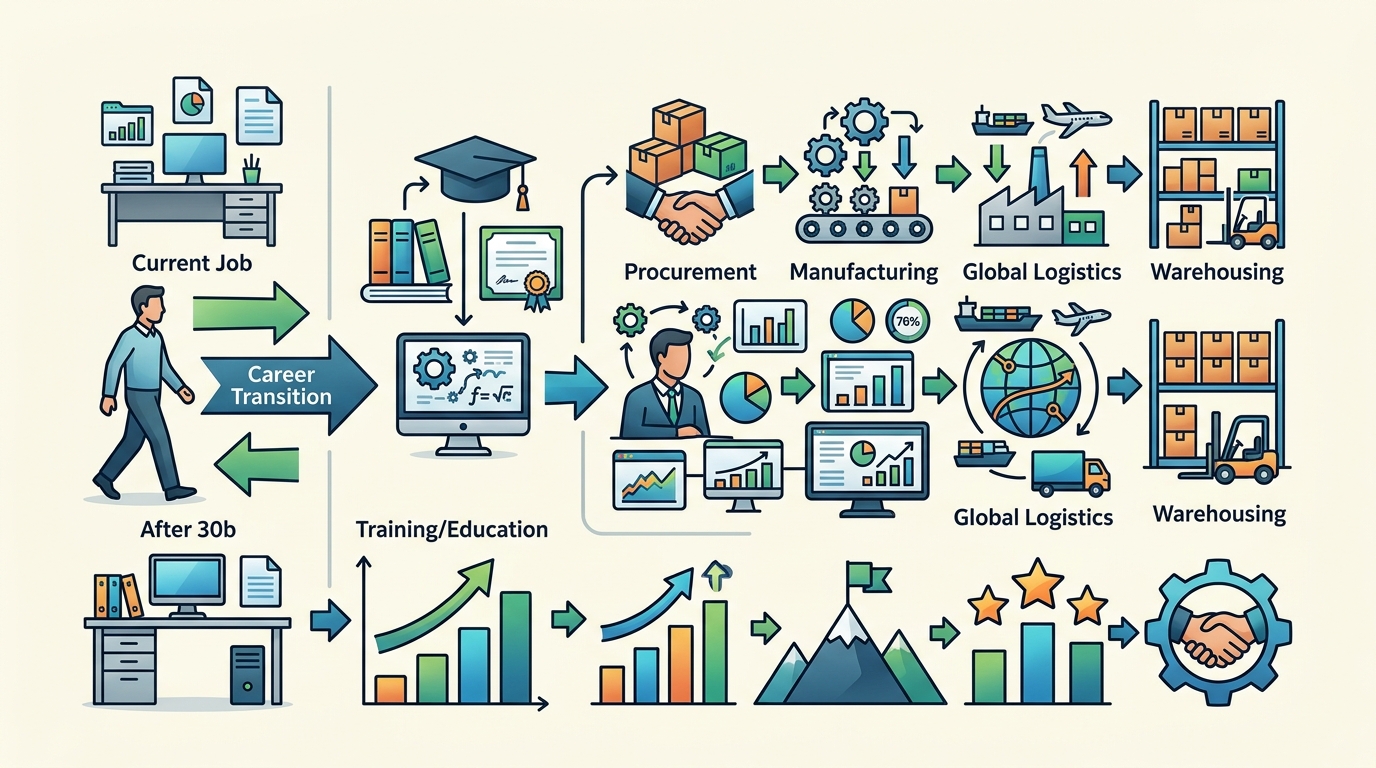
So You Want to Become a Supply Chain Manager After 30
Yes, you can move into supply chain management in your thirties, forties or fifties — but almost nobody walks straight into the manager title. The usual route is a coordinator, planner or analyst role first, built on logistics work you already do in your current job, with a certification added alongside it. Plan on 12 to 24 months from first serious study to a supply chain job title, and on entering a level or two below your current seniority.
Noor Abdallah · 9 min read
Speech-Language Pathologist vs. Occupational Therapist: Which Career Change Is Right for You
Speech-language pathology and occupational therapy both ask for a master's degree and a state licence, so neither is a quick exit from your current job. The real differences are the caseload you'd carry, how hard the work is on your body, and whether you want a school-year calendar or a year-round clinical one.
Priya Chandrasekaran · 8 min read
Wind Turbine Technician Career Change Roadmap for Working Adults
Switching into wind turbine technician work from another job realistically takes about 12 to 24 months from first research to first day on site, depending on whether you take a short certificate, an associate degree, or an apprenticeship — apprenticeships run longer than classroom routes (NES Fircroft, undated). The entry bar is a postsecondary nondegree award plus long-term on-the-job training once you are hired, and work experience in a related occupation is not required to enter the role (U.S. Bureau of Labor Statistics, 2025), which is why people arrive from vehicle repair, HVAC, the military and even retail management.
Wyatt Holloway · 11 min read
Executive Assistant vs. Virtual Assistant: A Second-Career Comparison
An executive assistant is an employee supporting senior leaders inside one organisation; a virtual assistant is a self-employed contractor serving several clients remotely on hourly, per-project or retainer terms. The executive assistant route gives you a published salary band and benefits but asks you to fit someone else's calendar; the virtual assistant route gives you control over hours and clients but makes you responsible for finding work, pricing it and covering slow months.
Noor Abdallah · 8 min read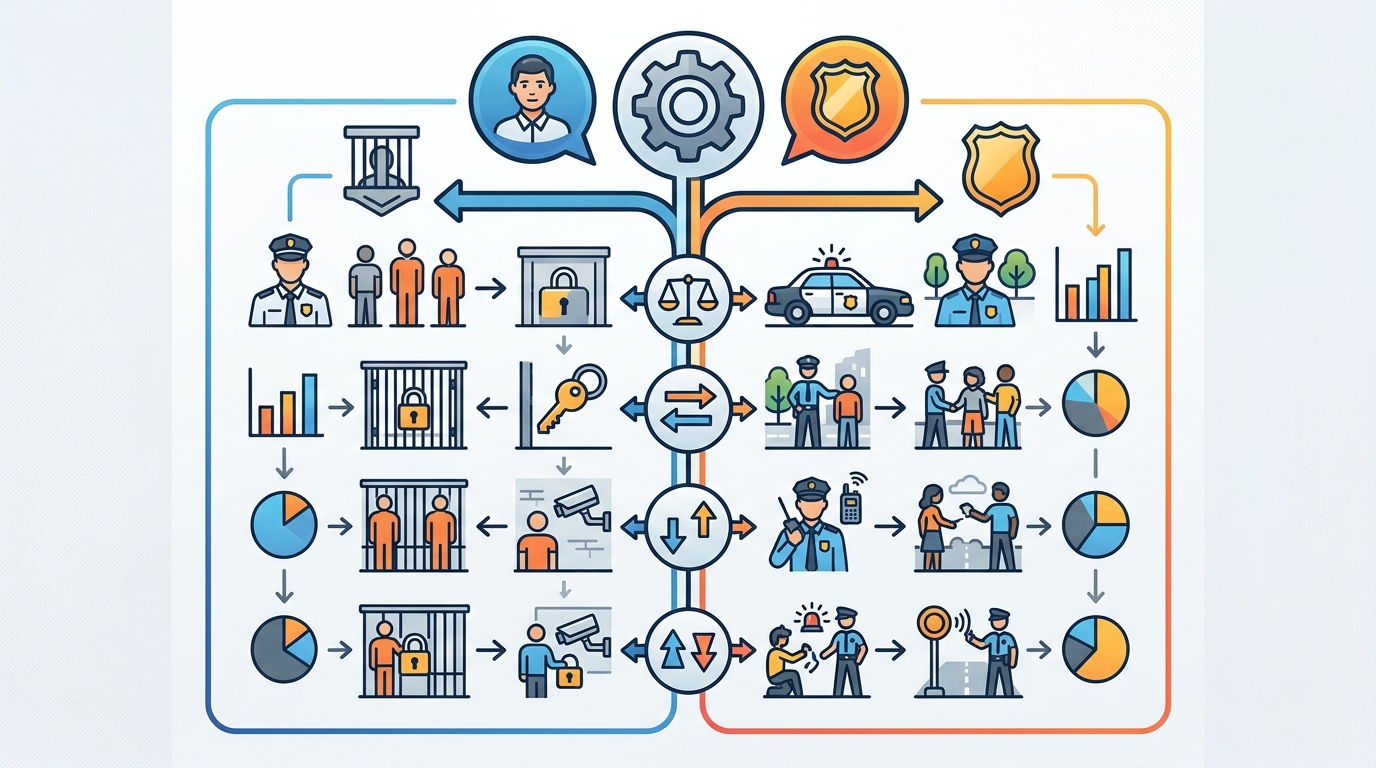
Correctional Officer or Police Officer: A Second-Career Comparison
Both jobs hire career changers without a four-year degree, both start with an academy, and both run on round-the-clock shifts. The split is pay and access: police and detectives had a median annual wage of $77,310 in May 2025, against $58,850 for correctional officers and bailiffs (U.S. Bureau of Labor Statistics, 2025), while corrections typically asks only for a high school diploma and no related work experience (U.S. Bureau of Labor Statistics, 2025).
Marisol Tanaka-Reyes · 8 min read
Your Plan for Changing Careers to Dietetics
Dietetics is an exam-gated, regulated profession, so moving into it from another job is a three-to-five-year project, not a short course. In the United States, anyone sitting the registration examination has needed a graduate degree since 1 January 2024 (Commission on Dietetic Registration, 2024); in the United Kingdom you must complete a programme approved by the Health and Care Professions Council to register and use the title (Coursera, undated).
Priya Chandrasekaran · 10 min read
Switching Careers to Military-to-Civilian Transition Roles: What You Need to Know
Moving from a military career into civilian work is a project with a clock on it: the paperwork, the training and the job search all have to happen while you are still serving, or in the months immediately after. Most people who do it well start 12 to 24 months before their separation date, finish Transition Assistance Program (TAP) requirements early, and line up one civilian credential that matches the work they actually want.
Desmond Okafor · 10 min read
Is Becoming a Wind Turbine Technician a Good Career Change?
For a lot of people switching in their 30s, 40s and 50s, wind turbine technician work is a realistic change: the usual entry requirement is a postsecondary nondegree award rather than a degree (U.S. Bureau of Labor Statistics, 2025), and college certificate programmes run in months — about one year full-time at Spokane Community College, or roughly 28 to 32 weeks part-time for the George Brown College Wind Turbine Technician Certificate in Canada.
Priya Chandrasekaran · 10 min read
How to Switch to a Career in Speech-Language Pathology, Step by Step
Moving into speech-language pathology is a multi-year change, not a short retrain. In the United States the usual entry-level qualification is a master's degree, and every state requires speech-language pathologists to be licensed, with requirements that vary by state (U.S. Bureau of Labor Statistics, 2025). Certification as a CCC-SLP additionally requires a master's from a program accredited by the Council on Academic Accreditation in Audiology and Speech-Language Pathology (American Speech-Language-Hearing Association, undated).
Noor Abdallah · 10 min read