How to Switch to a Career in Supply Chain Management, Step by Step
A realistic 18-to-30-month route out of your current job and into planning, buying or logistics work, including what to study, what it costs and when to resign.
Quick answer
- Plan for 18-30 months end to end: roughly 12-15 months while still employed, then a first year in the new role.
- Costs are exam-led: CPIM needs one comprehensive exam (ASCM Twin Cities Chapter, undated), CPSM needs three (Medium, author iqra.siddique, undated), while a free ASCM ID is the only requirement to begin the CSCP process (ASCM Jobs Career Resources, undated).
- Biggest risk is the pay gap: hold a 6-9 month savings runway and assume 12-24 months before your earnings return to your previous level.
Switching into supply chain management from another field usually takes 18 to 30 months from first research to a settled first year, and most of that time is spent while you are still drawing your current salary. The common route is to pick one recognised credential — CPIM or CSCP from ASCM, or CPSM from ISM — study it in evenings, pull supply chain tasks into your existing job, and only then apply out.
Expect a pay dip of some size in the first role, because you are usually entering as a planner, buyer or analyst rather than at the level you reached in your old field. Pay structures differ sharply by country, employer and sector, so check your national statistics source — BLS OEWS in the US, ONS ASHE in the UK, Statistics Canada, or the ABS in Australia — rather than any figure in a job advert.
The Transition Timeline
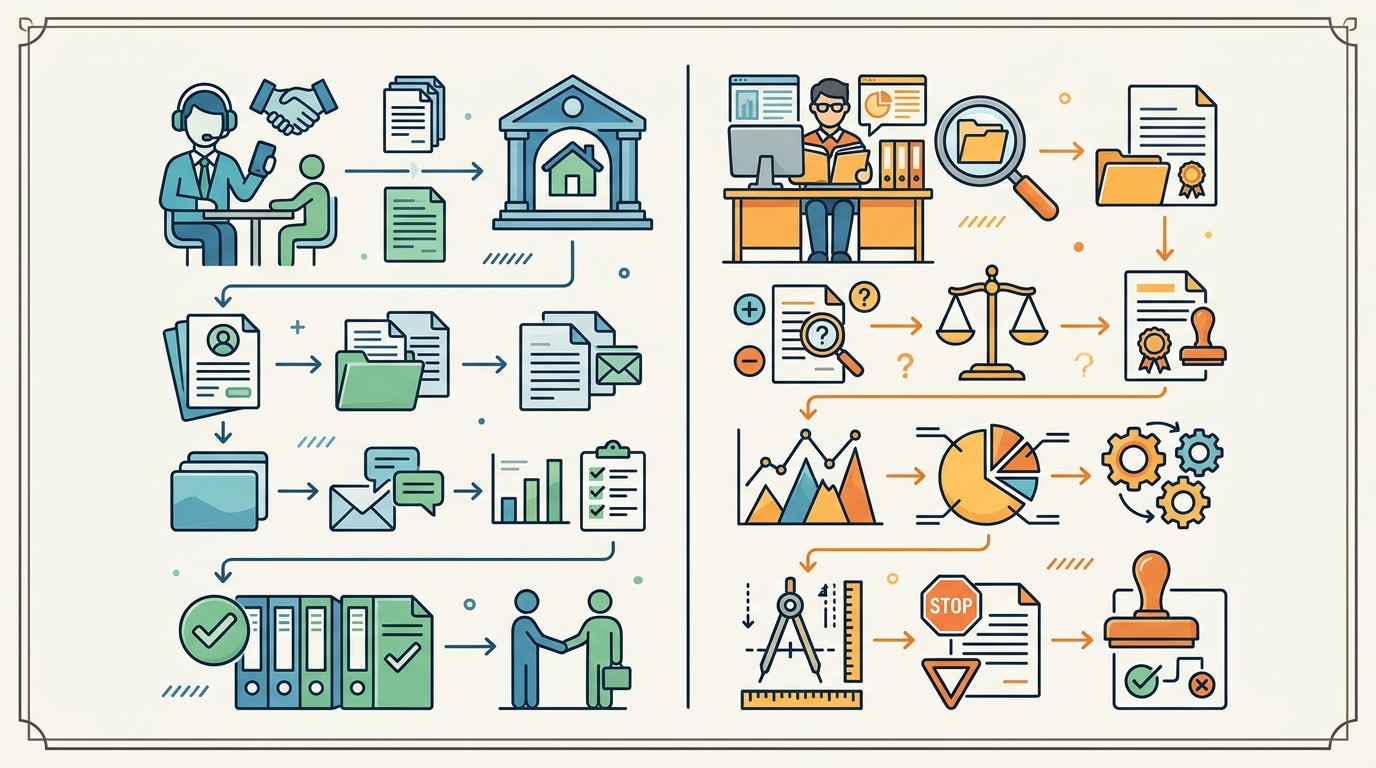
Most career changers move through six stages. The month ranges overlap on purpose — stages run in parallel while you are still employed.
- Months 1-2 — Still employed, researching. You read job adverts for planner, buyer, demand planner, logistics coordinator and materials controller roles in your own region, and work out which of the three main credentials fits: CPIM (production and inventory), CSCP (end-to-end supply chain), or CPSM (procurement and supply management). You check pay bands through your national statistics source, not through recruiters.
- Months 2-6 — Still employed, studying. You register, choose a study path, and start. For CPIM the chapter route offers either an instructor-led class sponsored by the chapter or the CPIM Learning System for self-study, which includes books and a 1-year licence for online study tools (ASCM Twin Cities Chapter, undated). That 1-year licence sets your study clock.
- Months 5-10 — Still employed, moving sideways. You volunteer for anything touching inventory, purchase orders, supplier queries, forecasting or stock counts in your current job. This is the stage that creates the evidence on your CV. If you are 45-60 and worried about being screened out, this is where you fix it: internal supply chain experience, however small, moves you from "career changer" to "someone already doing part of the job".
- Months 9-15 — Still employed, certified and applying. You sit the exam, update your CV around supply chain language, and apply. CPIM requires passing one comprehensive exam (ASCM Twin Cities Chapter, undated); CPSM requires passing three (Medium, author iqra.siddique, undated), so a CPSM route lengthens this stage.
- Months 14-20 — The switch window. Offers, notice period, and in some cases a 1-3 month income gap. If your first role is internal, this stage can collapse to a few weeks.
- Months 18-32 — First year in the new role. You learn one ERP or planning system properly, run your first full planning or procurement cycle, and start recovering the pay you gave up. Expect 12-24 months before your earnings match your previous role, longer if you were senior.
A realistic total is 18-30 months. An internal transfer inside your current employer can shorten it to 9-12 months; a full switch with three CPSM exams and a job search in a thin local market can stretch to 36.
Step-by-Step Plan
- While still employed (Months 1-2): Write down the exact job titles you are aiming for from live adverts in your own country, and list the systems, certifications and years of experience they ask for. Register the free ASCM ID, since it is the only requirement to begin the CSCP certification process (ASCM Jobs Career Resources, undated) and costs you nothing to hold.
- While still employed (Months 1-2): Audit your transferable work. A retail store manager has done stock replenishment, shrinkage control and supplier delivery disputes. A restaurant general manager has run perishable inventory and par levels. A military logistics NCO has done demand forecasting under constraint. A bank operations clerk has done exception handling and reconciliation — close to what a planner does with order discrepancies. An elementary teacher has done scheduling, procurement of supplies and vendor chasing on a small budget. Name those tasks in supply chain words.
- While still employed (Months 2-3): Choose one credential and one study path. For CPIM, that means either the chapter-sponsored instructor-led class or buying the CPIM Learning System for self-study (ASCM Twin Cities Chapter, undated). Instructor-led suits you if you need a fixed weekly commitment alongside a full-time job.
- While still employed (Months 2-6): Block 6-8 study hours a week and protect them. If you bought the Learning System, your 1-year online licence (ASCM Twin Cities Chapter, undated) is the deadline that matters — plan to sit the exam inside that window, not after it.
- While still employed (Months 5-10): Ask your manager for one supply chain task per quarter: a supplier review, a stock-count cycle, a reorder-point rebuild, a freight invoice audit. Learn one ERP module and advanced Excel — pivot tables, XLOOKUP, Power Query — because planner interviews test spreadsheet work directly.
- While still employed (Months 9-12): Sit the exam. CPIM is one comprehensive exam (ASCM Twin Cities Chapter, undated), and re-takes are priced separately for members and non-members (ASCM Twin Cities Chapter, undated), so budget for the possibility rather than being surprised by it.
- While still employed (Months 10-15): Apply. Target manufacturers, distributors, hospitals, grocery chains and third-party logistics firms — sectors that hire planners constantly. Apply internally first; an internal move at your current pay band is the cheapest version of this switch.
- At resignation (Months 14-20): Do not resign before a signed offer unless your savings checklist below is fully ticked. Confirm the start date in writing and check how any employer-tied benefits, pension contributions or notice obligations work in your country before you give notice.
- After leaving (Months 18-32): In the first 90 days, map your new employer's full order-to-delivery flow on one page and get it corrected by three colleagues. In months 6-12, take on one measurable project — a service-level improvement, a stock reduction, a supplier consolidation — and record the numbers. That project is what gets you to the next pay step.
Before You Quit Your Job Checklist
Each item is a yes or no. If any answer is no, you are not ready to resign.
- I have 6-9 months of essential living costs saved in cash, separate from retirement savings.
- I have confirmed in writing whether my target employers require a specific credential, and whether a degree is required at all. Without a bachelor's degree, CPSM certification requires a stated amount of full-time professional supply management experience (Medium, author iqra.siddique, undated), so I know which route applies to me.
- I have either passed my exam or booked a dated sitting. CPIM is one comprehensive exam (ASCM Twin Cities Chapter, undated); CPSM is three (Medium, author iqra.siddique, undated).
- I have checked whether any role I am applying for needs a licence or clearance in my country — customs broker licensing, dangerous goods handling, or a CDL Class A if the role includes driving — and I know which body issues it where I live.
- I have a backup income plan that starts within 14 days of leaving: contract work, part-time hours in my old trade, or a return-to-work agreement with my current employer.
- I have named a specific pay figure I will accept for the first role, checked against my national statistics source rather than a recruiter's estimate, and tested that my household budget survives it for 24 months.
- I have at least three examples of supply chain work I have personally done, with numbers attached, that I can describe in an interview.
- I have confirmed how my health cover, pension or employer benefits change on the day I leave, using my employer's own documents.
- I have had at least three conversations with people doing the job I want in my country, and none of them told me the credential I chose is irrelevant to that market.
- I have a signed offer, or I have deliberately decided to accept an income gap of a stated length — 1, 2 or 3 months — and I have the cash to cover it.
Certifications and Costs
Prices are set by the issuing bodies and by whether you hold membership, and they change. Treat the provider's current published price list as the only reliable figure.
| Requirement | Provider or Path | Cost | Time to Complete |
|---|---|---|---|
| ASCM ID (account to begin certification) | ASCM, online registration | Free — a free ASCM ID is the only requirement to begin the CSCP certification process (ASCM Jobs Career Resources, undated) | Under an hour |
| CPIM Version 8.0 exam | ASCM, one comprehensive exam | Exam fee is listed at separate member and non-member prices (ASCM Twin Cities Chapter, undated); re-takes are priced separately for members and non-members | 4-9 months of part-time study, one exam sitting |
| CPIM preparation — instructor-led | Class sponsored by a local ASCM chapter (ASCM Twin Cities Chapter, undated) | Chapter class fee, published by the chapter | Typically one course cycle alongside full-time work |
| CPIM preparation — self-study | CPIM Learning System, including books and a 1-year licence for online study tools (ASCM Twin Cities Chapter, undated) | Purchase price published by the provider | Up to the 1-year licence window |
| CSCP certification | ASCM | Exam and materials priced by ASCM; registration itself begins with the free ASCM ID | 6-12 months part-time |
| CPSM certification | ISM, three exams (Medium, author iqra.siddique, undated) | Exam fees are listed per exam for ISM members versus non-members, with a total member and non-member cost for all three (Medium, author iqra.siddique, undated) | 9-18 months part-time across three sittings |
| Spreadsheet and ERP skills | Vendor documentation, employer-provided training, public library access | Free to low cost | 4-8 weeks of evenings |
The cheapest honest version of this switch is: free ASCM ID, free spreadsheet practice, one exam fee, and the study materials for it. The most expensive is three CPSM exams plus re-takes plus a non-member rate — which is why joining the relevant body before you book anything usually pays for itself.
Frequently asked questions
Am I too old to switch into supply chain at 50?
Age bias is real in the 45-60 band, and it usually shows up as being screened out for "lack of relevant experience" rather than for age itself. The fix sits in Months 5-10 of the timeline: pull supply chain tasks into your current job so you apply as someone already doing part of the work. It helps that experience counts formally — without a bachelor's degree, CPSM certification is available on the basis of a stated amount of full-time professional supply management experience (Medium, author iqra.siddique, undated), which rewards long work histories rather than penalising them.
Will I have to take a pay cut?
Usually yes, because most changers enter as a planner, buyer or coordinator rather than at the seniority they held before. Plan for 12-24 months before your earnings return to your previous level, and use the checklist item that sets a specific minimum acceptable salary — tested against your national statistics source — before you accept anything. An internal move inside your current employer is the one route that often avoids the cut entirely.
Which certification should I start with?
If your target roles are production, inventory or materials planning, CPIM is the usual first step and needs one comprehensive exam (ASCM Twin Cities Chapter, undated). If you are aiming at procurement and sourcing, CPSM is the fit, but it needs three exams (Medium, author iqra.siddique, undated), which adds roughly 6 months to the Months 2-6 study stage. Either way, register the free ASCM ID first (ASCM Jobs Career Resources, undated) so you can see current pricing before committing money.
Can I do this without quitting my job?
Most of it, yes — roughly 12 to 15 of the 18-30 months happen while you are still employed and paid. The only stage that forces a decision is Months 14-20, and even then you should not resign until every item on the checklist is ticked, including the 6-9 month savings runway and a backup income plan that starts within 14 days of leaving.
Sources
- ASCM Twin Cities Chapter — CPIM Certification
- ASCM Jobs (Career Resources) — CSCP Certified Supply Chain Professional: A Practical Guide

Written by
Desmond writes about the mechanics of job searching: resumes, interviews, the long silence after applying. He's fascinated by how much of getting hired depends on luck dressed up as skill.