Switching Careers to Military-to-Civilian Transition Roles: What You Need to Know
A practical look at timing your separation, using SkillBridge and TAP, pricing certifications, and planning for the months civilian pay may not cover.
Quick answer
- A SkillBridge programme must not run more than 180 days and must sit inside your last 180 days on active duty under DoDI 1322.29, and you need TAP completion plus written approval from your unit commander before you start (U.S. Department of War SkillBridge Program, undated).
- Price the credential before you commit: CompTIA Security+ (SY0-701) costs $425 from CompTIA's official store (DestCert, 2025), and the PMP exam costs $675 for non-members or $425 for Project Management Institute members (Coursera, undated).
- The Department continues your salary, allowances and benefits while you train with an authorised SkillBridge partner (U.S. Department of War SkillBridge Program, undated) — that support ends at separation, so build savings for the months after it.
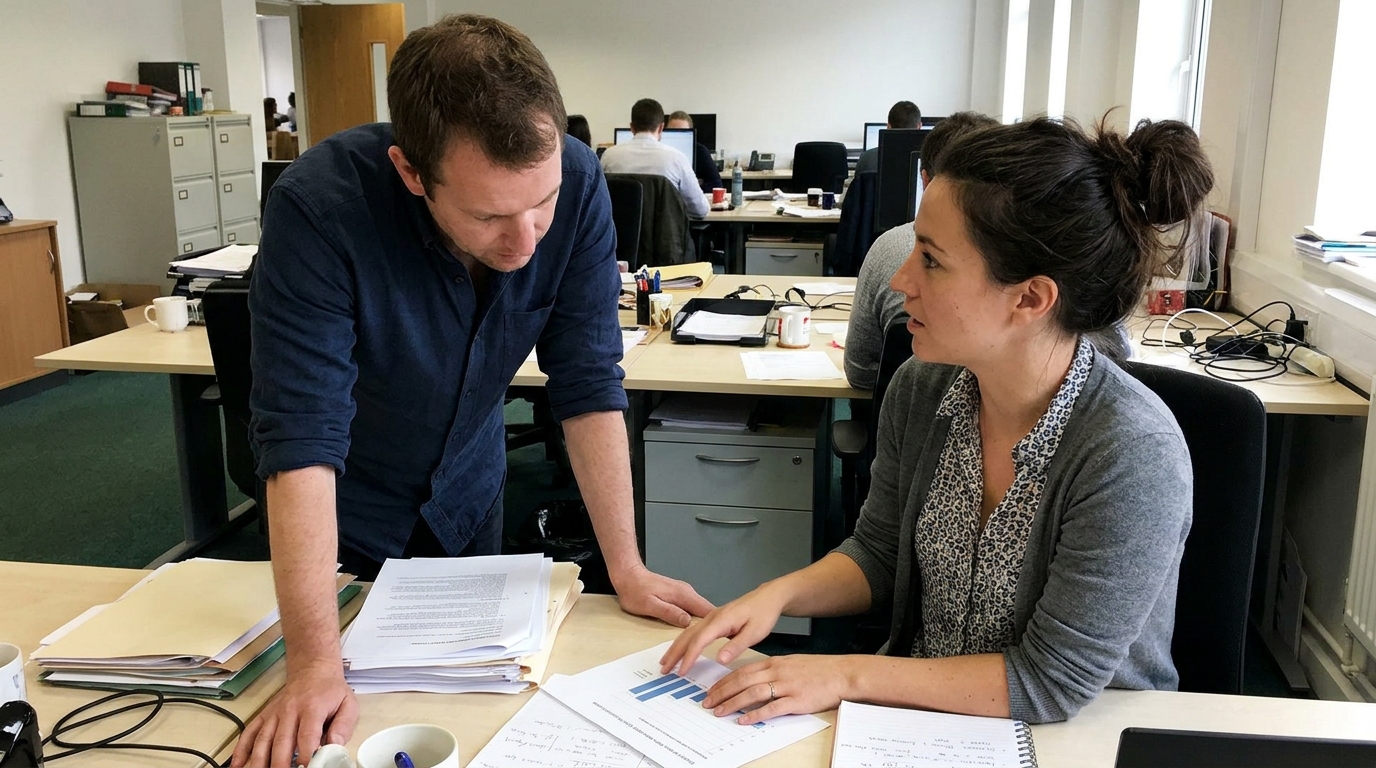
Moving from a military career into civilian work is a project with a clock on it: the paperwork, the training and the job search all have to happen while you are still serving, or in the months immediately after. Most people who do it well start 12 to 24 months before their separation date, finish Transition Assistance Program (TAP) requirements early, and line up one civilian credential that matches the work they actually want.
This guide uses United States programmes and data, because the schemes named here — SkillBridge, TAP and VA Veteran Readiness and Employment — are run by the U.S. Department of War and the VA. If you served elsewhere, the shape of the transition is similar but the programmes are not; check your own defence ministry's resettlement or transition office for the equivalents.
What the Work Actually Involves
Think of the transition itself as your second job for a year. In a typical week during your final 12 months, you might spend 6 to 8 hours in TAP workshops and counselling sessions, 2 to 3 hours rewriting your resume so that "platoon sergeant" reads as "operations supervisor responsible for staffing, training and equipment accountability", and 3 to 5 hours on certification study. Add two or three 30-minute calls with people doing the civilian job you want — that is where you learn which words recruiters in that industry actually use.
If you land a SkillBridge placement, the rhythm changes completely. For up to 180 days you work a normal civilian week at an authorised partner organisation — standups, ticket queues, warehouse shifts, clinic rotations — while the Department continues your salary, allowances and benefits (U.S. Department of War SkillBridge Program, undated). You are effectively a full-time employee somewhere that has not yet paid you anything, which is why placements so often end in an offer.
The first civilian role itself usually looks flatter than military work. A logistics coordinator might spend 90 minutes a morning on carrier emails, two hours reconciling shipment exceptions, and the afternoon in meetings where nobody outranks anybody. An IT support analyst might spend the first hour of each shift triaging the ticket queue before anything else gets touched. Expect less authority than you had, more negotiation, and a slower decision cycle — that adjustment, not the technical work, is what most people find hardest in month one.
Pay for civilian roles is usually structured as an annual salary plus benefits, or hourly with overtime in trades and logistics. Check current figures for the specific occupation and metro area in the U.S. Bureau of Labor Statistics Occupational Employment and Wage Statistics tables before you accept anything.
Who This Career Change Suits
- Logistics and supply NCOs — you already run inventory accuracy, carrier coordination and audit trails, which is the core of civilian supply chain and warehouse operations work.
- Signals, cyber and communications specialists — you have handled networks under real constraints, and CompTIA Security+ formalises what you already do for hiring filters.
- Aviation and vehicle maintenance technicians — documented maintenance under regulated inspection regimes maps directly onto aviation MRO, heavy equipment and manufacturing maintenance roles.
- Hospital corpsmen and combat medics — triage, patient documentation and working inside a clinical hierarchy transfer to EMT, surgical tech and clinic operations roles, though civilian scope of practice is set by state licensing boards, not by your military training.
- Platoon sergeants and first sergeants — scheduling, discipline, counselling and readiness reporting are supervision; the civilian version is operations management with a budget line instead of a readiness board.
- Military police and security forces — report writing, evidence handling and de-escalation suit corporate security, fraud investigation and compliance work.
- Personnel and admin specialists — records, entitlements and onboarding are HR operations by another name.
- Anyone with a service-connected disability who needs a different kind of work than they did in uniform — in August 2025, 50 percent of Gulf War-era II veterans had a service-connected disability compared with 34 percent of all veterans (U.S. Bureau of Labor Statistics, 2026), and VA's Veteran Readiness and Employment programme exists specifically to retrain this group.
Transferable Skills That Carry Over
| Prior Career | Skill | How It Applies Here |
|---|---|---|
| Supply sergeant / logistics NCO | Inventory accountability and property book management | Warehouse management systems, cycle counting, vendor and carrier coordination in civilian supply chain roles |
| Aviation maintenance technician | Documented maintenance under inspection regimes | MRO, manufacturing maintenance and quality assurance jobs where every task has a signed record |
| Combat medic or hospital corpsman | Triage, patient handover, clinical documentation | EMT, surgical tech, clinic coordinator and medical device roles, subject to state licensing requirements |
| Signals or cyber operator | Network monitoring, incident handling, security discipline | SOC analyst and IT support roles; Security+ (SY0-701) is the credential hiring filters usually look for |
| Platoon sergeant / senior NCO | Supervising, training and counselling teams | Shift supervision, operations management and field service leadership; the 35 hours of project management education the PMP requires also sits well on this experience (KnowledgeHut, 2026) |
| Military police | Report writing, evidence chain, de-escalation | Corporate security, loss prevention, insurance investigation and compliance teams |
| Personnel / admin specialist | Records, entitlements, onboarding processes | HR operations, payroll and benefits administration |
How to Get Started
- Eighteen months out, translate your specialty. Run your occupational code through My Next Move for Veterans, the ONET tool from the U.S. Department of Labor Employment and Training Administration, which provides streamlined career search for veterans moving into the civilian workforce (ONET, undated). Write down the civilian job titles that keep appearing — everything after this step depends on picking a target.
- Complete your TAP requirements early, not late. TAP completion and written approval from your unit commander are both required before you can start a SkillBridge programme (U.S. Department of War SkillBridge Program, undated), and commanders need lead time.
- Choose one credential and book the exam date. For IT, that is usually CompTIA Security+ (SY0-701) at $425 from CompTIA's official store (DestCert, 2025). For operations and project roles, the PMP requires at least 35 hours of project management education before you can sit it (KnowledgeHut, 2026).
- Search the SkillBridge partner directory. The DoD maintains a searchable directory of approved industry partners, filterable by career field, location and opportunity type, covering thousands of organisations across healthcare, IT, skilled trades and logistics (FedLaws, undated). Shortlist the ones in your target field and contact them directly.
- Apply for your placement to fall inside your last 180 days. A SkillBridge programme cannot run longer than 180 days and must sit within that final window under DoDI 1322.29 (U.S. Department of War SkillBridge Program, undated), so work backwards from your separation date.
- If you have a service-connected disability, open a VR&E case. Veteran Readiness and Employment is an entitlement programme providing job training and other employment-related services to veterans with service-connected disabilities (Congressional Research Service, undated). Start the application before you separate.
- Rebuild your resume around outcomes, then test it. Send it to two people working in your target industry and ask them to circle anything they do not understand. Rank, acronyms and award names usually get circled.
- Treat the placement as a 180-day interview. Ask in the first fortnight what a conversion to a paid role would require, and get the answer in writing if you can.
Costs and Time Commitment
| Item | Typical Cost | Typical Time |
|---|---|---|
| CompTIA Security+ (SY0-701) exam | $425 from CompTIA's official store (DestCert, 2025) | Plan 2-3 months of part-time study alongside duty |
| PMP exam fee | $675 for non-members, $425 for Project Management Institute members (Coursera, undated) | At least 35 hours of project management education first (KnowledgeHut, 2026) |
| SkillBridge placement | No tuition; salary, allowances and benefits continue during training (U.S. Department of War SkillBridge Program, undated) | Up to 180 days, inside your final 180 days on active duty (U.S. Department of War SkillBridge Program, undated) |
| VR&E training (service-connected disability) | Entitlement programme, not a tuition bill (Congressional Research Service, undated) | Allow lead time to open a case and agree a plan before training starts |
| Income gap after separation | Budget 3-6 months of household expenses in savings | 3-6 months is a realistic search for a first civilian offer |
| Relocation, interview clothing, state licence fees | Varies by state licensing board and by employer reimbursement policy | Spread across the final 3 months |
| Whole transition, start to first paid civilian day | — | 12-24 months from first research to settled role |
The honest tradeoff: your first civilian title will often sit a level below the responsibility you held in uniform, and the months immediately after separation are the expensive part, because housing and medical costs that were handled for you become line items you pay yourself.
Frequently asked questions
I am 52 and separating after 30 years. Is that too old to start again?
Age does affect this transition, and it is worth being specific about where. Among unemployed veterans in 2025, about 35 percent were aged 55 and over, 60 percent were aged 25 to 54, and 5 percent were aged 18 to 24 (U.S. Bureau of Labor Statistics, 2026) — so the over-55 group is meaningfully represented among those still searching. The practical countermeasures are to target operations, compliance and programme roles where decades of supervision is an asset rather than entry-level technical roles, and to use a placement so an employer sees you working before they see your separation date.
How competitive is the civilian market for veterans right now?
The jobless rate for all veterans increased over the year from 3.0 percent to 3.5 percent in 2025 (U.S. Bureau of Labor Statistics, 2026). That is a tighter market than the preceding year, which argues for starting your search earlier rather than letting your separation date force the issue. Check current occupation-level pay and demand in the BLS Occupational Employment and Wage Statistics tables for the metro area you are moving to.
I have a service-connected disability. Does that change my route?
It can open a different one. In August 2025, 50 percent of Gulf War-era II veterans had a service-connected disability, compared with 34 percent of all veterans (U.S. Bureau of Labor Statistics, 2026), and labour force participation among that group is lower than among those without a service-connected disability (U.S. Bureau of Labor Statistics, 2026). Veteran Readiness and Employment is the comprehensive programme supporting service members leaving active duty for medical reasons and veterans with a service-connected disability and an employment handicap (Warrior Care, U.S. Department of Defense, undated; Congressional Research Service, undated). Open the case before you separate rather than after.
How do I actually find a SkillBridge host?
Start with the DoD's searchable directory of approved industry partners, which can be filtered by career field, location and opportunity type and includes thousands of organisations across healthcare, IT, skilled trades and logistics (FedLaws, undated). Contact the partners directly rather than waiting for a posting, and have your target job title ready before you write. Remember the approval chain: TAP requirements completed and written commander sign-off, both before the placement begins (U.S. Department of War SkillBridge Program, undated).
What if I served outside the United States?
SkillBridge, TAP and VR&E are United States programmes, so they will not apply to you. Most defence ministries run an equivalent resettlement or transition service with its own entitlement window, and the commercial credentials referenced here are international — the PMP, for example, requires at least 35 hours of project management education wherever you sit it (KnowledgeHut, 2026). Use your own national statistics agency's wage data, not US figures, when you assess an offer.
Sources
- U.S. Department of War (SkillBridge Program) — DoW Skillbridge FAQ
- U.S. Bureau of Labor Statistics — Employment Situation of Veterans News Release (2026-04-28)

Written by
Desmond writes about the mechanics of job searching: resumes, interviews, the long silence after applying. He's fascinated by how much of getting hired depends on luck dressed up as skill.