Loan Officer Career Path: Education, Certifications, and Experience
What loan officers actually do with applications, credit files and borrowers, plus the degree, licence and sales experience employers screen for first.
Quick answer
- Fastest path: move in from a banking, customer service, or sales role, since some jobseekers enter without a bachelor's degree if they have related experience (U.S. Bureau of Labor Statistics, 2026-08-27).
- Typical timeline: about four years for a bachelor's in business or finance, plus several months of on-the-job training; mortgage prelicensing courses and the national exam can be done in weeks.
- Minimum credential in the US: no universal licence for consumer or commercial lending, but mortgage work requires an MLO licence with a national exam, background and credit checks, renewed annually (U.S. Bureau of Labor Statistics, 2026-08-27).
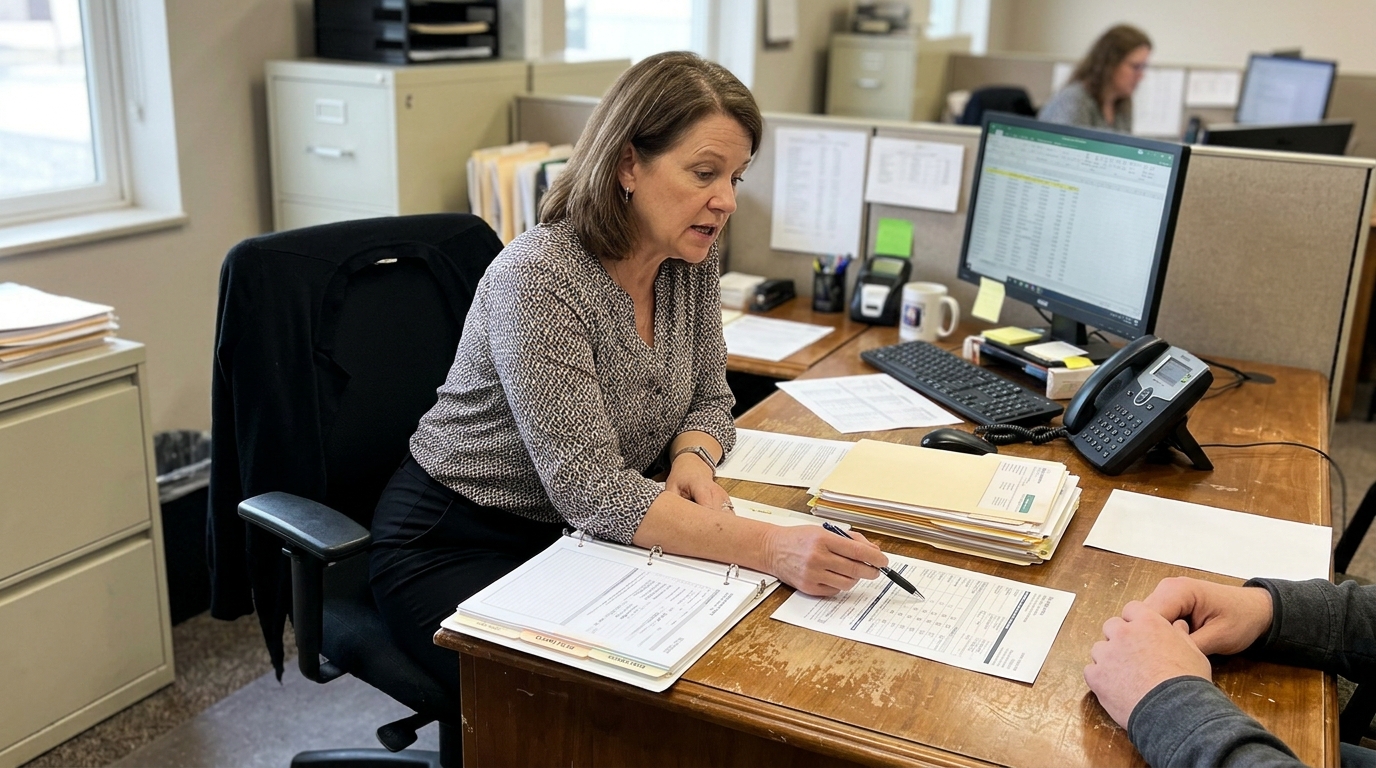
A loan officer evaluates, authorises, or recommends approval of loan applications and advises borrowers on their financial position and repayment options (U.S. Bureau of Labor Statistics, 2026-08-27). In the United States, the usual route is a bachelor's degree plus on-the-job training, and anyone originating mortgages must hold a Mortgage Loan Originator licence (U.S. Bureau of Labor Statistics, 2026-08-27).
The occupation is broad: it covers mortgage loan officers and agents, collection analysts, loan servicing officers, loan underwriters, and payday loan officers (O*NET OnLine, 2026). Outside the US, titles, licensing bodies and credit rules differ, so check your national regulator and statistics agency before planning a route.
Is This Career Right for You?
Most loan officers work for commercial banks, credit unions, mortgage companies, and other financial institutions, most work full time, and some work more than 40 hours per week (U.S. Bureau of Labor Statistics, 2026-08-27). Consumer loan officers spend most of their time in offices; other loan officers may travel to visit clients (U.S. Bureau of Labor Statistics, 2026-08-27), which can mean evening appointments, property visits, and time at real estate open houses or business premises.
The work is sedentary and screen-heavy: meeting applicants to collect information and answer questions, analysing financial status, credit history and property evaluations, and reviewing loan agreements for completeness and accuracy (O*NET OnLine, 2026). A single missed document or mis-keyed figure can stall a closing, so detail orientation is not optional — it is listed among the important qualities for the job, along with decision-making skills, initiative, and interpersonal skills (U.S. Bureau of Labor Statistics, 2026-08-27).
It suits people who are comfortable telling an applicant no and explaining why, who like structured analysis inside clear approval limits, and who will chase referrals from agents, builders and business contacts without being told. It suits poorly anyone who wants fixed hours with no client contact, or who dislikes pipeline pressure when several files close in the same week.
Pay is commonly structured as salary, commission on loans closed, or a combination, and varies by employer, lending type and country; check the BLS Occupational Outlook Handbook wage section for current US figures, or your national statistics agency elsewhere.
Steps to Becoming a Loan Officer
- Pick your lending segment (a few weeks of research). The occupation includes mortgage loan officers and agents, collection analysts, loan servicing officers, loan underwriters, and payday loan officers (O*NET OnLine, 2026). Mortgage work carries a licence; commercial and consumer lending generally do not.
- Earn a bachelor's degree, usually in a field such as business or finance (about four years full time). Loan officers typically need one, and commercial loan officers need to understand general business accounting, including how to read financial statements (U.S. Bureau of Labor Statistics, 2026-08-27). Tuition varies widely by institution; compare published costs before enrolling.
- Or build related experience instead (typically one to three years). Some jobseekers enter without a bachelor's degree if they have related work experience such as banking, customer service, or sales, and mortgage companies may prefer candidates with residential mortgage or real estate experience (U.S. Bureau of Labor Statistics, 2026-08-27).
- Get licensed if you want to originate mortgages (weeks, plus course and exam fees). Mortgage loan officers must hold a Mortgage Loan Originator (MLO) licence: complete prelicensing courses, pass a national exam, and submit to background and credit checks. Licences must be renewed annually, and individual states may add requirements (U.S. Bureau of Labor Statistics, 2026-08-27). Fees differ by state and course provider.
- Take an entry-level role and complete on-the-job training (commonly several months). BLS lists typical on-the-job training as part of the occupation's entry requirements (U.S. Bureau of Labor Statistics, 2026-08-27). Early on you gather documents from applicants, verify income and credit data, and prepare files for a more senior officer or underwriter to decide.
- Consider a Registered Apprenticeship (programme length set by the sponsor). ONET lists 'Loan Officer (Nof)' as an example apprenticeship title vetted by industry and approved by the U.S. Department of Labor, and points to Apprenticeship.gov for opportunities (ONET OnLine, 2026).
- Add certification once you are working (optional). Certification is not required, but it shows dedication and expertise and may enhance employment opportunities; information on certifications is available from CareerOneStop (U.S. Bureau of Labor Statistics, 2026-08-27).
- Move up as your approval authority grows (usually several years). Experienced officers approve loans within specified limits and refer others to management, rather than only assembling files (ONET OnLine, 2026). ONET places the occupation in Job Zone Four, 'Considerable Preparation Needed,' where employees usually need several years of work-related experience, on-the-job training, and/or vocational training (O*NET OnLine, 2026).
Education and Certification Options
| Path | Typical time | Approximate cost | Required or preferred |
|---|---|---|---|
| Bachelor's degree in business or finance | About four years full time | Varies by institution; compare published tuition | Typically needed for loan officers, and essential background for commercial lending, where you must read financial statements (BLS, 2026-08-27) |
| Related work experience instead of a degree (banking, customer service, sales) | Usually one to three years in the prior role | Earning rather than paying; no tuition | Accepted by some employers; mortgage companies may prefer residential mortgage or real estate experience (BLS, 2026-08-27) |
| MLO prelicensing courses plus national exam | Weeks, alongside work in most cases | Course and exam fees set by provider and state | Required to work as a mortgage loan officer, with background and credit checks and annual renewal (BLS, 2026-08-27) |
| Registered Apprenticeship under the U.S. Department of Labor | Set by the programme sponsor | Paid while training, per the apprenticeship model | Optional route; 'Loan Officer (Nof)' is a vetted apprenticeship title listed on ONET, with openings via Apprenticeship.gov (ONET, 2026) |
| Voluntary certification | Varies by certifying body | Varies by certifying body | Not required, but may enhance employment opportunities; listings available through CareerOneStop (BLS, 2026-08-27) |
| Employer on-the-job training | Commonly several months after hire | Employer-funded | Standard entry requirement listed for the occupation (BLS, 2026-08-27) |
Where to Find Loan Officer Jobs
- Commercial bank careers pages. Most loan officers are employed by commercial banks, credit unions, mortgage companies, and other financial institutions (U.S. Bureau of Labor Statistics, 2026-08-27), and large banks post consumer, small business and commercial lending roles directly.
- Credit unions. They hire consumer and member lending officers, and branch staff often move into lending internally after on-the-job training.
- Mortgage companies and independent brokerages. These employers may prefer candidates with residential mortgage or real estate experience (U.S. Bureau of Labor Statistics, 2026-08-27), and often recruit licensed MLOs year-round.
- Apprenticeship.gov. ONET directs users to it for Registered Apprenticeship opportunities under the vetted 'Loan Officer (Nof)' title (ONET OnLine, 2026).
- CareerOneStop. Useful for certification information (U.S. Bureau of Labor Statistics, 2026-08-27) and for state and local job bank links.
- Your state workforce agency job bank. States publish vacancies from regional banks and lenders that never reach national boards, and your state regulator's site explains any additional MLO requirements it imposes.
- Internal transfer from a teller, collections or servicing role. The occupation already includes collection analysts and loan servicing officers (O*NET OnLine, 2026), so adjacent staff are natural internal candidates.
- Real estate and builder networks. Agents, title firms and homebuilders refer buyers to loan officers, and those relationships often surface vacancies before they are advertised.
Frequently asked questions
How long does it take to become a loan officer?
Plan on about four years if you take the usual route of a bachelor's degree in a field such as business or finance, followed by several months of employer on-the-job training (U.S. Bureau of Labor Statistics, 2026-08-27). If you already work in banking, customer service, or sales, some employers will hire you without the degree, which can cut the timeline to the length of your prelicensing study. O*NET classifies the occupation in Job Zone Four, where employees usually need several years of work-related experience, on-the-job training, and/or vocational training (O*NET OnLine, 2026).
Will a poor credit history or a criminal record stop me?
For mortgage work in the US, yes, it can. Becoming a Mortgage Loan Originator requires prelicensing courses, a national exam, and submission to background and credit checks, with annual renewal and possible extra state requirements (U.S. Bureau of Labor Statistics, 2026-08-27). Because the thresholds are set by each state, check your state regulator's standards before paying for courses.
What does the licensing and education actually cost?
There is no single figure: degree tuition is set by each institution, and MLO prelicensing course and exam fees are set by approved providers and by the state issuing the licence. Budget for annual renewal too, since licences must be renewed each year (U.S. Bureau of Labor Statistics, 2026-08-27). Ask prospective employers whether they reimburse prelicensing or renewal costs, as many lenders do for staff they sponsor.
Is demand for loan officers steady?
The BLS Occupational Outlook Handbook publishes current employment, a 2025–35 projection, and an average number of annual openings for loan officers, most of which come from the need to replace workers who transfer occupations or leave the labour force (U.S. Bureau of Labor Statistics, 2026-08-27). Check the handbook for the latest figures rather than relying on general claims. Lending volumes also move with interest rates, so mortgage hiring is more cyclical than commercial or consumer lending.
What is the difference between entry-level and experienced duties?
At entry level you meet applicants to obtain information for loan applications and answer their questions, assemble documents, and check loan agreements for completeness and accuracy (O*NET OnLine, 2026). With experience you analyse applicants' financial status, credit and property evaluations, approve loans within specified limits, and refer larger or riskier files to management (O*NET OnLine, 2026). Commercial roles add the requirement to read and interpret business financial statements (U.S. Bureau of Labor Statistics, 2026-08-27).
Sources
- U.S. Bureau of Labor Statistics — Occupational Outlook Handbook: Loan Officers (2026-08-27)
- O*NET OnLine (U.S. Department of Labor, Employment and Training Administration) — 13-2072.00 - Loan Officers (2026)

Written by
Noor writes personal essays and interviews about career changes, burnout, and starting over. She's interested in the stories people tell themselves about what a job is supposed to mean.