
Articles
Every articles on World Career Path.

Loan Officer vs. Underwriter: Key Differences Explained
A loan officer works with applicants to put a credit application together and assesses their financial information to decide whether a loan can be approved (U.S. Bureau of Labor Statistics, 2025). An insurance underwriter reviews individual applications to evaluate the degree of risk involved and determine acceptance, then sets coverage amounts and premiums on the ones approved (O\NET OnLine, U.S. Department of Labor, undated; U.S. Bureau of Labor Statistics, 2025).
Wyatt Holloway · 7 min read
Breaking Into Human Resources: A Step-by-Step Guide
Human resources specialists recruit, screen and interview job applicants, place new hires into roles, and often handle compensation and benefits, training and employee relations (U.S. Bureau of Labor Statistics, 2026-10-29). The usual route in is a bachelor's degree in human resources, business, communications or a related field, plus experience in a support role such as human resources assistant or customer service representative before you move into a specialist job.
Marisol Tanaka-Reyes · 9 min read
How to Get Your Notary Public Commission
A notary public commission is a state appointment, not a national licence. You apply through your state's commissioning office — usually the Secretary of State — meet basic eligibility rules, and in some states complete a training course, sit an exam, pass a background check and file a surety bond before you are appointed.
Wyatt Holloway · 8 min read
How to Become a Drone Pilot: Step-by-Step Guide
Becoming a drone pilot means passing the civil aviation regulator's test for the country you fly in, registering your aircraft, and then proving you can deliver usable data — survey images, inspection footage, mapping files — not just keep an aircraft in the air. In the United States that is the FAA's Part 107 remote pilot certificate; in the UK it is usually the CAA's General VLOS Certificate; in Canada, a Transport Canada basic or advanced certificate; in the EU, EASA open-category certificates.
Priya Chandrasekaran · 10 min read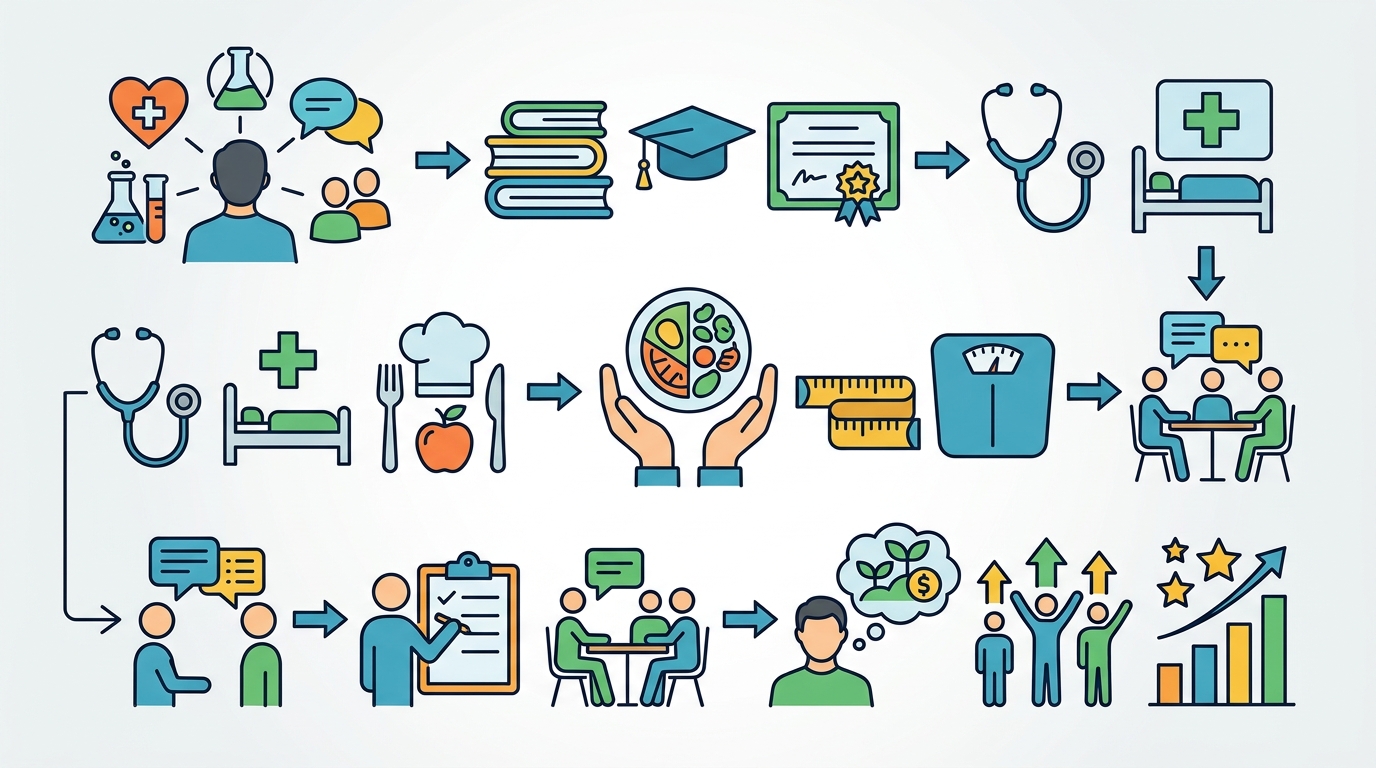
Dietitian: A Guide for Career Changers
Becoming a dietitian as a career changer is a structured, slow route rather than a quick pivot: in the United States the Commission on Dietetic Registration has required a minimum of a master's degree to sit the credentialing exam since 1 January 2024 (Tulane University School of Public Health and Tropical Medicine), on top of supervised practice and, in many states, licensure (U.S. Bureau of Labor Statistics, 2025). If you already hold a bachelor's degree in something unrelated, expect roughly three to six years from your first prerequisite class to your first paid dietitian role.
Wyatt Holloway · 9 min read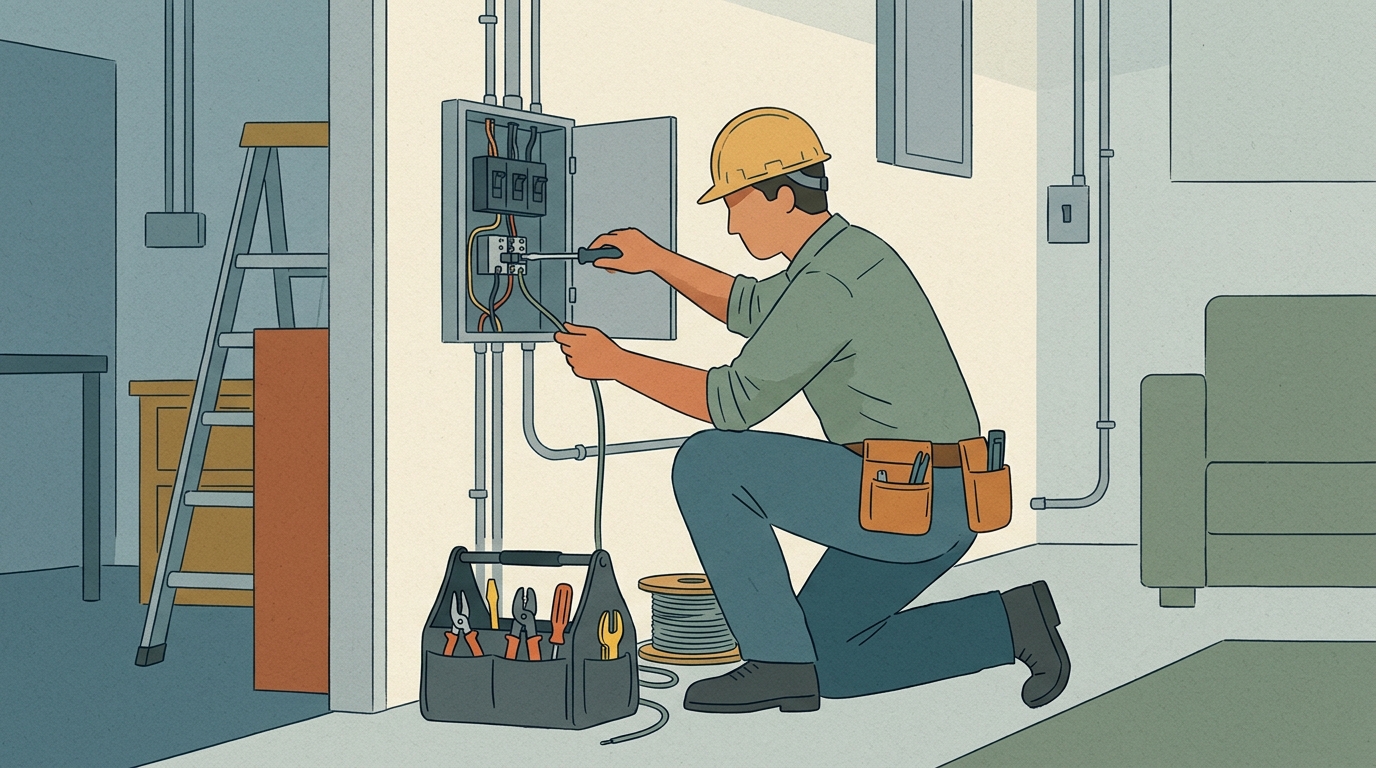
What Does an Electrician Do? A Day in the Life
An electrician installs, maintains and repairs electrical power, communications, lighting and control systems in homes, businesses and factories (U.S. Bureau of Labor Statistics, 2025). The day mixes physical installation work, fault-finding with test instruments, and paperwork proving the job meets the electrical code.
Noor Abdallah · 9 min read
Electrician vs. Plumber: Which Career Fits You?
Electricians and plumbers are both skilled trades you can enter without a four-year degree, learning through a paid apprenticeship rather than classroom study alone. The U.S. Bureau of Labor Statistics (2025) describes electricians as installing, maintaining and repairing electrical power, communications, lighting and control systems; plumbing work centres instead on water supply, drainage, waste and gas or heating pipework.
Priya Chandrasekaran · 8 min read
How to Switch to a Career in Supply Chain Management, Step by Step
Switching into supply chain management from another field usually takes 18 to 30 months from first research to a settled first year, and most of that time is spent while you are still drawing your current salary. The common route is to pick one recognised credential — CPIM or CSCP from ASCM, or CPSM from ISM — study it in evenings, pull supply chain tasks into your existing job, and only then apply out.
Desmond Okafor · 10 min read
Receptionist Cover Letter: Examples and How to Write One
A receptionist cover letter has one job: prove in under a page that you can handle a ringing phone, a waiting visitor and a half-full appointment diary at once. The strongest letters name the systems you have used, quantify the volume you handled, and mirror the advert's wording so a fast scan lands on the right words.
Desmond Okafor · 7 min read
How to Prepare for a Video Interview
Preparing for a video interview means doing two jobs at once: rehearsing your answers, and making sure the technology, lighting and background do not get in the way of them. Most of that work is physical and checkable — test the camera and microphone, pick a plain background, log in early, and keep the interviewer's phone number on paper.
Priya Chandrasekaran · 7 min read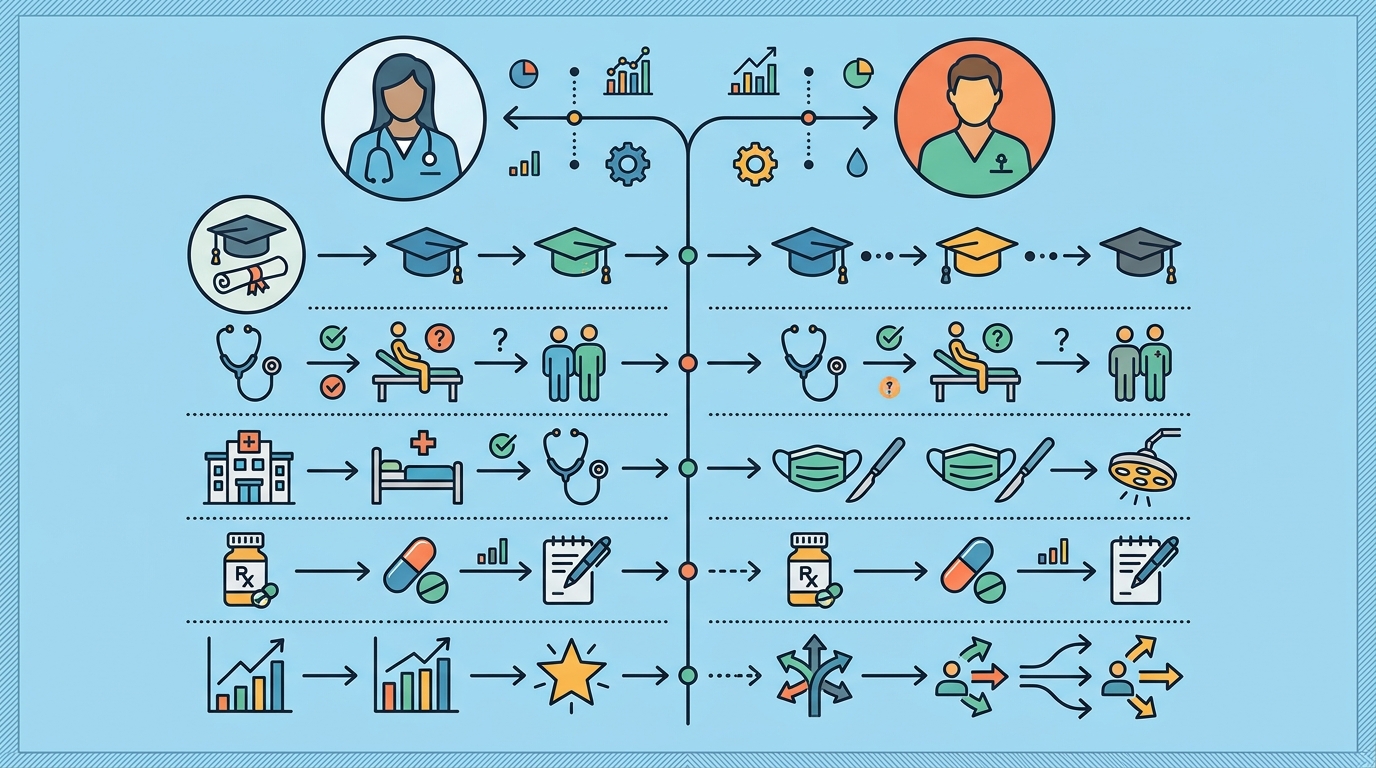
Nurse Practitioner vs. Physician Assistant: Which Career Path Is Right for You?
Nurse practitioners and physician assistants both diagnose, treat and prescribe, but they arrive through different training systems and are regulated differently. NPs qualify through nursing: a registered nursing license first, then an accredited graduate program, a national certification exam and an APRN license (U.S. Bureau of Labor Statistics). PAs qualify through a medical-model master's program of at least two years of postbaccalaureate study, then state licensure and the PA-C credential (U.S. Bureau of Labor Statistics).
Wyatt Holloway · 8 min read
How to Become a Claims Adjuster
Claims adjusters, appraisers, examiners and investigators evaluate insurance claims to decide what an insurer owes (U.S. Bureau of Labor Statistics, 2025). In the United States, the usual entry route is a high school diploma or equivalent plus a state adjuster license where one is required, followed by supervised work on small claims; some employers want a bachelor's degree or prior insurance experience instead (U.S. Bureau of Labor Statistics, 2025).
Desmond Okafor · 10 min read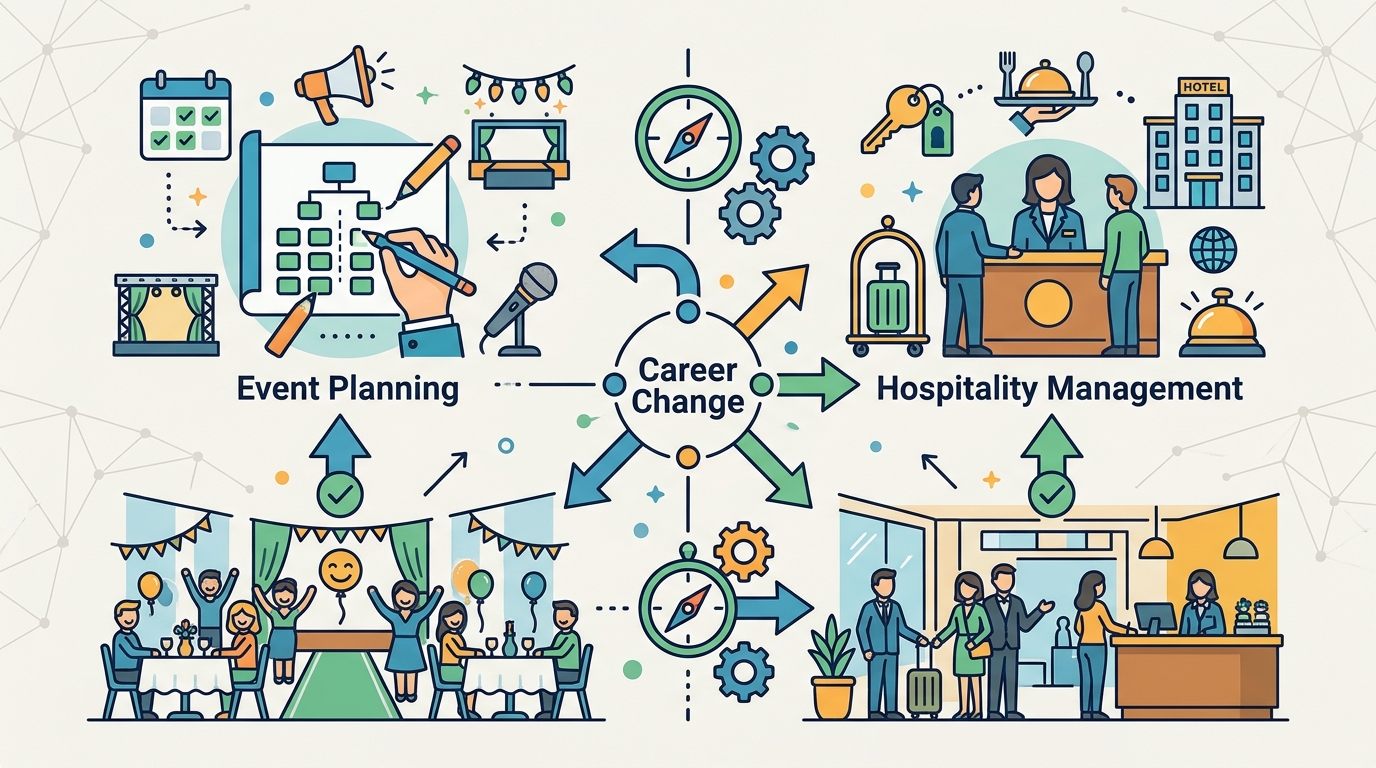
Choosing Between Event Planning and Hospitality Management as a Career Changer
Event planning and hospitality management overlap in reputation and diverge in practice. Event planning is project work with heavy peaks: you meet clients, solicit bids from venues and suppliers, and run the event onsite (U.S. Bureau of Labor Statistics, 2025). Lodging management is running a building that never closes — inspecting rooms and grounds, hiring and training staff, setting budgets and approving expenditures (U.S. Bureau of Labor Statistics, 2025).
Wyatt Holloway · 7 min read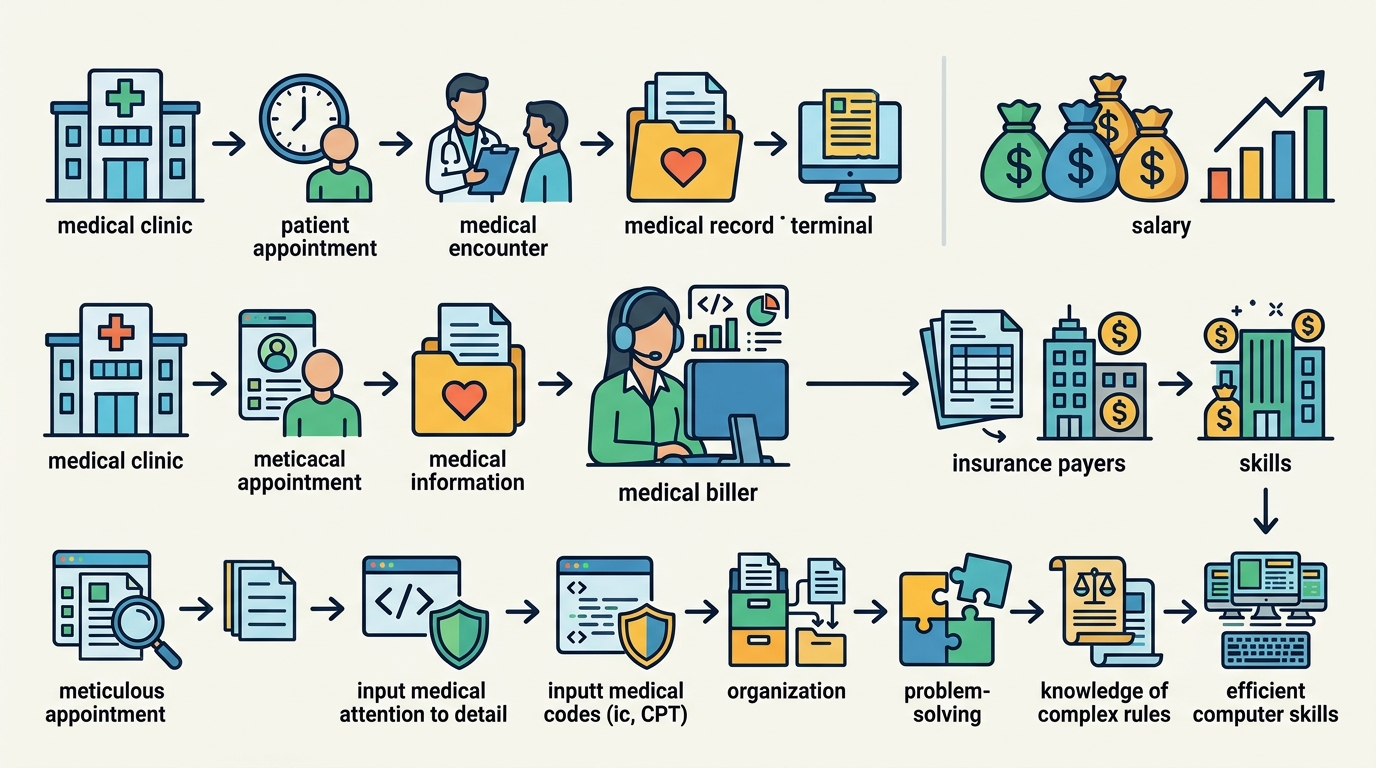
Medical Biller Job Description: Duties, Skills, and Salary
A medical biller turns the services a clinician provided into a coded claim, sends it to the patient's insurer or health fund, and follows the money until the account is settled. The work is screen-based: practice management software, payer portals, denial queues and patient statements, with bursts of phone and email contact.
Wyatt Holloway · 8 min read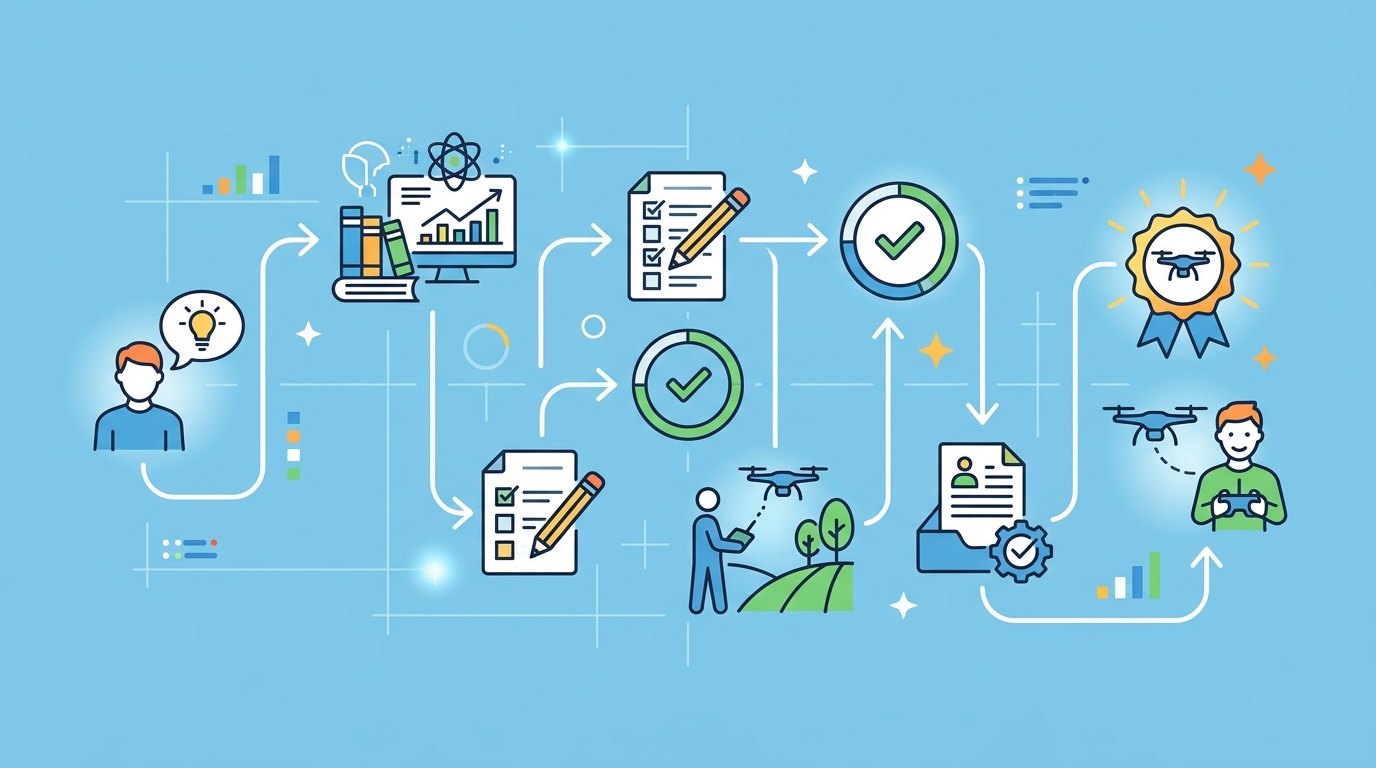
How to Get Your Commercial Drone Pilot License
A commercial drone licence in the United States means the FAA Remote Pilot Certificate with a small UAS rating, issued under the Federal Aviation Administration's Small UAS Rule (Part 107). You need it before you fly a drone commercially (Federal Aviation Administration, 2026-06-09), and the path runs through one aeronautical knowledge exam at an FAA-approved Knowledge Testing Center, an online application in IACRA, and a TSA security background check.
Marisol Tanaka-Reyes · 8 min read
What Does a Social Worker Do? A Day in the Life
A social worker helps individuals, families and groups prevent and cope with problems in everyday life, while clinical social workers also diagnose and treat mental, behavioural and emotional problems (U.S. Bureau of Labor Statistics, 2025). Day to day that means assessing needs, referring people to community resources, responding to crises, monitoring progress and keeping case files up to date (U.S. Bureau of Labor Statistics, 2025).
Priya Chandrasekaran · 8 min read
Is Becoming an Occupational Therapist a Good Career Change?
Occupational therapy can be a strong second career if you want hands-on clinical work with a rehabilitation focus, but it is not a quick switch. In the United States the typical entry-level requirement is a master's degree in occupational therapy, every state requires a licence, and you must pass the qualifying exam before you can use the title Occupational Therapist Registered (U.S. Bureau of Labor Statistics, 2025).
Marisol Tanaka-Reyes · 9 min read
Phlebotomist vs. Medical Assistant Salary: Which Pays More?
On national figures, medical assistants edge ahead. The median annual wage was $45,690 for medical assistants and $45,230 for phlebotomists in May 2025 (U.S. Bureau of Labor Statistics, 2025).
Desmond Okafor · 7 min read
What Does a Loan Officer Do? A Day in the Life
A loan officer helps people and businesses borrow money: gathering application information, checking an applicant's financial position, and either approving the loan within their authority or passing it to management. Most work for commercial banks, credit unions, mortgage companies and other financial institutions, and most work full time, with some putting in more than 40 hours a week (U.S. Bureau of Labor Statistics, 2025).
Desmond Okafor · 8 min read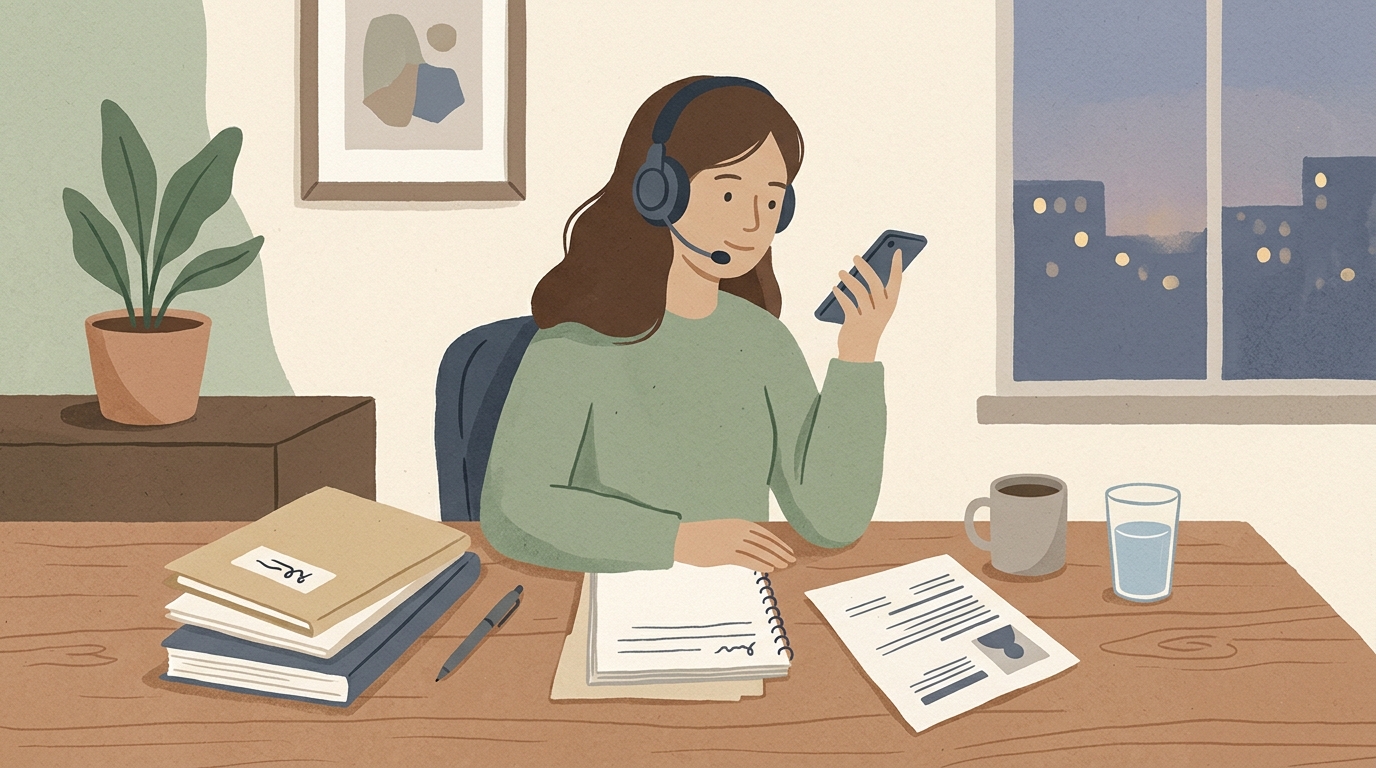
How to Prepare for a Phone Interview
Preparing for a phone interview comes down to three things: confirming the logistics, setting up a quiet room with your documents in front of you, and rehearsing your answers out loud before the day. Employers usually call at a prearranged time, so you should clarify the time zone, the expected length, the phone number and who will be conducting the interview (Florida State University Career Center, undated).
Wyatt Holloway · 6 min read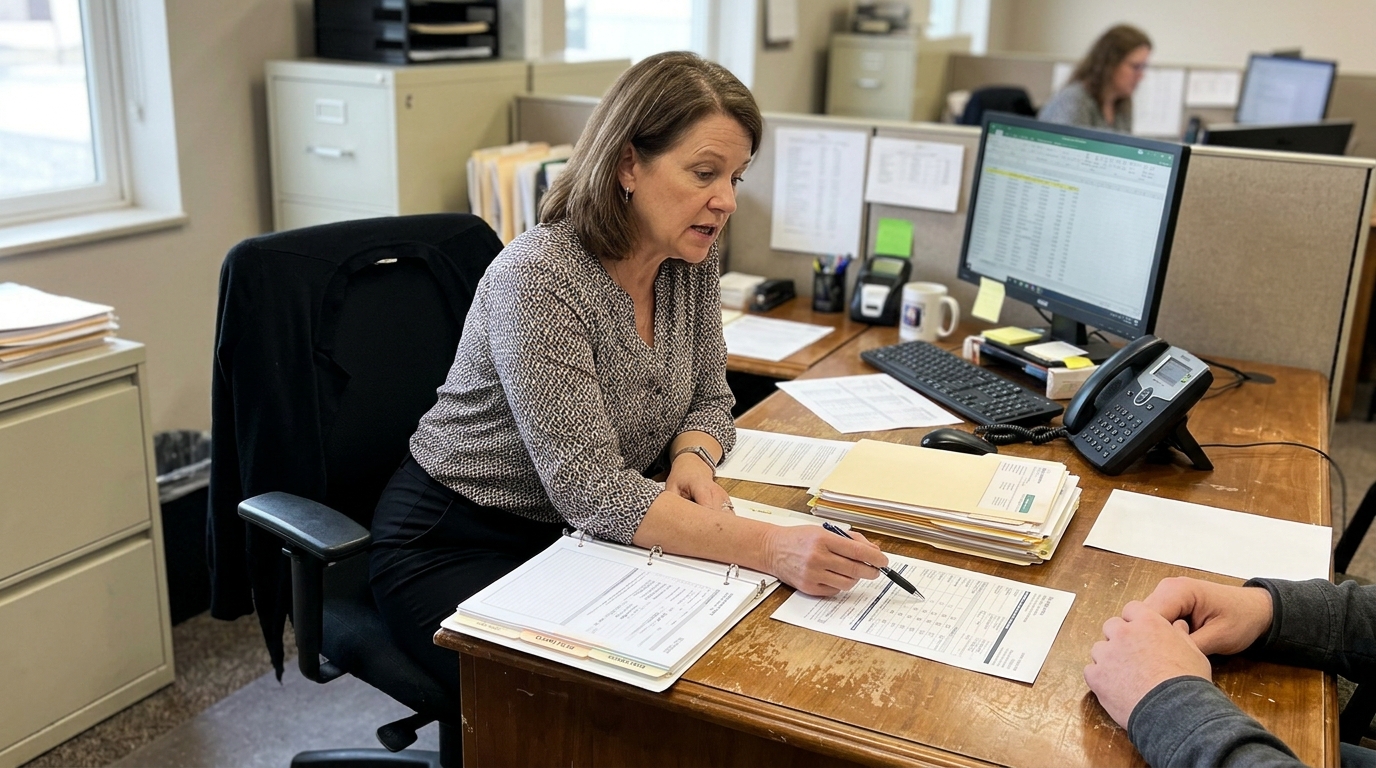
Loan Officer Career Path: Education, Certifications, and Experience
A loan officer evaluates, authorises, or recommends approval of loan applications and advises borrowers on their financial position and repayment options (U.S. Bureau of Labor Statistics, 2026-08-27). In the United States, the usual route is a bachelor's degree plus on-the-job training, and anyone originating mortgages must hold a Mortgage Loan Originator licence (U.S. Bureau of Labor Statistics, 2026-08-27).
Noor Abdallah · 8 min read
What Does an Actuary Do? Duties, Skills, and Salary Explained
An actuary uses statistics and financial theory to estimate how likely an event is and what it will cost — a crash, a hospital stay, a wave of early retirements — and then helps design policies and set the money aside to cover it. The work combines database and modelling software with written and spoken explanation, because the numbers have to be understood by underwriters, regulators and executives who are not mathematicians.
Marisol Tanaka-Reyes · 9 min read
Loan Officer vs. Financial Analyst: Pay, Duties, and Day-to-Day Differences
Loan officers work with applicants: they contact people and businesses about loans, gather and verify financial information, check agreements against regulations, and approve or refer applications (U.S. Bureau of Labor Statistics, 2025). Financial analysts work with data: they evaluate current and historical financial figures, study economic and business trends, examine company financial statements, and write reports recommending investments (U.S. Bureau of Labor Statistics, 2025).
Marisol Tanaka-Reyes · 9 min read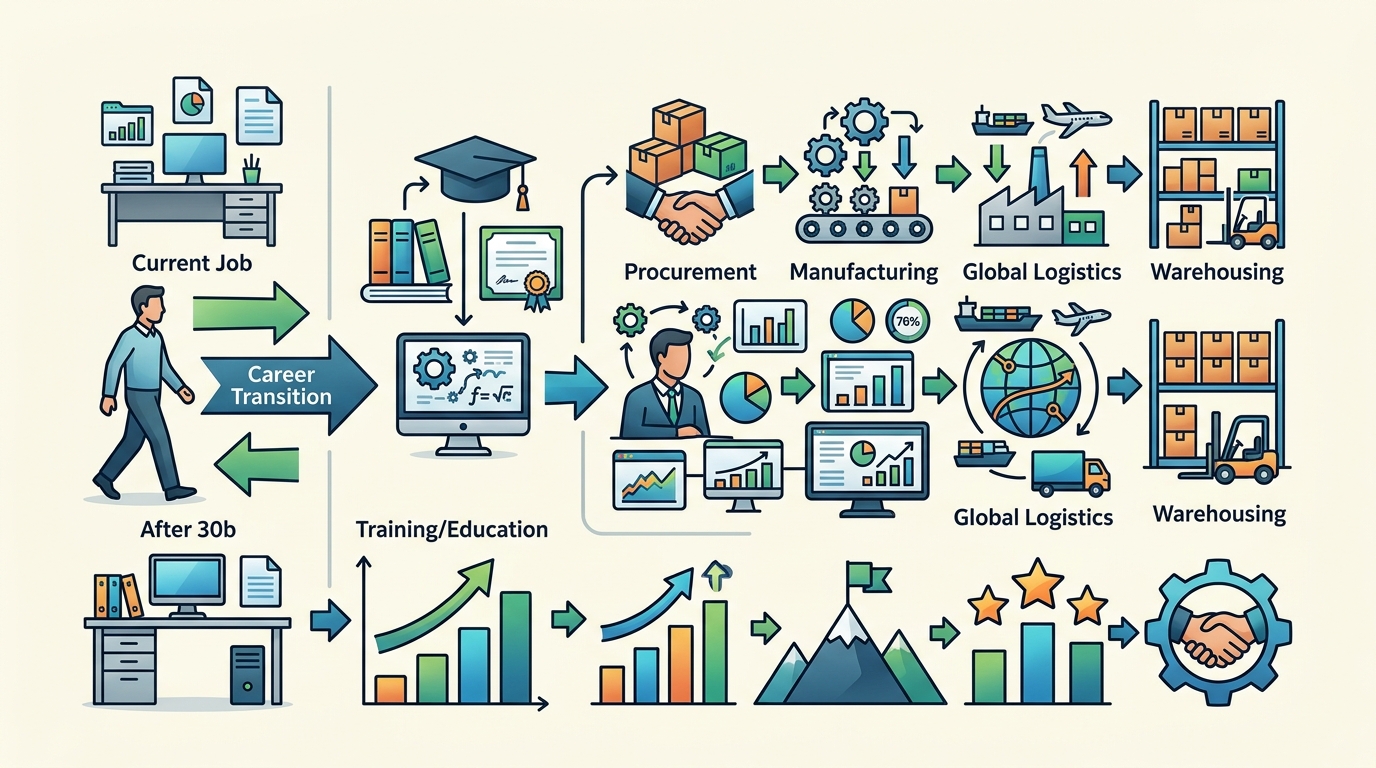
So You Want to Become a Supply Chain Manager After 30
Yes, you can move into supply chain management in your thirties, forties or fifties — but almost nobody walks straight into the manager title. The usual route is a coordinator, planner or analyst role first, built on logistics work you already do in your current job, with a certification added alongside it. Plan on 12 to 24 months from first serious study to a supply chain job title, and on entering a level or two below your current seniority.
Noor Abdallah · 9 min read
Teacher Interview Questions: What to Expect and How to Prepare
A teacher interview is rarely one conversation. Expect a panel of two to four people, a sample or demo lesson that is watched and scored, and scenario questions on behaviour, differentiation and child protection — often all on the same day.
Noor Abdallah · 8 min read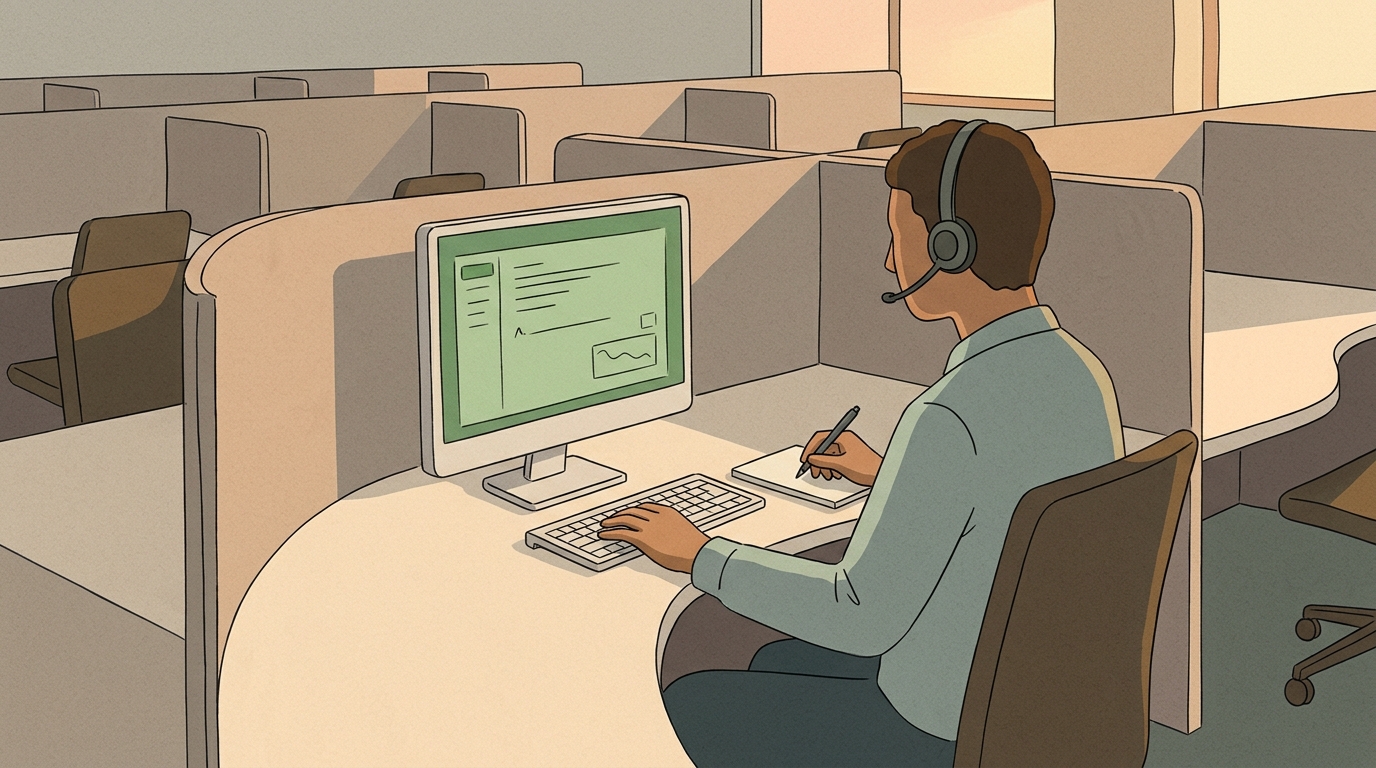
Call Center Interview Questions: What to Expect and How to Prepare
Call centre interviews are usually short, structured and practical. Expect a phone or video screen first, then a round that tests how you sound and behave under pressure — often a role-play with a difficult customer, sometimes a typing or system-navigation test — with scoring against a fixed set of competencies rather than a free-flowing conversation.
Marisol Tanaka-Reyes · 9 min read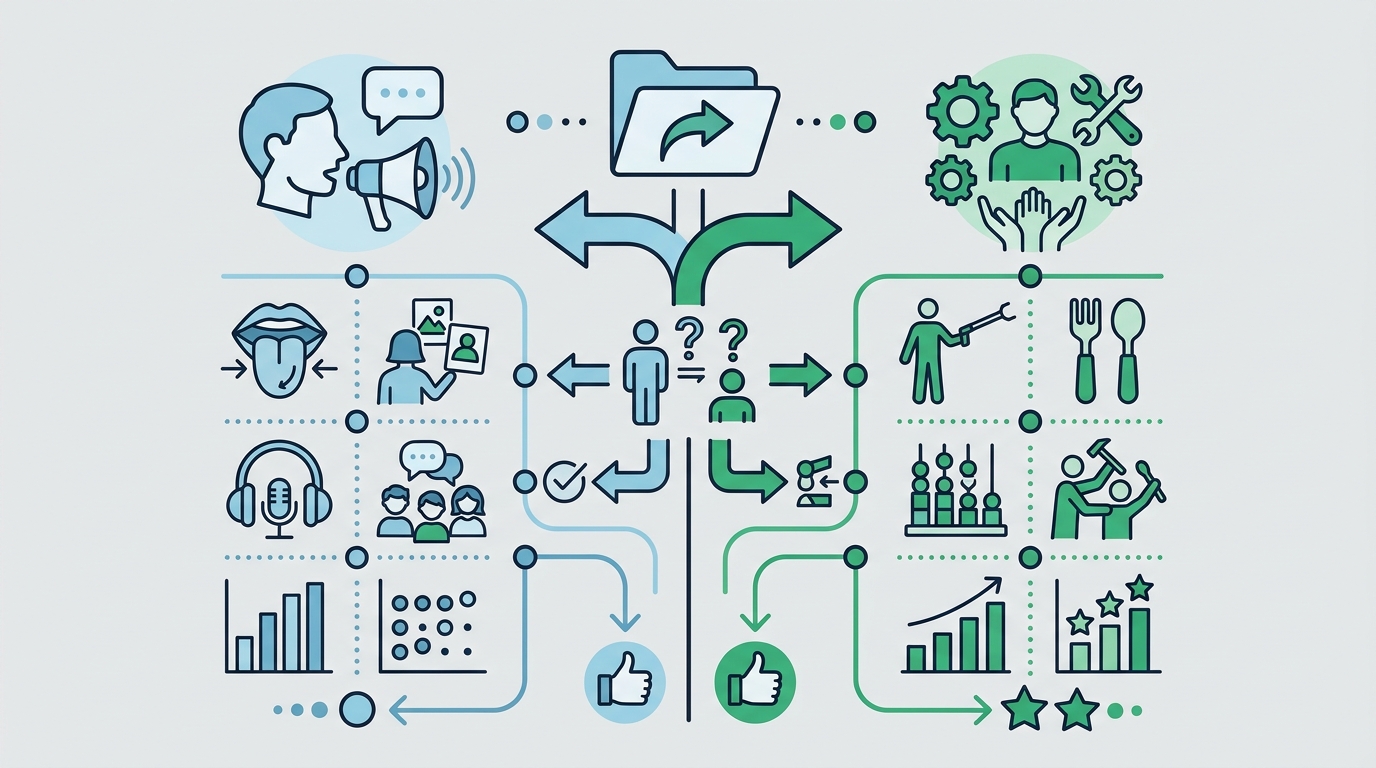
Speech-Language Pathologist vs. Occupational Therapist: Which Career Change Is Right for You
Speech-language pathology and occupational therapy both ask for a master's degree and a state licence, so neither is a quick exit from your current job. The real differences are the caseload you'd carry, how hard the work is on your body, and whether you want a school-year calendar or a year-round clinical one.
Priya Chandrasekaran · 8 min read
Wind Turbine Technician Career Change Roadmap for Working Adults
Switching into wind turbine technician work from another job realistically takes about 12 to 24 months from first research to first day on site, depending on whether you take a short certificate, an associate degree, or an apprenticeship — apprenticeships run longer than classroom routes (NES Fircroft, undated). The entry bar is a postsecondary nondegree award plus long-term on-the-job training once you are hired, and work experience in a related occupation is not required to enter the role (U.S. Bureau of Labor Statistics, 2025), which is why people arrive from vehicle repair, HVAC, the military and even retail management.
Wyatt Holloway · 11 min read
Executive Assistant vs. Virtual Assistant: A Second-Career Comparison
An executive assistant is an employee supporting senior leaders inside one organisation; a virtual assistant is a self-employed contractor serving several clients remotely on hourly, per-project or retainer terms. The executive assistant route gives you a published salary band and benefits but asks you to fit someone else's calendar; the virtual assistant route gives you control over hours and clients but makes you responsible for finding work, pricing it and covering slow months.
Noor Abdallah · 8 min read
Project Manager vs. HR Generalist Salary: Which Pays More?
On U.S. national figures, project management is the better-paid of the two. Project management specialists had a median annual wage of $102,320 in May 2025, against $75,940 for human resources specialists — the federal category that covers most HR generalist roles (U.S. Bureau of Labor Statistics, May 2025). Project management pays more at the bottom, the middle and the top of the range.
Priya Chandrasekaran · 7 min read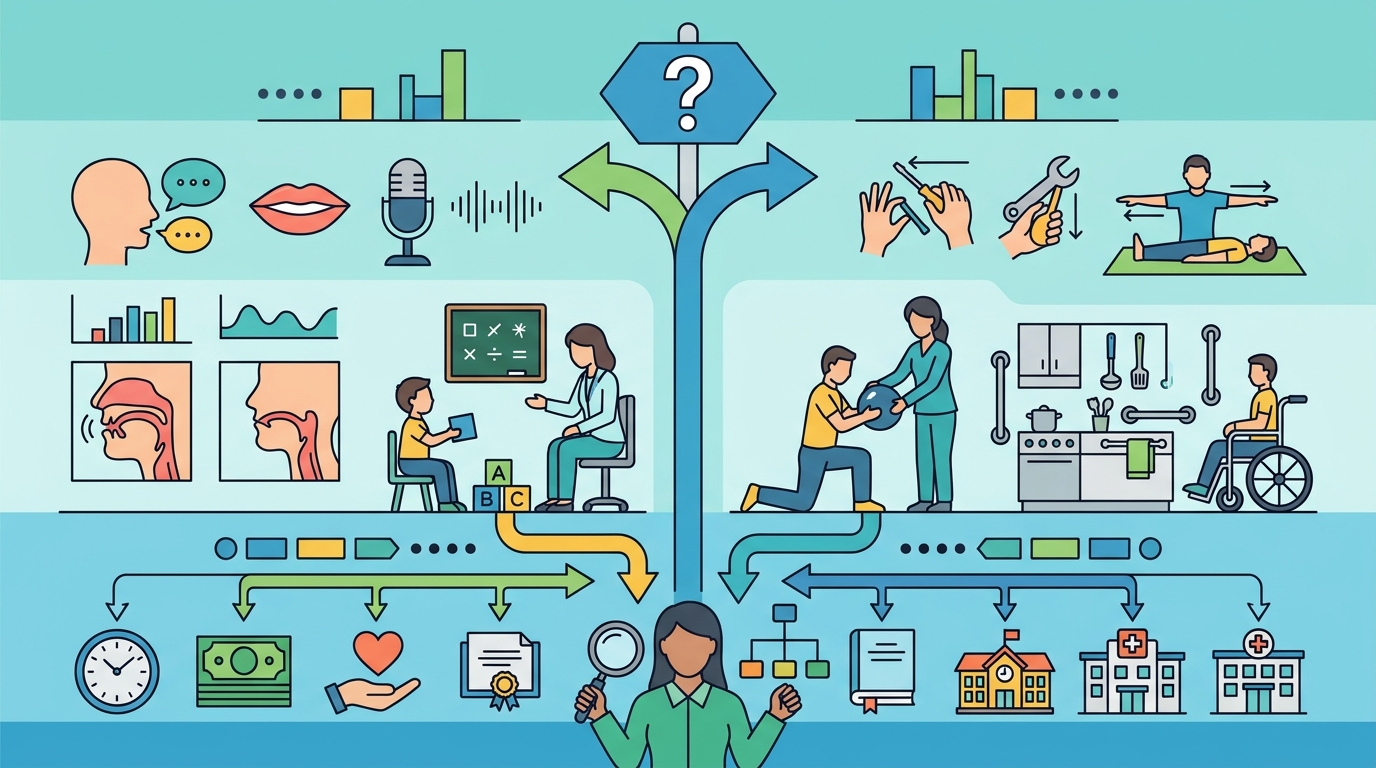
Speech-Language Pathologist vs. Occupational Therapist: Which Career Path Is Right for You?
Speech-language pathology and occupational therapy sit side by side in hospitals, schools and clinics, and in the United States both typically require a master's degree and a state licence. The difference is what you treat: speech-language pathologists work on communication, language, voice and swallowing, while occupational therapists work on the practical activities of daily life — dressing, bathing, cooking, returning to work or school.
Noor Abdallah · 8 min read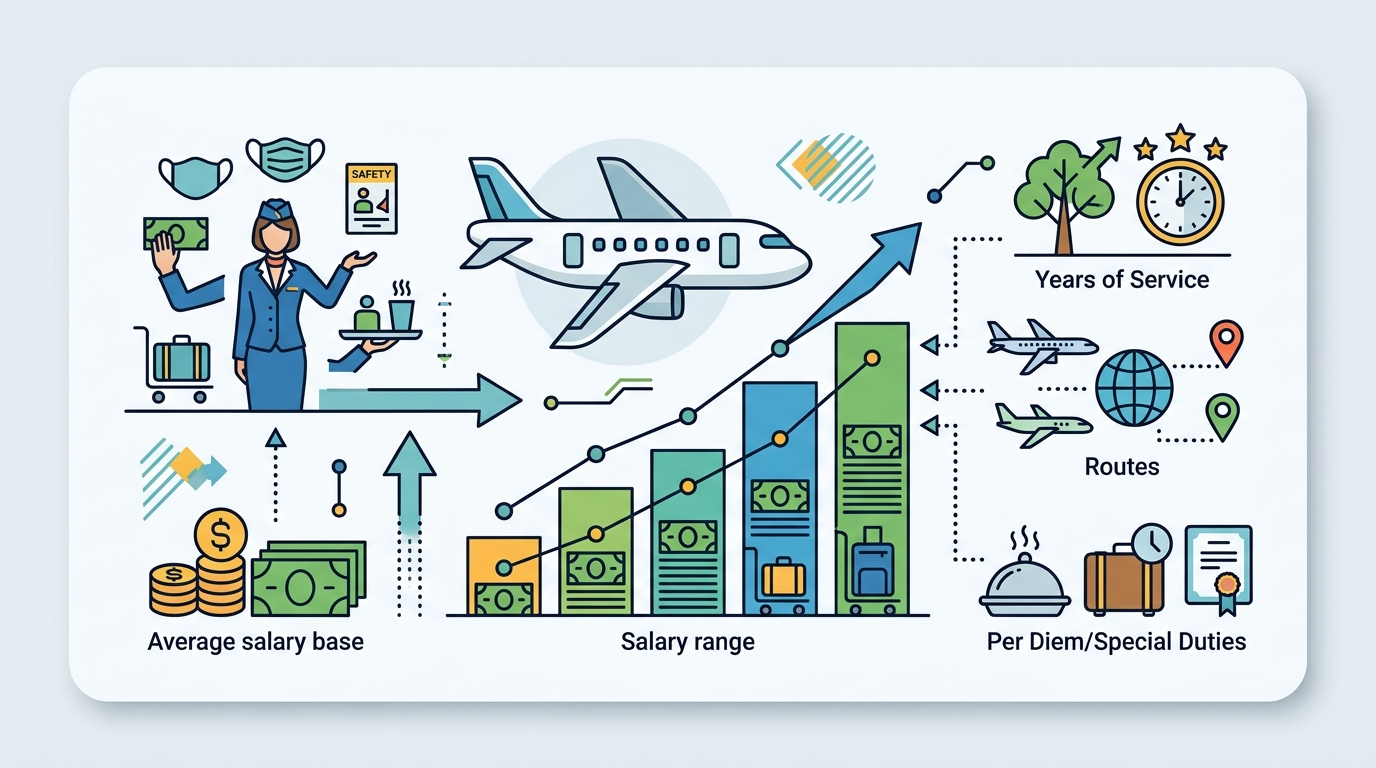
Flight Attendant Pay: Average Salary, Range, and What Affects It
In the United States, flight attendants had a median annual wage of $63,580 in May 2025 (U.S. Bureau of Labor Statistics). Half earned more than that and half earned less, with the lowest-paid tenth at $37,690 a year (BLS Occupational Employment and Wage Statistics, May 2022) and the highest-paid tenth above $136,430 (Assessment.com, citing BLS, May 2025).
Noor Abdallah · 11 min read
How to Become an Actuary: Education, Licensing, and First-Job Steps
Becoming an actuary means combining a quantitative education with a long series of professional exams taken while you work. In most countries there is no single licence to apply for: you join a national actuarial association, pass its exam and module sequence, and build experience in an analyst role at the same time.
Wyatt Holloway · 9 min read
Flight Attendant Interview Questions: What to Expect and How to Prepare
Flight attendant interviews are rarely a single conversation. Most large airlines run a staged process — online application, a recorded or recruiter screen, an assessment or group day, a final panel, then a conditional offer and compliance checks (CoPilot Interview, 2026) — with candidates cut after most stages.
Desmond Okafor · 7 min read
How to Negotiate a Higher Salary as a Customer Service Representative
Negotiating as a customer service representative works best when you argue with numbers rather than effort: published wage percentiles for your area, your own queue and quality metrics, and a target range decided before the meeting. The U.S. Bureau of Labor Statistics (2025) reported median pay for the occupation at $44,770 a year, or $21.53 an hour — a median base wage, before overtime, shift differentials, commission or bonuses.
Wyatt Holloway · 9 min read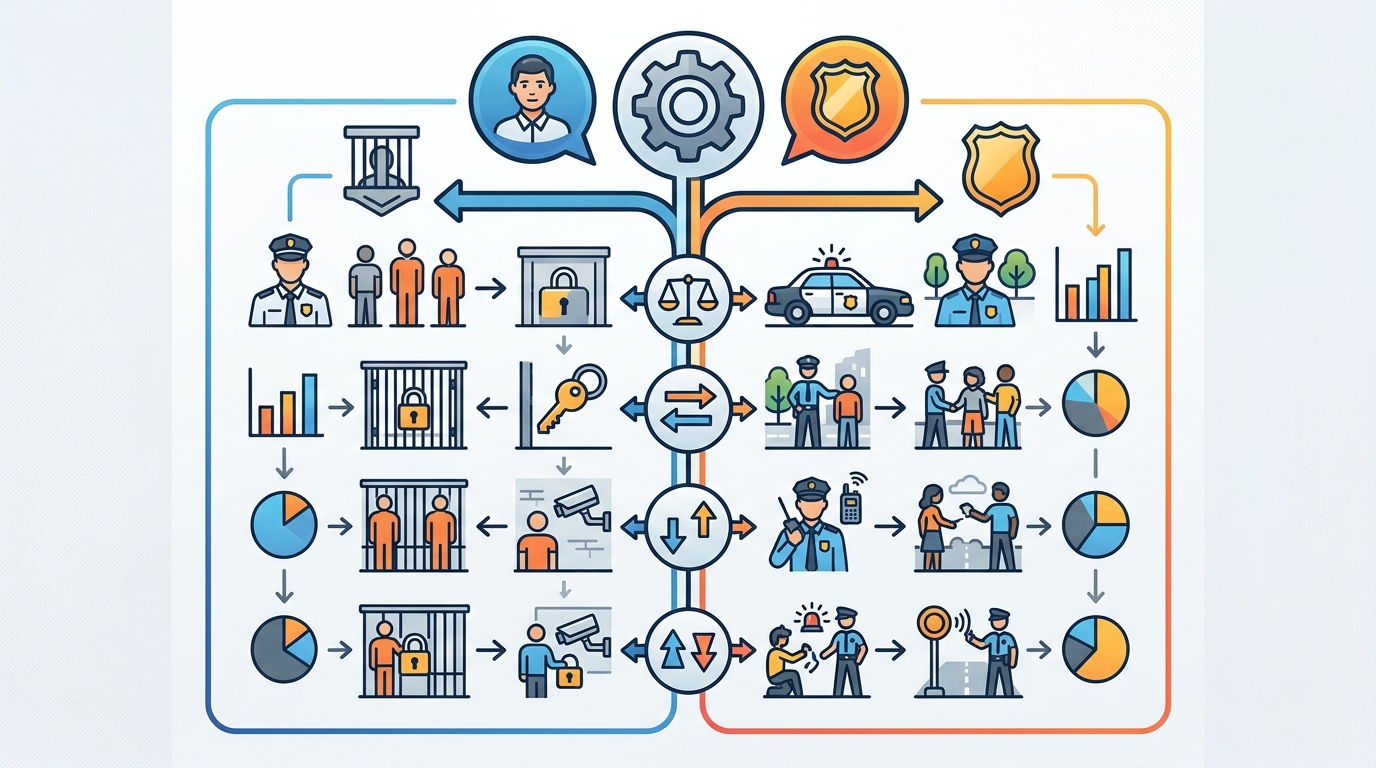
Correctional Officer or Police Officer: A Second-Career Comparison
Both jobs hire career changers without a four-year degree, both start with an academy, and both run on round-the-clock shifts. The split is pay and access: police and detectives had a median annual wage of $77,310 in May 2025, against $58,850 for correctional officers and bailiffs (U.S. Bureau of Labor Statistics, 2025), while corrections typically asks only for a high school diploma and no related work experience (U.S. Bureau of Labor Statistics, 2025).
Marisol Tanaka-Reyes · 8 min read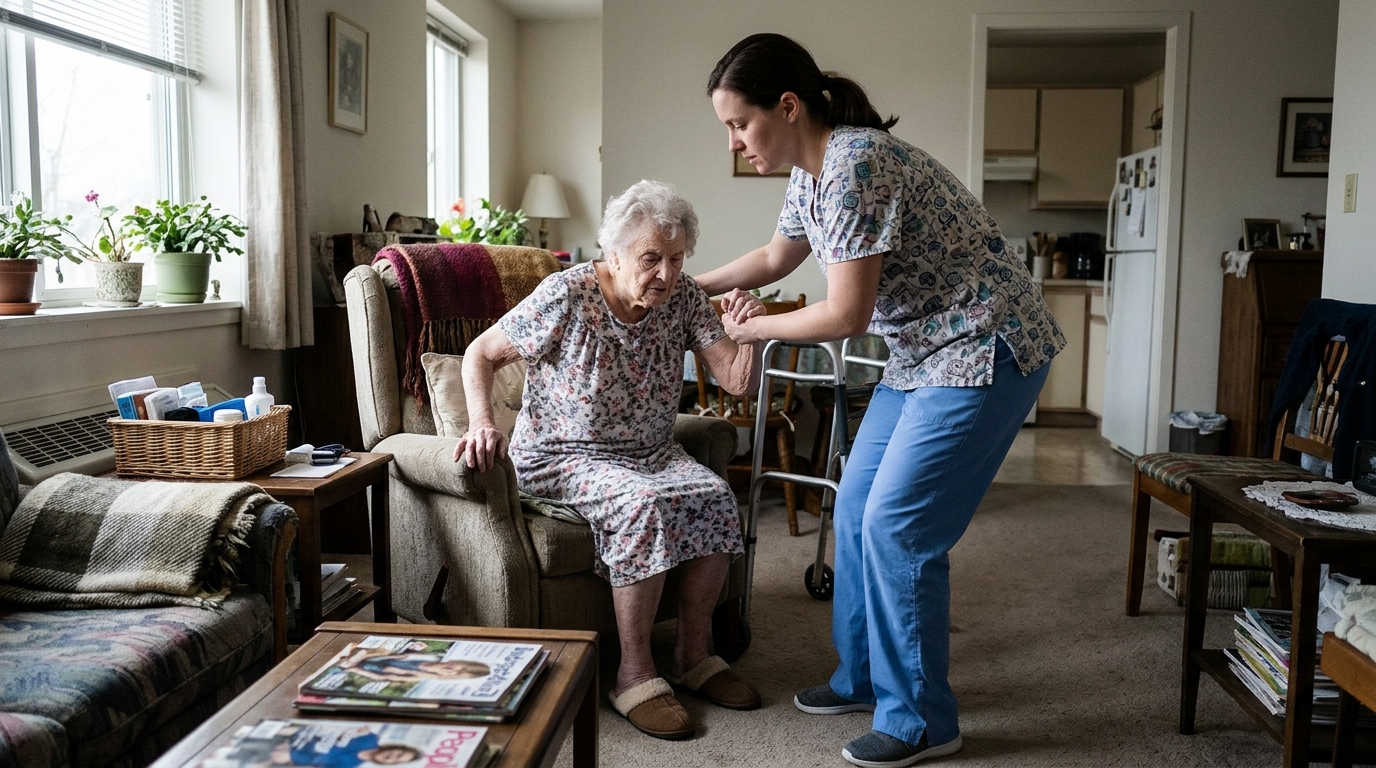
How to Become a Home Health Aide With No Experience
You can start as a home health aide without prior caregiving work. The U.S. Bureau of Labor Statistics (2025) lists no work experience in a related occupation as an entry requirement, says education requirements vary by employer with some positions requiring no formal credential, and describes training as short-term and often completed on the job.
Priya Chandrasekaran · 9 min read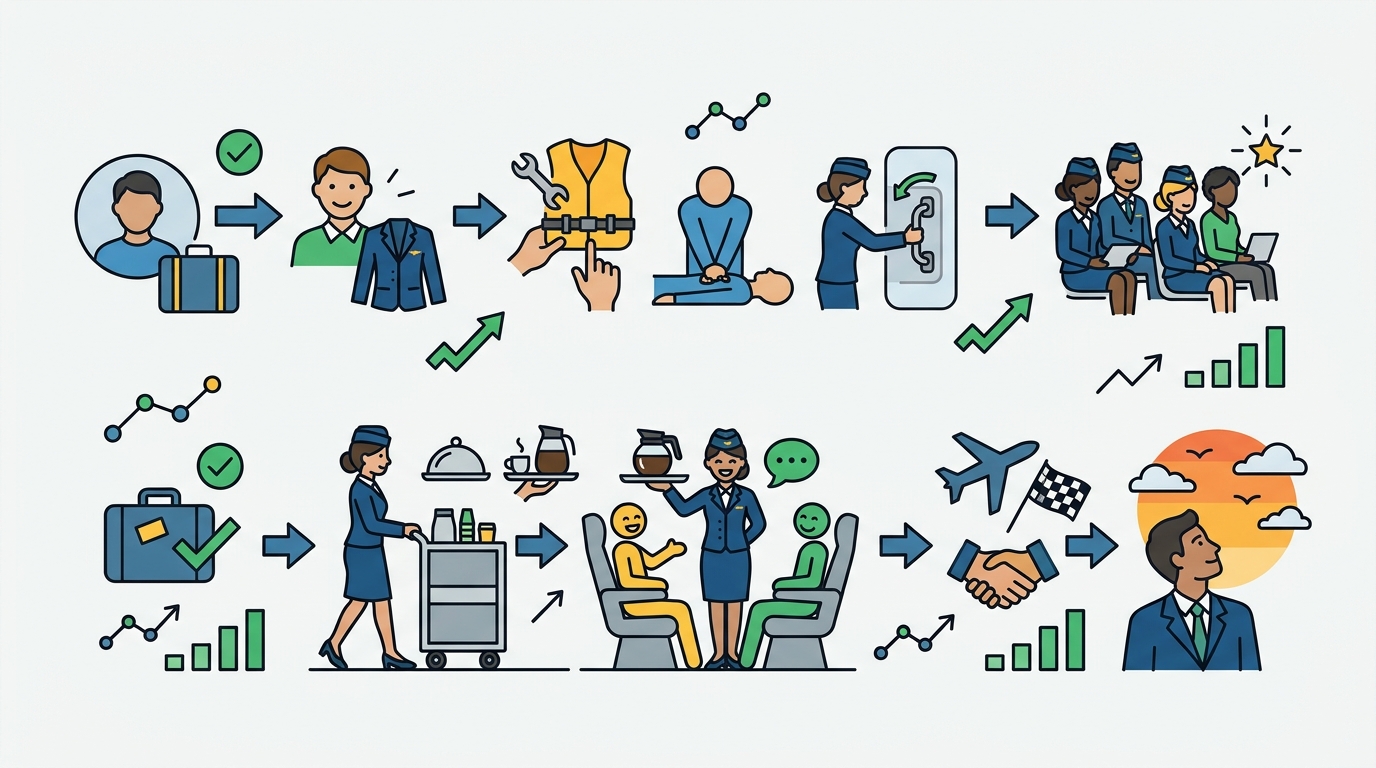
How to Become a Flight Attendant Without a Degree
You do not need a college degree to work as cabin crew. In the United States, flight attendants typically need a high school diploma or the equivalent plus work experience in customer service, and the specialized training and federal certification come from the airline after you are hired (U.S. Bureau of Labor Statistics, 2025).
Desmond Okafor · 9 min read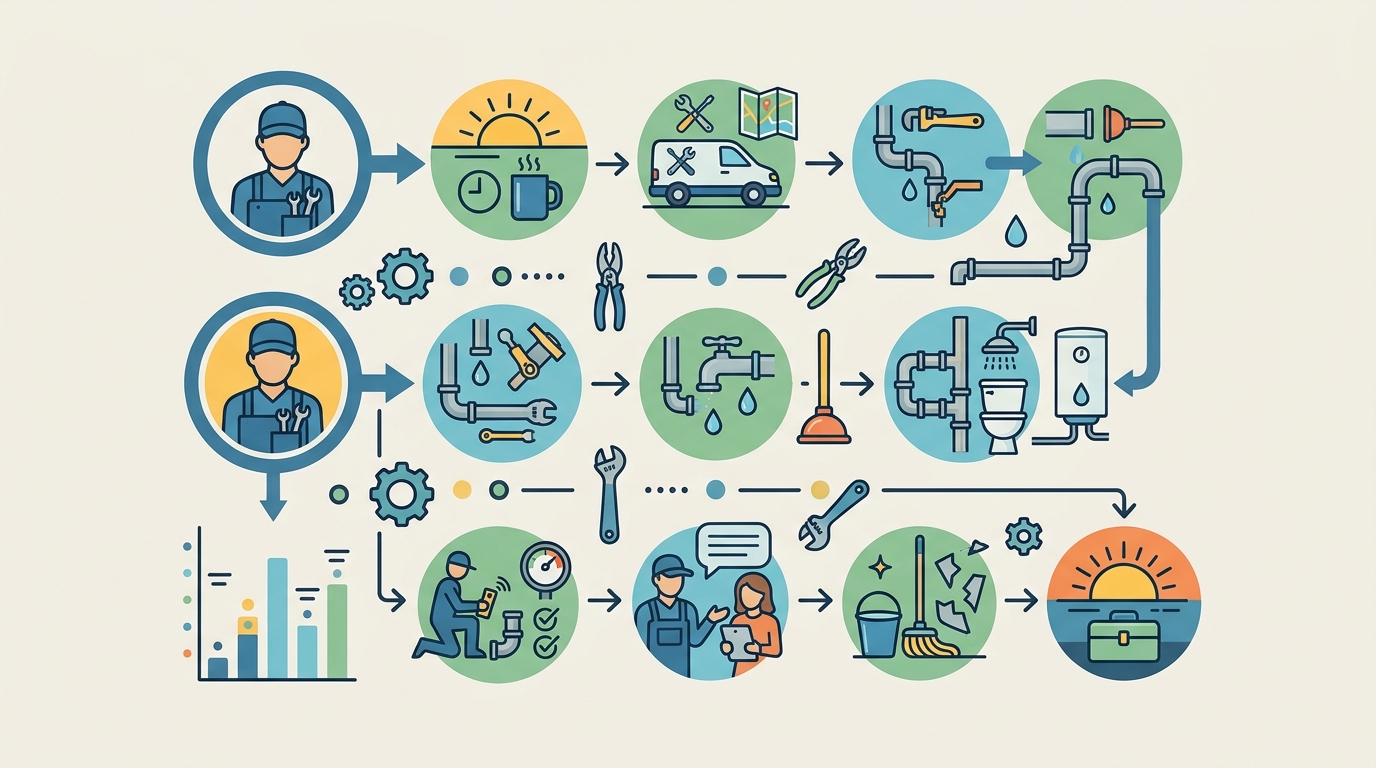
What Does a Plumber Do? A Day in the Life
A plumber installs, tests, repairs and maintains the pipes, fixtures and appliances that move water, waste, gas and steam through buildings. The work spans homes, businesses, factories and construction sites, and mixes planned installation jobs with emergency breakdowns that can land in the evening or at a weekend (U.S. Bureau of Labor Statistics, 2025).
Marisol Tanaka-Reyes · 8 min read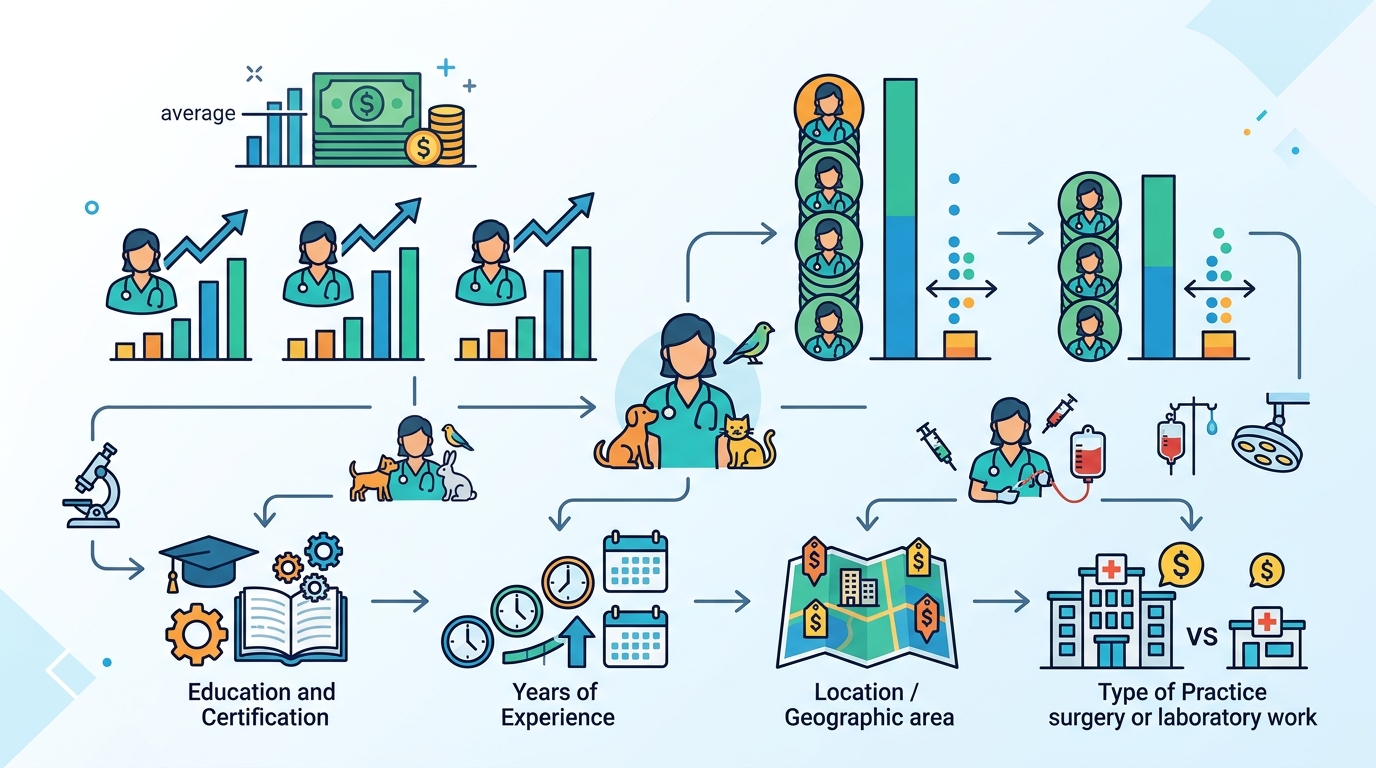
Veterinary Technician Pay: Average Salary, Range, and What Affects It
Veterinary technologists and technicians earned a median annual wage of $47,380 in May 2025, according to the U.S. Bureau of Labor Statistics (2025). That is the midpoint for the occupation across the United States — half earned more, half less — and the spread between the lowest-paid and highest-paid tenth is wide enough that the median alone will not tell you what a specific job offers.
Marisol Tanaka-Reyes · 9 min read
Your Plan for Changing Careers to Dietetics
Dietetics is an exam-gated, regulated profession, so moving into it from another job is a three-to-five-year project, not a short course. In the United States, anyone sitting the registration examination has needed a graduate degree since 1 January 2024 (Commission on Dietetic Registration, 2024); in the United Kingdom you must complete a programme approved by the Health and Care Professions Council to register and use the title (Coursera, undated).
Priya Chandrasekaran · 10 min read
Switching Careers to Military-to-Civilian Transition Roles: What You Need to Know
Moving from a military career into civilian work is a project with a clock on it: the paperwork, the training and the job search all have to happen while you are still serving, or in the months immediately after. Most people who do it well start 12 to 24 months before their separation date, finish Transition Assistance Program (TAP) requirements early, and line up one civilian credential that matches the work they actually want.
Desmond Okafor · 10 min read
Server Resume Tips for Restaurant Jobs (With Examples)
A server resume is judged fast. Employers often spend less than 30 seconds on a resume on the first pass before deciding whether to keep it or discard it (CareerOneStop, U.S. Department of Labor, undated), so your document has to show section size, shift types, POS systems and food-safety certification without the reader hunting for them.
Marisol Tanaka-Reyes · 8 min read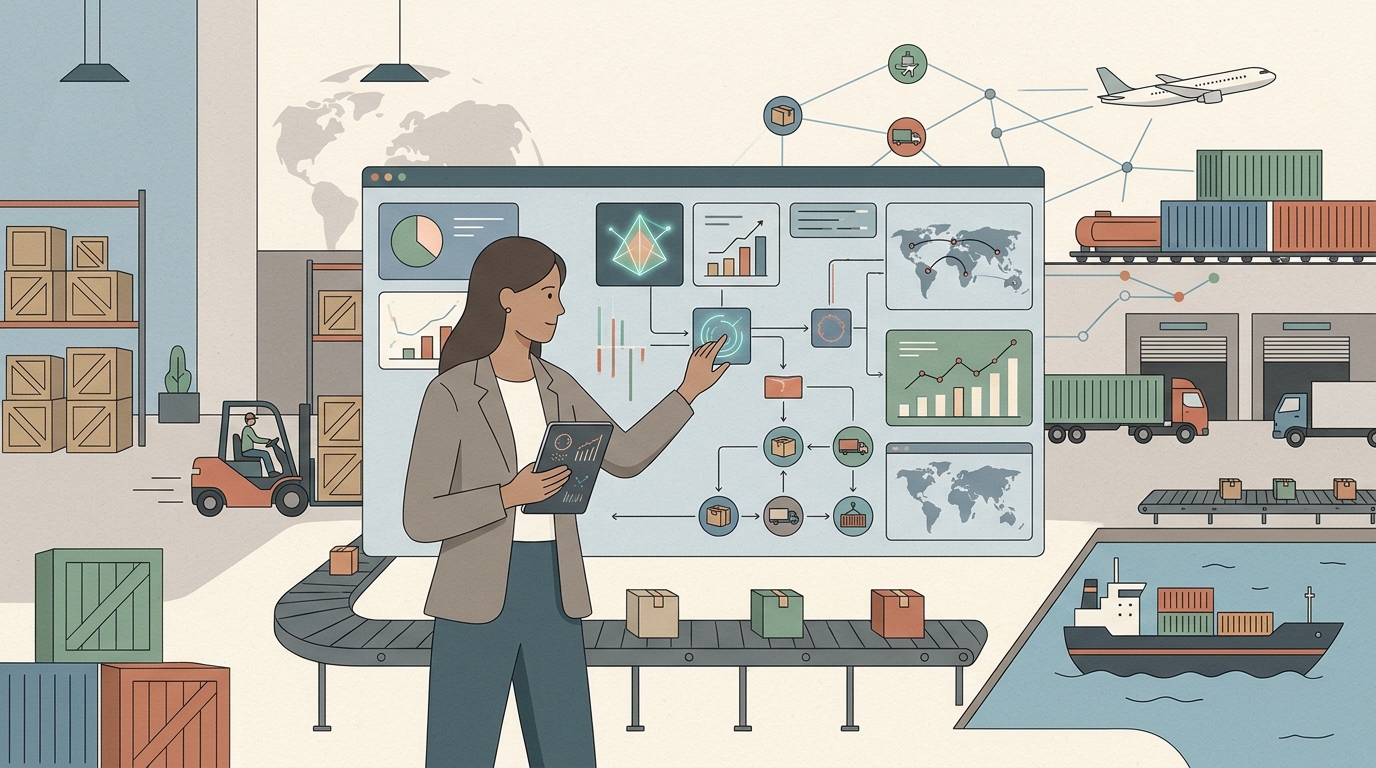
Supply Chain Manager Career Overview: Is This the Right Path for You?
A supply chain manager keeps materials, products and information moving from supplier to customer: forecasting demand, choosing carriers and suppliers, watching inventory levels and fixing the disruptions that hit every week. In the United States, the Bureau of Labor Statistics does not publish a separate Occupational Outlook Handbook profile for supply chain managers, and instead covers the work under Logisticians (SOC 13-1081), noting that experienced logisticians may advance into supply chain management roles (U.S. Bureau of Labor Statistics, 2025).
Priya Chandrasekaran · 9 min read
How to Prepare for a Second Interview
Getting a second interview means you are seriously in contention, and the questions will be more probing than the first round (U.S. News & World Report, undated). Expect a bigger time commitment too: a first conversation may run 30 to 45 minutes, while a second interview can last from one hour to several hours and may include back-to-back meetings, a practical task or a presentation (Robert Walters, undated).
Noor Abdallah · 7 min read
Is Becoming a Wind Turbine Technician a Good Career Change?
For a lot of people switching in their 30s, 40s and 50s, wind turbine technician work is a realistic change: the usual entry requirement is a postsecondary nondegree award rather than a degree (U.S. Bureau of Labor Statistics, 2025), and college certificate programmes run in months — about one year full-time at Spokane Community College, or roughly 28 to 32 weeks part-time for the George Brown College Wind Turbine Technician Certificate in Canada.
Priya Chandrasekaran · 10 min read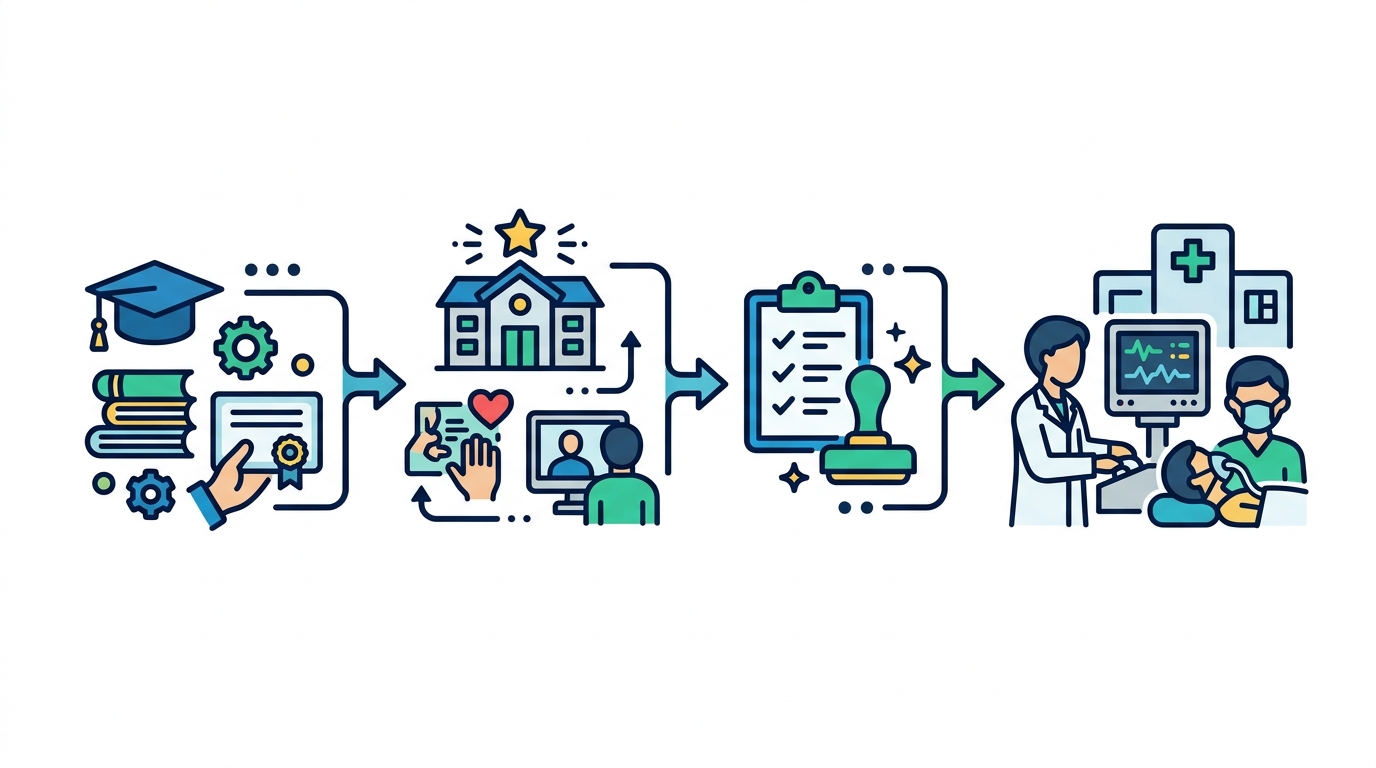
How to Become a Respiratory Therapist
Becoming a respiratory therapist means completing an accredited respiratory therapy degree, passing a national credentialing exam, then applying for a license from the regulator where you want to practice. In the United States that is at least an associate's degree in respiratory therapy from an accredited program (U.S. Bureau of Labor Statistics, 2025), a CRT or RRT credential from the National Board for Respiratory Care, and a state license — required everywhere except Alaska (U.S. Bureau of Labor Statistics, 2025).
Noor Abdallah · 10 min read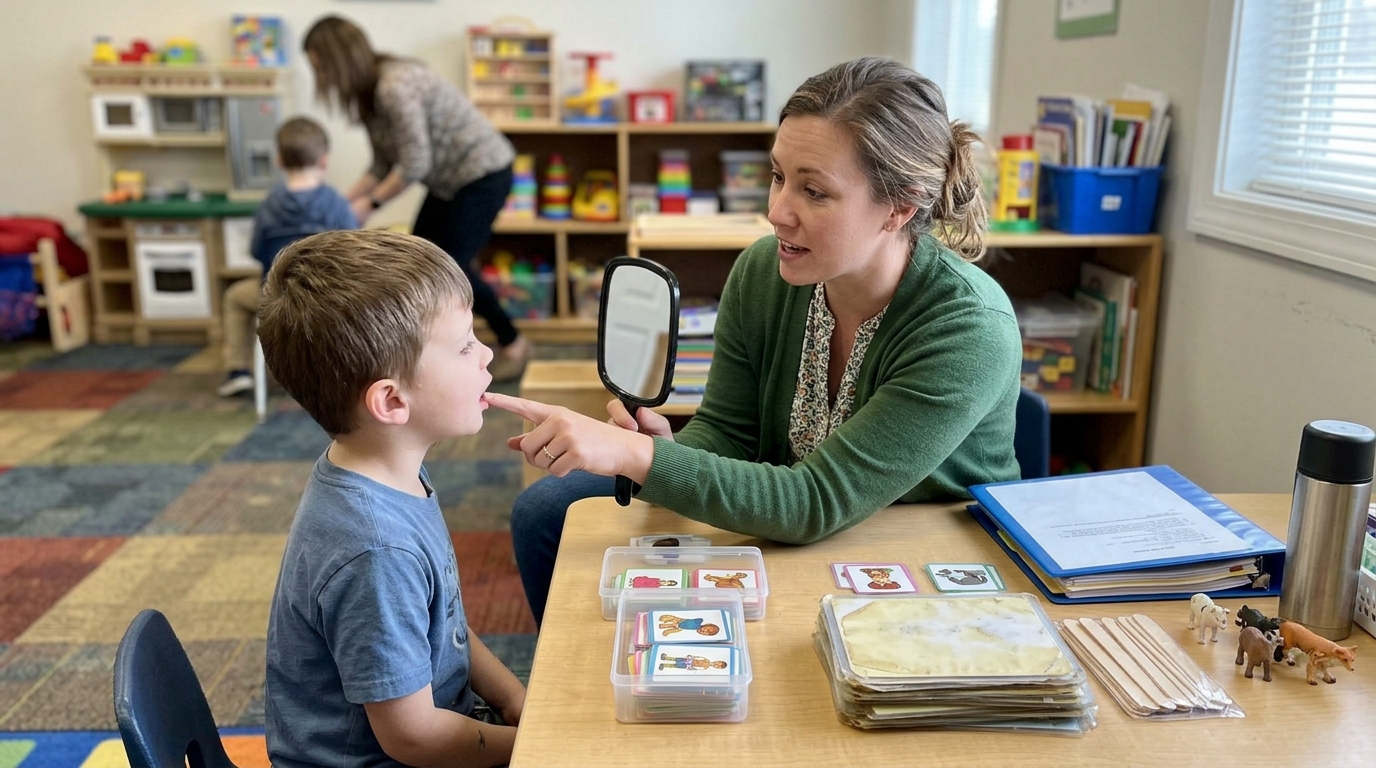
How to Switch to a Career in Speech-Language Pathology, Step by Step
Moving into speech-language pathology is a multi-year change, not a short retrain. In the United States the usual entry-level qualification is a master's degree, and every state requires speech-language pathologists to be licensed, with requirements that vary by state (U.S. Bureau of Labor Statistics, 2025). Certification as a CCC-SLP additionally requires a master's from a program accredited by the Council on Academic Accreditation in Audiology and Speech-Language Pathology (American Speech-Language-Hearing Association, undated).
Noor Abdallah · 10 min read
How to Become an Air Traffic Controller: Step-by-Step Guide
Becoming an air traffic controller in the United States means meeting a fixed set of Federal Aviation Administration entry rules, passing the Air Traffic Skills Assessment, clearing a medical exam and security investigation, training at the FAA Academy in Oklahoma City, then spending more than a year in on-the-job training at an assigned facility (U.S. Bureau of Labor Statistics, 2025; Federal Aviation Administration, undated). The usual entry-level education is an associate's degree, often through an FAA-approved Air Traffic Collegiate Training Initiative (AT-CTI) program, though a bachelor's in any field or qualifying work experience can also open the door (U.S. Bureau of Labor Statistics, 2025).
Desmond Okafor · 11 min read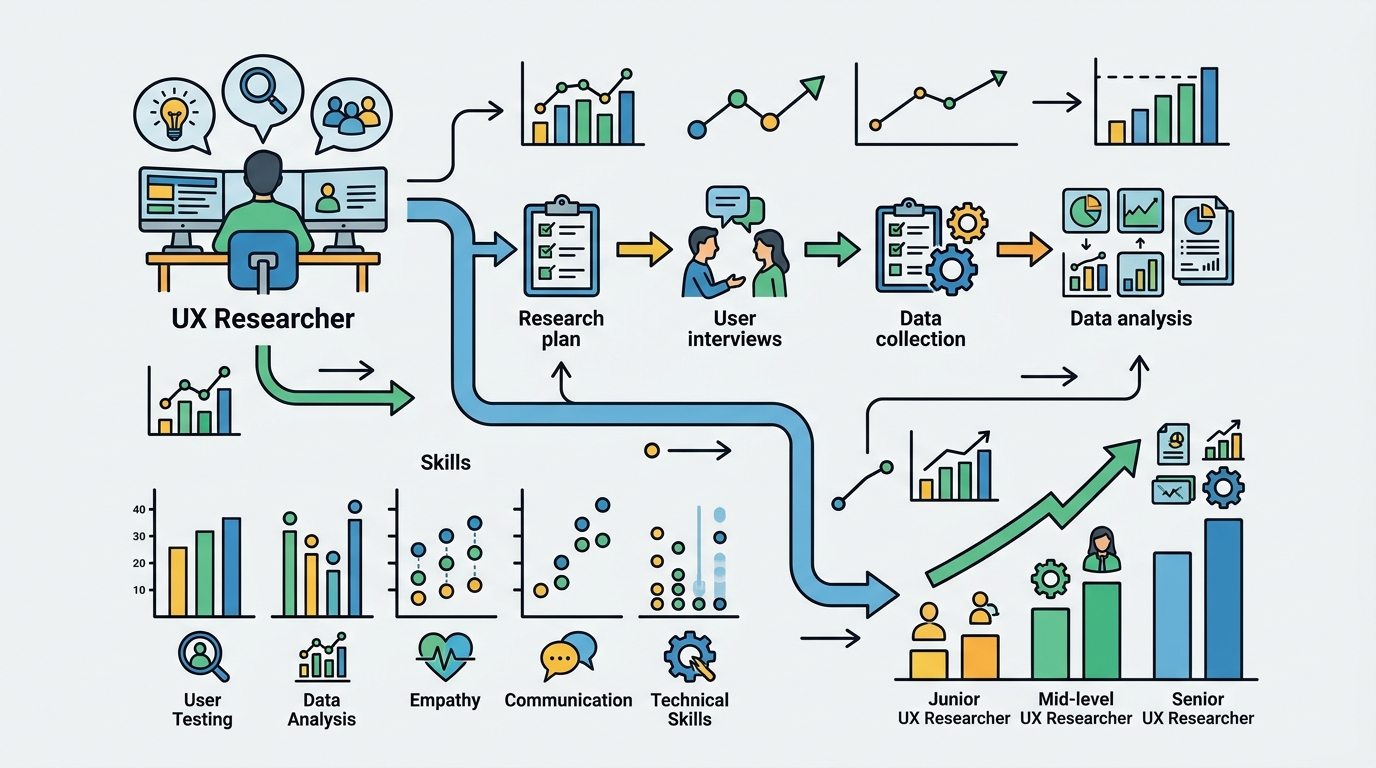
What Does a UX Researcher Do? Duties, Skills, and Salary Explained
A UX researcher plans and runs studies with real or potential users, then turns what those people say and do into evidence a product team can act on. ONET OnLine (U.S. Department of Labor) lists conducting user research and analysing user feedback as a core task for the occupation, and classifies it as Job Zone Four — work that requires considerable preparation, usually a degree plus practice.
Desmond Okafor · 9 min read